
The global aluminum cans market is experiencing consistent growth as beverage manufacturers increasingly prioritize sustainable packaging, operational efficiency, and resilient supply chains. With rising demand for recyclable, lightweight, and high-performance packaging formats, aluminum cans are strengthening their position as a preferred solution across the beverage industry.
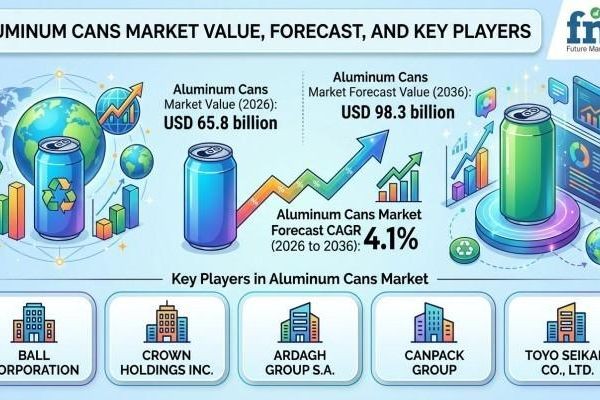
The Aluminum Cans Market is valued at USD 63.2 billion in 2025 and is projected to reach USD 65.8 billion in 2026. By 2036, the market is expected to attain a valuation of USD 98.3 billion, expanding at a CAGR of 4.1% during the forecast period. Growing investments in sustainable packaging initiatives, coupled with increasing beverage consumption worldwide, are driving long-term market expansion.
Get detailed market forecasts, competitive benchmarking, and pricing trends:
https://www.futuremarketinsights.com/reports/sample/rep-gb-4434
Market Highlights
- Market Value (2025): USD 63.2 Billion
- Market Value (2026): USD 65.8 Billion
- Projected Market Value (2036): USD 98.3 Billion
- Forecast CAGR (2026-2036): 4.1%
- Fastest Growing Markets: China (5.3%), India (4.9%), Germany (4.5%)
- Leading Product Type: 2-Piece Cans (61.4% market share in 2026)
- Dominant End-Use Sector: Beverage Industry (68.2% market share in 2026)
Market Dynamics and Pricing Trends
The aluminum cans industry is being shaped by fluctuations in raw material costs, recycling infrastructure development, and global energy prices. Industry stakeholders are increasingly focused on securing reliable material supplies while optimizing packaging performance and sustainability outcomes.
Key procurement considerations include:
- Long-term aluminum supply agreements
- Consistent aluminum sheet availability
- Access to recycled content
- Transportation cost optimization
- Enhanced lifecycle sustainability performance
Although rising aluminum prices and evolving international trade regulations continue to influence manufacturing costs, aluminum cans remain highly attractive due to their lightweight construction, exceptional recyclability, and compatibility with high-speed production lines.
Replacement Demand and Installed Base Expansion
Demand for aluminum cans continues to increase as beverage manufacturers transition away from alternative packaging formats toward more sustainable metal packaging solutions. Several factors are contributing to this shift:
- Expansion of beverage manufacturing facilities
- Rising consumption of canned soft drinks and alcoholic beverages
- Corporate sustainability initiatives
- Growth of deposit-return schemes and recycling programs
Many beverage producers are also strengthening supplier relationships and establishing production facilities closer to can manufacturing hubs to improve supply chain efficiency and reduce operational risks.
Production Capacity and Supply Chain Developments
Regional markets continue to strengthen their role within the global aluminum can ecosystem.
Regional Highlights
- China and India: Rapid expansion of can production facilities and beverage manufacturing operations.
- Germany and Europe: Advanced recycling infrastructure supporting circular economy initiatives.
- United States: Mature can manufacturing capabilities supported by strong beverage demand.
Major supply chain developments include:
- New investments in can manufacturing plants
- Expansion of aluminum sheet production capacity
- Increased emphasis on localized sourcing strategies
- Intensifying competition among integrated packaging manufacturers
Beverage Industry Trends Supporting Growth
Aluminum cans continue to gain popularity across multiple beverage categories due to their performance advantages, including:
- Reduced transportation costs through lightweight packaging
- Excellent barrier protection
- Superior carbonation retention
- Efficient filling-line operations
- High recyclability and environmental benefits
Demand is growing steadily across carbonated soft drinks, beer, energy drinks, ready-to-drink tea, flavored water, and coffee beverages, creating strong growth opportunities throughout the forecast period.
Evolving Procurement Strategies
Leading buyers in the market include:
- Beverage manufacturers
- Food processing companies
- Industrial packaging users
- Export-oriented consumer goods brands
Procurement teams are increasingly prioritizing:
- Reliable supply continuity
- Verified sustainability credentials
- Secure aluminum sheet sourcing
- Consistent product quality
- Long-term strategic partnerships
Large-scale beverage companies are particularly seeking suppliers capable of supporting high-volume production requirements while ensuring uninterrupted deliveries.
Service Excellence and Operational Support
Beyond product quality, packaging buyers are placing greater emphasis on supplier service capabilities. Key evaluation criteria include:
- On-time delivery performance
- Inventory management solutions
- Comprehensive quality assurance programs
- Technical assistance during production trials
- Packaging optimization expertise
Manufacturers that combine strong regional manufacturing networks with dependable customer support are gaining a competitive advantage in securing long-term contracts.
Sustainability and Circular Economy Initiatives
Environmental regulations and corporate sustainability commitments continue to reshape packaging purchasing decisions worldwide. Key industry priorities include:
- Reducing packaging waste
- Increasing recycled content usage
- Supporting circular economy objectives
- Lowering carbon emissions throughout the packaging lifecycle
The expansion of deposit-return systems and aluminum recovery programs is further enhancing the sustainability profile of aluminum cans, making them a preferred choice for environmentally conscious brands and consumers.
Competitive Landscape
Leading market participants such as Ball Corporation, Crown Holdings, Inc., Ardagh Group S.A., CANPACK Group, Toyo Seikan Co., Ltd., and CPMC Holdings Inc. are strengthening their market presence through:
- Capacity expansion initiatives
- Supply chain integration strategies
- Geographic diversification
- Innovative can design technologies
- Sustainability-focused investments
Ongoing investments in lightweight can development, recycling technologies, and regional manufacturing capabilities continue to intensify competition across the global market.
Unlock high-growth opportunities with FMI's niche business market insights:
https://www.futuremarketinsights.com/industry-analysis
Explore the Latest Packaging Industry Analysis Now:
https://www.futuremarketinsights.com/industry-analysis/packaging
Future Outlook
The aluminum cans market is poised for sustained growth through 2036, driven by increasing beverage consumption, expanding recycling ecosystems, and ongoing investments in manufacturing efficiency. As sustainability becomes a central purchasing criterion, companies that successfully integrate recycling capabilities, secure raw material sourcing, and scalable production infrastructure will be best positioned to capitalize on future market opportunities across both developed and emerging economies.
About Future Market Insights (FMI)
Future Market Insights, Inc. (FMI) is an ESOMAR-certified, ISO 9001:2015 market research and consulting organization, trusted by Fortune 500 clients and global enterprises. With operations in the U.S., UK, India, and Dubai, FMI provides data-backed insights and strategic intelligence across 30+ industries and 1200 markets worldwide.






