
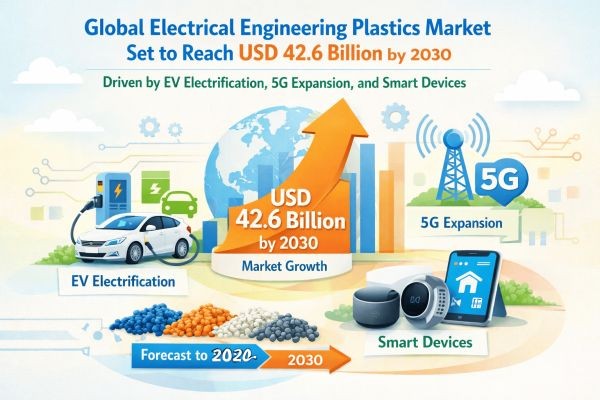
Electrical Engineering Plastics are high-performance polymers engineered to meet stringent electrical, thermal, and mechanical requirements in demanding applications. These materials combine excellent dielectric properties with superior heat resistance and flame retardance, making them indispensable in electrical insulation and electronic component manufacturing. Unlike commodity plastics, engineering-grade formulations offer precise performance characteristics tailored for mission-critical applications where failure is not an option.
Get Full Report Here: https://www.24chemicalresearch.com/reports/261896/global-electrical-engineering-plastics-forecast-market-2024-2030-670
Market Dynamics:
The electrical engineering plastics industry sits at the convergence of multiple technological advancements and regulatory pressures, creating a dynamic environment where innovation determines market leadership.
Key Market Drivers Accelerating Growth
- Electrification Mega-Trend: The global push toward electrification across automotive, industrial, and consumer sectors drives unprecedented demand. Electric vehicle production, projected to exceed 40 million units annually by 2030, requires 3-5 times more engineering plastics per vehicle than conventional automobiles for battery systems, charging infrastructure, and powertrain components. This transformation creates a sustained demand pipeline for advanced materials with superior electrical insulation properties.
- 5G Infrastructure Expansion: The rollout of 5G networks demands high-frequency capable materials with exceptional dielectric properties. Engineering plastics enable the miniaturization of antenna systems and base station components while maintaining signal integrity. With over 7 million 5G base stations expected globally by 2026, material suppliers are developing specialized compounds that reduce signal loss by 15-20% compared to conventional options.
- Smart Home Revolution: The proliferation of IoT-connected home appliances creates robust demand for flame-retardant engineering plastics. Modern appliances integrate more electronics in compact spaces, requiring materials that can withstand higher operating temperatures while meeting stringent UL and IEC safety standards. The global smart home market, projected to reach $400 billion by 2030, represents a key growth vertical for high-performance polymers.
Download FREE Sample Report: https://www.24chemicalresearch.com/download-sample/261896/global-electrical-engineering-plastics-forecast-market-2024-2030-670
Significant Market Challenges
Despite robust demand, the industry faces several structural challenges that manufacturers must navigate.
- Raw Material Volatility: Engineering plastics rely on petroleum-based feedstocks, making them susceptible to crude oil price fluctuations. Recent geopolitical tensions have caused acrylonitrile and benzene prices to swing 25-30% annually, forcing producers to implement frequent price adjustments. This instability creates budgeting challenges for OEMs and impacts long-term supply agreements.
- Technical Performance Trade-offs: Achieving the optimal balance between electrical properties, mechanical strength, and cost remains an engineering challenge. For instance, enhancing flame retardancy often reduces impact strength, while improving dielectric properties can compromise thermal conductivity. Material scientists continually work to break these performance barriers through advanced compounding techniques and nanotechnology additives.
Critical Regulatory Considerations
The industry operates under an increasingly complex web of global regulations:
- RoHS and REACH compliance in Europe drives formulation changes to eliminate restricted substances
- UL certification processes for new materials can take 12-18 months, delaying time-to-market
- Diverging flammability standards across regions require customized material solutions
These regulatory hurdles add 15-20% to product development costs and extend qualification timelines, particularly for materials used in safety-critical applications.
Emerging Market Opportunities
- Renewable Energy Infrastructure: Wind turbine generators and solar inverters require specialized engineering plastics that can withstand decades of outdoor exposure while maintaining electrical properties. The global renewable energy sector, projected to attract $1.7 trillion in investments by 2030, represents a high-growth application area for advanced polymer solutions.
- Medical Electronics: The convergence of healthcare and electronics creates demand for biocompatible engineering plastics in imaging equipment, surgical robots, and wearable monitors. These applications require materials that combine sterilization resistance with precise electrical characteristics, commanding premium pricing 30-50% above standard grades.
- Cable & Wire Innovation: Next-generation 800V+ electric vehicle architectures and underground transmission lines drive demand for advanced insulating materials. Engineering plastics that enable higher voltage operation while reducing wall thickness by 20-25% are gaining rapid adoption across these applications.
Market Segmentation Analysis
By Material Type:
The market is segmented into Polycarbonates (PC), Polyamides (PA), Polyetheretherketone (PEEK), and other specialty polymers. Polyamides dominate volume share due to their balanced performance and cost-effectiveness across multiple applications. However, PEEK is witnessing the fastest growth, particularly in extreme environment applications where its combination of thermal stability and electrical properties justifies its premium pricing.
By Application:
Key application areas include electrical components, wire insulation, electronic housings, and semiconductor processing equipment. Electrical components represent the largest segment, driven by the miniaturization trend in electronics that demands precision-molded insulating parts with tight tolerances.
By End-Use Industry:
The automotive sector accounts for over 35% of demand, followed by consumer electronics and industrial equipment. Emerging growth areas include aerospace applications where weight reduction and flame resistance are critical requirements.
Download FREE Sample Report: https://www.24chemicalresearch.com/download-sample/261896/global-electrical-engineering-plastics-forecast-market-2024-2030-670
Competitive Landscape
The market features a mix of global chemical giants and specialty polymer producers:
Key Companies Profiled:
- LyondellBasell Industries (Netherlands)
- Sinopec Group (China)
- INEOS Styrolution (Germany)
- SABIC (Saudi Arabia)
- Borealis AG (Austria)
- ExxonMobil Chemical (USA)
- Reliance Industries (India)
- Formosa Plastics (Taiwan)
The industry is characterized by intense R&D competition, with leading players investing 4-6% of revenues annually in new product development. Recent strategic initiatives include:
- Vertical integration to secure raw material supply
- Application engineering centers co-located with key customers
- Acquisitions of specialty compounders to expand technical capabilities
Regional Market Analysis
Asia-Pacific dominates consumption, accounting for over 50% of global demand, driven by China's electronics manufacturing ecosystem. The region benefits from:
- Proximity to major OEM production facilities
- Growing domestic technical polymer production capacity
- Favorable government policies supporting electrification
North America leads in high-value specialty formulations, particularly for aerospace, medical, and advanced automotive applications. The region's strengths include:
- Strong R&D ecosystem with major material science centers
- Early adoption of next-generation technologies like 5G and EVs
- Stringent regulatory environment driving material innovation
Europe maintains leadership in sustainable engineering plastics, with increasing focus on:
- Closed-loop recycling systems for production waste
- Bio-based polymer alternatives to conventional formulations
- Low-carbon footprint material solutions
Get Full Report Here: https://www.24chemicalresearch.com/reports/261896/global-electrical-engineering-plastics-forecast-market-2024-2030-670
About 24chemicalresearch
Founded in 2015, 24chemicalresearch has rapidly established itself as a leader in chemical market intelligence, serving clients including over 30 Fortune 500 companies. We provide data-driven insights through rigorous research methodologies, addressing key industry factors such as government policy, emerging technologies, and competitive landscapes.
- Plant-level capacity tracking
- Real-time price monitoring
- Techno-economic feasibility studies
International: +1(332) 2424 294 | Asia: +91 9169162030
Website: https://www.24chemicalresearch.com/






