
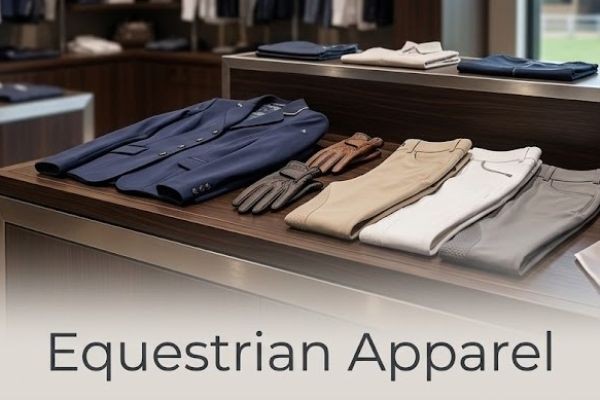
According to the latest industry analysis by Future Market Insights (FMI), the global equestrian apparel market is witnessing steady growth driven by rising consumer preference for sustainable riding apparel, increasing participation in equestrian activities, and growing demand for performance-oriented clothing across professional and recreational rider segments. Valued at USD 7.0 billion in 2025, the market is projected to reach USD 7.4 billion by 2026-end and further expand to USD 12.6 billion by 2036, registering a CAGR of 5.5% during the forecast period.
The market is transitioning from traditional riding apparel procurement toward specification-driven sourcing supported by sustainability mandates, product innovation, and expanding organized retail distribution. Increasing demand for premium topwear, eco-friendly fabrics, and technically advanced riding apparel is reshaping purchasing behavior across global equestrian communities.
Quick Stats Snapshot
• Market size (2026): USD 7.4 billion
• Forecast (2036): USD 12.6 billion
• CAGR (2026-2036): 5.5%
• Leading product segment: Topwear (42.7% share)
• Dominant apparel segment: Sustainable apparel (58.2% share)
• Leading category segment: Professional rider (63.4% share)
• Fastest-growing country: China (7.4% CAGR)
• Key product trend: Expansion of sustainable and performance-oriented riding apparel
• Top application areas: Professional riding, recreational riding, training, and equestrian sports
• Key performance driver: Growing preference for specification-compliant and eco-friendly apparel solutions
Get detailed market forecasts, competitive benchmarking, and strategic insights: https://www.futuremarketinsights.com/reports/sample/rep-gb-25138
Market Size and Growth Outlook
The equestrian apparel market is forecast to grow at a CAGR of 5.5% between 2026 and 2036. Growth is primarily driven by increasing adoption of sustainable riding wear, rising participation in equestrian sports, expanding organized retail channels, and growing consumer willingness to invest in premium performance apparel.
Consumers are increasingly seeking riding apparel that combines comfort, durability, weather resistance, and safety compliance. This trend is accelerating the adoption of sustainable topwear, high-performance riding gear, and technically advanced equestrian clothing across both developed and emerging markets.
Market Trends
• Rising consumer preference for sustainable and eco-friendly riding apparel
• Increasing demand for performance-enhancing equestrian clothing
• Growing adoption of premium riding topwear and protective apparel
• Expansion of organized retail and online distribution channels
• Increasing influence of professional equestrian sports and rider communities
• Growing demand for gender-specific and youth-focused riding apparel
• Rising innovation in breathable, lightweight, and weather-resistant fabrics
Key Market Drivers
1. Growing Demand for Sustainable Apparel
Shifting consumer preference toward environmentally responsible and ethically sourced apparel is significantly driving adoption of sustainable equestrian clothing across global markets.
2. Expansion of Professional and Recreational Riding Activities
Growing participation in equestrian sports, horse riding clubs, and recreational riding activities is increasing demand for performance-oriented riding apparel.
3. Increasing Focus on Product Quality and Compliance
Tightening quality standards and safety compliance requirements are encouraging consumers and institutional buyers to adopt certified and specification-compliant equestrian apparel products.
4. Growth of Organized Distribution Channels
The expansion of organized retail networks and e-commerce platforms is improving product accessibility and supporting premium product adoption worldwide.
Key Challenges
• Intense price competition across mid-range apparel categories
• Input cost volatility affecting premium fabric and material sourcing
• Competitive pressure from unorganized and local manufacturers
• Margin pressure caused by procurement consolidation among large buyers
• Supply chain disruptions impacting production timelines and inventory management
Emerging Opportunities
• Expansion of sustainable and recycled fabric technologies
• Rising demand for smart and performance-enhancing riding apparel
• Increasing adoption of women-focused and youth equestrian clothing
• Growth of premium equestrian fashion and lifestyle apparel
• Product innovation in breathable, lightweight, and climate-adaptive fabrics
Segmentation Insights: Topwear Leads Product Demand
By Product Type
Topwear dominates the market with a 42.7% share in 2026, supported by broad applicability across professional riding, training, and recreational activities. Consumers increasingly prefer technically advanced topwear offering comfort, flexibility, and weather resistance.
Bottomwear and other accessories such as socks also continue to witness steady demand as riders seek complete performance-oriented apparel solutions.
By Apparel Type
Sustainable apparel accounts for 58.2% of the market, reflecting rising consumer preference for environmentally responsible products and increasing retailer focus on sustainable sourcing strategies.
Unsustainable apparel categories continue to maintain demand in cost-sensitive segments, particularly across developing regions.
Speak to Analyst: Customize insights for your business strategy: https://www.futuremarketinsights.com/customization-available/rep-gb-25138
Regional Analysis
• China (7.4% CAGR): Expanding manufacturing capacity, rising equestrian participation, and government-backed industrial modernization support strong market growth
• India (6.9% CAGR): Growing organized retail infrastructure, rising middle-class spending, and expanding recreational riding activities drive demand
• Germany (6.3% CAGR): Strong equestrian culture and stringent quality standards support premium apparel adoption
• France (5.8% CAGR): Stable growth driven by institutional procurement and increasing sustainable apparel demand
• United Kingdom (5.2% CAGR): Mature market supported by premium riding apparel demand and organized retail infrastructure
• United States (4.7% CAGR): Replacement demand and continued innovation in technical riding apparel sustain market expansion
Europe remains a dominant regional market due to strong equestrian traditions, high consumer spending on premium riding apparel, and widespread adoption of sustainable clothing solutions.
Competitive Landscape
The market remains highly competitive, with leading companies focusing on sustainability initiatives, product innovation, retail expansion, and premium brand positioning.
Major players include Ariat International, Charles Owen, Dublin, Equi-Star, Eskadron, Goode Rider, Helite, Horze, Kentucky Horsewear, and Kingsland Equestrian.
Competitive advantage is increasingly defined by:
• Sustainable product innovation and fabric technology
• Strong retail and e-commerce distribution networks
• Brand recognition and rider community engagement
• Competitive pricing strategies and manufacturing scale
• Expansion into emerging markets and premium product categories
Future Outlook
The equestrian apparel market is expected to continue evolving toward sustainable, specification-driven, and performance-oriented apparel ecosystems supported by innovation in fabric technology, growing consumer preference for eco-friendly products, and expanding equestrian participation worldwide.
Companies investing in sustainability, product innovation, and digital retail expansion are expected to strengthen their market positions over the next decade, while emerging markets such as China and India will remain key growth engines.
Purchase Full Report for Comprehensive Insights: https://www.futuremarketinsights.com/reports/equestrian-apparel-market
Executive Takeaways
• Market projected to grow from USD 7.0 billion (2025) to USD 12.6 billion (2036)
• CAGR of 5.5% supported by sustainable apparel adoption and performance-focused product innovation
• Topwear leads with 42.7% market share
• Sustainable apparel dominates with 58.2% share
• China represents the fastest-growing national market
• Competitive advantage increasingly depends on sustainability, quality compliance, and distribution strength
• Long-term market evolution shifting toward premium, eco-friendly, and performance-oriented riding apparel solutions
Why Choose FMI: https://www.futuremarketinsights.com/why-fmi
कोई टिप्पणी नहीं मिली






