
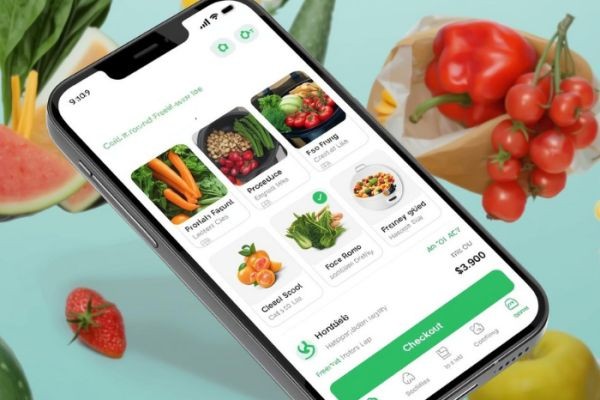
The grocery delivery market is booming, and businesses are rushing to launch their own apps. But speed without strategy leads to costly errors. Whether you're a startup or an established retailer, partnering with the right grocery app development company is just the first step. Understanding what can go wrong is equally important. Here are the most common grocery app development mistakes — and how to avoid them.
1. Skipping Market Research
One of the biggest blunders is jumping into development without validating the idea. Many businesses assume they know what their customers want, only to launch an app that fails to gain traction.
Before a single line of code is written, study your target audience. What do they expect from a grocery app? Fast delivery? Scheduled slots? Easy reordering? Look at competitors like Instacart, BigBasket, or Blinkit and identify gaps you can fill. A reliable grocery app development company will always begin with a discovery phase that includes user research, competitor analysis, and market mapping.
2. Overcomplicating the UI/UX
A grocery app must be simple. Users open it to buy tomatoes and milk — not to explore a complex interface. Cluttered layouts, too many categories, and confusing navigation kill conversions faster than anything else.
Invest in clean, intuitive design. Prioritize a smart search bar, clear product categories, readable fonts, and a frictionless checkout process. The fewer taps it takes to complete a purchase, the better. Your development partner should conduct usability testing at every stage to ensure the app feels natural to first-time users.
3. Ignoring Performance Optimization
A slow grocery app is a dead grocery app. Studies consistently show that users abandon apps that take more than three seconds to load. When hundreds of products, images, and real-time inventory data are involved, performance can deteriorate quickly if not handled properly.
Avoid this by using image compression, lazy loading, caching strategies, and efficient API calls. A competent grocery app development company will stress-test the app under high traffic conditions and ensure it scales smoothly during peak shopping hours like weekends and holidays.
4. Neglecting Real-Time Inventory Management
Nothing frustrates a grocery shopper more than adding items to the cart, placing an order, and then receiving a cancellation because products were out of stock. This breaks trust immediately.
Your app must sync in real time with your inventory system. Whether you manage a single store or multiple warehouses, the backend should reflect live stock levels. Integrate with your ERP or warehouse management system so the product catalog is always accurate.
5. Weak Payment and Security Infrastructure
Grocery apps handle financial transactions and sensitive user data daily. A single data breach can permanently damage your brand reputation. Yet many apps cut corners on payment gateway integration and data encryption.
Always implement SSL encryption, PCI-DSS compliant payment gateways, and multi-factor authentication. Offer multiple payment options — cards, wallets, UPI, and cash on delivery — to reduce cart abandonment. Security should be a non-negotiable requirement, not an afterthought.
6. Poor Post-Launch Support
Many businesses treat launch day as the finish line. In reality, it is the starting line. Bugs surface, user behavior reveals unexpected pain points, and market needs evolve. Without a structured post-launch maintenance plan, your app will stagnate.
Plan for regular updates, performance monitoring, and user feedback loops. Track key metrics like session duration, drop-off points, and order completion rates. Work with your grocery app development company on a long-term roadmap that includes feature enhancements and platform updates.
7. Not Planning for Scalability
Your app might handle 500 users today, but what about 50,000 next year? Building without scalability in mind forces expensive rebuilds down the line.
Choose a cloud-based, microservices architecture that allows individual components to scale independently. Plan database structures that can handle growing product catalogs and user bases without performance degradation.
Final Thoughts
Building a successful grocery app requires more than a good idea — it demands strategic planning, technical precision, and a long-term vision. Avoiding these common mistakes will significantly improve your chances of launching a product that users love and return to. Choose a grocery app development company that brings not just coding expertise, but domain knowledge, design thinking, and a commitment to quality at every stage of the project.






