
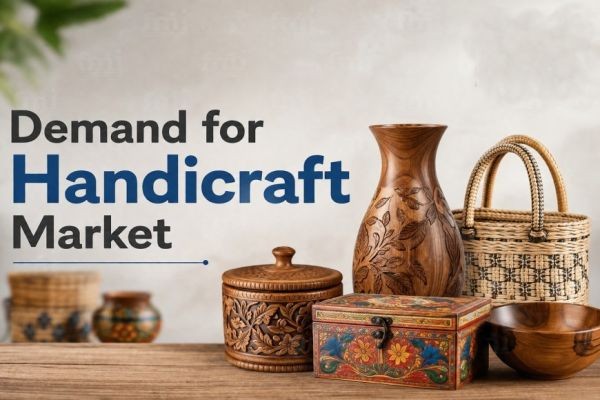
The global handicraft market is entering a period of strong expansion as consumer appreciation for authentic artisanal products, the growth of e-commerce platforms, and increasing awareness of fair trade and ethical sourcing continue to influence purchasing patterns. According to Future Market Insights (FMI), the market is projected to grow from USD 472.62 billion in 2026 to USD 1,282.73 billion by 2036, expanding at a CAGR of 10.5% during the forecast period.
The market is benefiting from rising demand for handcrafted textiles, embroidered goods, woodwork, ceramics, metalwork, leather products, and decorative items across residential, commercial, gifting, hospitality, and personal collection applications. While traditional specialty stores remain important distribution channels, digital marketplaces are increasingly enabling artisan producers to reach international consumers directly.
Get detailed market forecasts, competitive benchmarking, and pricing trends: https://www.futuremarketinsights.com/reports/sample/rep-gb-18752
Key Market Highlights:
- Market Value (2026): USD 472.62 Billion
• Forecast Value (2036): USD 1,282.73 Billion
• CAGR (2026-2036): 10.5%
• Leading Product Segment: Handprinted Textiles & Embroidered Goods (32.4%)
• Leading End User: Residential (68.7%)
• Leading Distribution Channel: Specialty Stores (36.2%)
• Leading Material: Wood (28.9%)
• Fastest-Growing Country: India (14.0% CAGR)
Why Is the Handicraft Market Growing?
The handicraft market is expanding as consumers increasingly seek unique, culturally meaningful, and authentically produced goods. Growing e-commerce penetration is also transforming how artisan products reach global markets, while fair trade awareness is creating new opportunities for certified and traceable handicrafts.
Key growth drivers include:
- Rising consumer demand for authentic handcrafted home décor, textiles, and decorative products.
• Expansion of e-commerce platforms connecting artisan producers with international consumers.
• Increasing awareness of fair trade, ethical sourcing, and product traceability.
• Growing demand for unique and culturally meaningful products compared with mass-produced alternatives.
• Rising international market access through digital marketplaces and direct-to-consumer channels.
Analyst Perspective
"The handicraft market reflects growing consumer appreciation for authentic artisanal products and fair trade sourcing. Organizations that can connect artisan producers with global consumers through e-commerce platforms while ensuring quality consistency and supply reliability are positioned to capture expanding international demand during the forecast period."
- Rahul Pandita, Principal Consultant, Future Market Insights
The handicraft market is evolving from localized artisan trade toward a globally connected creative economy. Companies with strong artisan networks, quality assurance capabilities, fair trade certification, and international distribution reach are likely to capture premium demand.
Which Product Segment Leads the Handicraft Market?
Handprinted textiles and embroidered goods lead the product segment with a 32.4% share, supported by sustained consumer demand for traditional textile products, culturally distinctive designs, and handcrafted home décor.
Key Highlights:
- Handprinted textiles and embroidered goods account for 32.4% of the product segment.
• Demand is supported by consumer interest in authentic craftsmanship and cultural heritage.
• Textile-based handicrafts continue to benefit from gifting, home décor, fashion, and personal collection applications.
• Product differentiation and artisan provenance are increasingly important purchasing factors.
Why Does Wood Lead the Material Segment?
Wood accounts for 28.9% of the material segment, supported by strong demand for handcrafted furniture, decorative objects, sculptures, home accessories, and traditional artisan products.
Key Highlights:
- Wood represents 28.9% of the material segment.
• Wood-based handicrafts benefit from durability, natural aesthetics, and cultural significance.
• Traditional woodcraft techniques support product differentiation and premium positioning.
• Textile, metal, glass, clay, and ceramic materials continue to support diverse product offerings.
Which End User Segment Leads the Market?
Residential applications dominate the handicraft market with a 68.7% share, driven by demand for handcrafted home décor, textiles, decorative products, furnishings, and personal collection items.
Key Highlights:
- Residential applications account for 68.7% of the end users segment.
• Consumers increasingly use handcrafted products to create distinctive and culturally inspired living spaces.
• Hospitality, commercial, and gifting applications represent additional growth opportunities.
• Demand for personalized and unique décor continues to support residential purchasing.
Market Dynamics
Market Drivers
Consumer appreciation for authentic craftsmanship and culturally meaningful products continues to drive demand across residential, gifting, hospitality, and decorative applications. Fair trade awareness is also encouraging consumers to purchase products with transparent sourcing and artisan provenance.
E-commerce expansion is another important growth driver. Digital platforms allow artisan producers and cooperatives to access international consumers without relying exclusively on physical retail networks. This is expanding market reach while enabling direct-to-consumer sales and improved product discovery.
Emerging Market Trends
The market is moving toward digital-first distribution, fair trade certification, traceable sourcing, and storytelling-led product marketing. Online marketplaces are increasingly using artisan stories, product origin information, and social media content to create stronger connections between producers and consumers.
Manufacturers and retailers are also focusing on premium product collections, sustainable materials, heritage craftsmanship, and differentiated designs to justify higher price points.
Speak to Analyst: Customize insights for your business strategy: https://www.futuremarketinsights.com/customization-available/rep-gb-12008
Regional Outlook: Which Countries Are Driving Growth in the Handicraft Market?
The handicraft market is witnessing strong growth across Asia-Pacific, Europe, North America, and other global regions. India is emerging as the fastest-growing market due to its extensive artisan base, traditional textile and woodcraft capabilities, and government support for handicraft exports.
Country Growth Snapshot
India Leads Global Growth
India is projected to grow at a 14.0% CAGR through 2036, supported by its large artisan production base, strong textile and woodwork traditions, and government initiatives supporting handicraft development and exports.
- Large artisan base sustains production capacity.
• Textile traditions support export-quality handcrafted products.
• Government promotion accelerates market development.
• Growing e-commerce adoption improves international market access.
Australia Shows Strong Market Expansion
Australia is expected to grow at a 12.1% CAGR, supported by strong consumer demand for handcrafted home décor, fair trade awareness, and established retail and online distribution channels.
- Consumer demand supports handcrafted home décor purchases.
• Fair trade awareness strengthens premium product demand.
• Retail and online channels expand product accessibility.
China Maintains Strong Growth Potential
China is projected to grow at a 10.6% CAGR, supported by its large domestic consumer market, diverse craft traditions, and expanding e-commerce infrastructure.
- Large domestic market sustains demand.
• Diverse craft traditions support a broad product range.
• E-commerce distribution accelerates consumer reach.
Germany Supports Premium Handicraft Demand
Germany is expected to grow at a 9.7% CAGR, driven by consumer demand for quality craftsmanship, fair trade purchasing preferences, and strong specialty retail infrastructure.
- Quality craftsmanship supports premium procurement.
• Fair trade preferences encourage ethical sourcing.
• Specialty retail enables curated product distribution.
United States Maintains Stable Market Demand
The USA is projected to grow at a 7.4% CAGR, supported by a large home décor market, increasing appreciation for handcrafted products, and established e-commerce distribution.
- Large home décor market sustains baseline demand.
• Consumer appreciation supports premium spending.
• E-commerce improves product discovery and accessibility.
Competitive Landscape: How Are Leading Companies Competing?
The handicraft market remains highly fragmented, with competition spanning established handicraft companies, fair trade organizations, specialized artisan networks, regional producers, and e-commerce-focused platforms.
Companies are competing through product diversity, artisan network development, fair trade certification, distribution reach, brand positioning, and direct-to-consumer sales.
Leading Companies
- Asian Handicrafts - Maintains a strong position through product diversity, artisan networks, and broad market presence.
• Fakih Group of Companies - Competes through broad product portfolios and established distribution capabilities.
• Laizhou Zhonghe Arts & Crafts Co. Ltd. - Focuses on specialized handicraft production and international market participation.
• Ten Thousand Villages - Builds market presence through fair trade handicrafts and artisan partnerships.
• Minhou Minxing Weaving Co. Ltd. - Competes through specialized production capabilities and regional market strength.
• The India Craft House - Focuses on premium Indian handicrafts and direct-to-consumer international sales.
• Novica (National Geographic), World Market (Cost Plus), Serrv International, and Global Goods Partners - Target specialized and niche segments through differentiated product offerings and ethical sourcing models.
Key Developments in the Handicraft Market
- In 2025, Ten Thousand Villages expanded its online fair trade handicraft marketplace through new artisan partnerships across South Asia and Africa.
• In 2025, The India Craft House launched a premium handicraft collection targeting international luxury home décor buyers through direct-to-consumer e-commerce.
Frequently Asked Questions (FAQ)
- What is the current size of the handicraft market?
The handicraft market is projected to reach USD 472.62 billion in 2026.
- What will the handicraft market be worth by 2036?
The global handicraft market is projected to reach USD 1,282.73 billion by 2036.
- What is the expected CAGR of the handicraft market?
The market is forecast to grow at a CAGR of 10.5% from 2026 to 2036.
- Which product segment leads the handicraft market?
Handprinted textiles and embroidered goods lead the product segment with a 32.4% share.
- Which end user segment dominates the handicraft market?
Residential applications dominate the market with a 68.7% share.
- Which distribution channel leads the handicraft market?
Specialty stores lead the distribution channel segment with a 36.2% share.
- Which country is expected to grow fastest in the handicraft market?
India is projected to be the fastest-growing major market, expanding at a 14.0% CAGR through 2036.
- Who are the leading companies in the handicraft market?
Key companies include Asian Handicrafts, Fakih Group of Companies, Laizhou Zhonghe Arts & Crafts Co. Ltd., Ten Thousand Villages, Minhou Minxing Weaving Co. Ltd., The India Craft House, Creative Expressions, Novica, World Market, Serrv International, and Global Goods Partners.
Explore More Insights from the Consumer Product Industry Analysis
https://www.openpr.com/news/4574994/online-grocery-market-to-reach-usd-471-9-billion-by-2036-as
https://www.openpr.com/news/4575014/yogurt-maker-market-to-reach-usd-6-3-billion-by-2036-as-demand
FMI Custom Research: Strategic Intelligence for Confident Decision-Making
In today's rapidly evolving business environment, leadership teams need more than market data—they need clear, actionable intelligence tailored to their strategic objectives. FMI's Custom Research solutions are designed around the specific business questions organizations need answered, enabling executives to evaluate growth opportunities, validate investments, assess competitive dynamics, and reduce uncertainty before making critical decisions. By combining deep industry expertise, primary research, and proprietary market intelligence, FMI delivers insights that help organizations move from assumptions to evidence-based strategies with greater speed and confidence.
Key Executive Benefits
- Decision-Ready Insights: Research tailored to your specific business challenges, growth plans, and investment priorities.
- Reduced Strategic Risk: Validate market opportunities, customer demand, and competitive positioning before committing resources.
- Market Entry Confidence: Assess opportunity size, regulatory barriers, channel dynamics, and competitive landscapes with precision.
- Competitive Advantage: Gain proprietary intelligence unavailable through syndicated reports or internal datasets.
- Faster Growth Decisions: Accelerate expansion, product development, portfolio optimization, and investment planning.
- Primary Market Validation: Access real-world customer, buyer, and stakeholder insights that support high-confidence decision-making.
- Global Industry Expertise: Powered by 100+ analysts, 20,000+ published reports, and 1.6 million+ hours of research experience.
- Proven Track Record: Over 7,000 market-entry engagements completed across six regions and 14 industry sectors with strong client retention.
Business Impact
FMI helps organizations transform market complexity into strategic clarity, enabling leadership teams to identify growth opportunities faster, optimize resource allocation, strengthen competitive positioning, and make high-stakes business decisions with confidence.
To explore how FMI Custom Research can support your strategic priorities, please connect with our team at - sales@futuremarketinsights.com






