
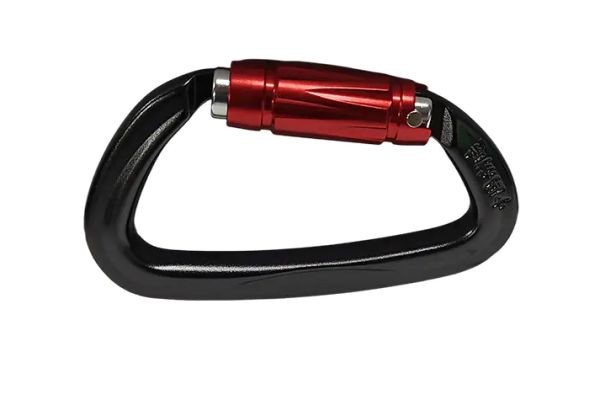
The range of products that rely on a hanging buckle [https://www.mp-safety.com/product/climbing-buckle/] is wider than it first appears. From a child's school backpack to a rigging line on a sailboat, from a retail display hook to a climbing harness attachment point, the same fundamental mechanism — a hardware component that suspends, connects, and often releases — shows up in remarkably varied forms across consumer, commercial, and industrial categories.
What unifies all of these applications is the relationship between the buckle's gate or slot geometry and the strap, cord, or anchor it interfaces with. Get that interface wrong — a gate that's too narrow for the intended ring, a slot that doesn't grip the webbing width, or a spring tension that's too light for the load — and the buckle becomes a liability rather than a solution.
Surface finish affects more than appearance. Black oxide provides mild corrosion resistance and a non-reflective surface used in tactical and utility gear. Nickel plating improves corrosion resistance and gives a bright finish suitable for consumer accessories. Hot-dip galvanizing is used on heavy steel hardware for outdoor and marine installation where salt exposure is continuous. Powder coating adds color options and a durable organic layer suitable for display hardware and consumer goods.
For procurement teams placing volume orders, requesting material certifications, finish adhesion test reports, and load test documentation ahead of first orders is standard practice. Hanging buckle [https://www.mp-safety.com/product/climbing-buckle/] hardware may look simple, but the tolerance stack between the buckle, the strap, and the anchor point has a direct effect on how the finished product performs in the hands of the end user — and whether it comes back as a return.






