
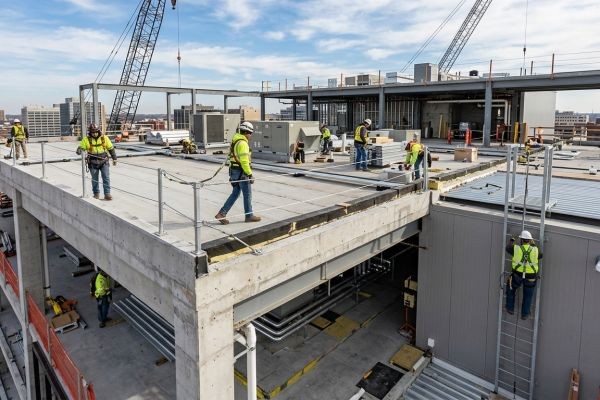
Working at heights is one of the most hazardous tasks across industries such as construction, roofing, maintenance, telecommunications, and manufacturing. Every year, falls from height result in serious injuries and fatalities, making reliable fall protection systems an essential part of workplace safety. Among the most effective solutions is the horizontal lifeline (HLL) system, which provides workers with continuous fall protection while allowing freedom of movement across elevated work areas.
Whether installing roofing, maintaining industrial facilities, or performing inspections, a horizontal lifeline helps create a safer and more productive work environment.
What Is a Horizontal Lifeline?
A horizontal lifeline is a fall protection system consisting of a flexible cable or rope securely anchored between two or more fixed points. Workers connect their personal fall arrest equipment—such as a full-body harness and lanyard—to the lifeline using a compatible connector or shuttle.
Unlike single-point anchor systems that limit movement, horizontal lifelines enable workers to move laterally across a work area while remaining continuously attached to the fall protection system.
How Does a Horizontal Lifeline Work?
The system is designed to maintain worker safety without requiring frequent disconnection and reconnection. The basic operation includes:
- Secure anchor points installed at both ends of the work area
- A high-strength cable or rope stretched horizontally
- Energy absorbers that reduce forces generated during a fall
- Personal protective equipment connected to the lifeline
If a fall occurs, the system absorbs and distributes the impact forces, reducing stress on both the worker and the anchor structure while preventing the worker from hitting lower levels.
Key Benefits of Horizontal Lifeline Systems
1. Continuous Fall Protection
One of the greatest advantages of a horizontal lifeline is uninterrupted protection. Workers remain attached throughout the task, minimizing the risks associated with disconnecting from one anchor point and reconnecting to another.
2. Greater Freedom of Movement
Horizontal lifelines allow users to move freely across rooftops, elevated platforms, bridges, or structural steel without constantly repositioning their anchor point. This flexibility improves both safety and efficiency.
3. Increased Productivity
Workers can focus on completing tasks rather than repeatedly adjusting their fall protection equipment. The result is smoother workflows and reduced downtime.
4. Suitable for Large Work Areas
For long rooftops, warehouses, industrial plants, or bridges, installing multiple fixed anchor points can be impractical. A horizontal lifeline offers a practical solution by covering a wider work area with fewer anchor locations.
5. Enhanced Worker Confidence
Knowing they are continuously protected helps workers perform their duties more confidently, leading to improved focus and reduced workplace stress.
Where Are Horizontal Lifelines Commonly Used?
Horizontal lifeline systems are widely used in industries where employees work at height, including:
- Commercial roofing projects
- Residential roof installations
- Building maintenance
- Industrial facilities
- Manufacturing plants
- Warehouses
- Bridges and infrastructure projects
- Telecommunications towers
- Solar panel installations
- Aviation maintenance facilities
Their versatility makes them a preferred choice across many sectors requiring reliable fall protection.
Important Components of a Horizontal Lifeline System
A complete horizontal lifeline system typically includes several essential components:
Anchor Points
Strong structural anchors provide the foundation of the entire system and must be capable of supporting the required loads.
Lifeline Cable
Usually constructed from galvanized or stainless steel, the cable provides durability, corrosion resistance, and long-term performance.
Energy Absorber
This component reduces the forces transferred during a fall, protecting both the worker and the supporting structure.
Intermediate Supports
For longer spans, intermediate brackets help support the cable while allowing connectors to pass through smoothly.
Personal Protective Equipment
Workers use compatible harnesses, lanyards, self-retracting lifelines, and connectors designed specifically for the horizontal lifeline system.
Factors to Consider Before Installing a Horizontal Lifeline
Choosing the right horizontal lifeline involves evaluating several factors:
Work Environment
Indoor and outdoor environments have different requirements. Exposure to weather, chemicals, or corrosive conditions may influence material selection.
Span Length
Longer spans require careful engineering to control cable deflection and ensure safe fall arrest performance.
Number of Users
Some systems support only one worker, while others are engineered for multiple simultaneous users.
Structural Integrity
The supporting structure must safely withstand the loads generated during normal use and fall arrest situations.
Compliance with Safety Standards
Always ensure the selected system complies with applicable workplace safety regulations and industry standards.
Maintenance and Inspection Best Practices
Regular inspection and maintenance are critical for keeping horizontal lifeline systems safe and effective.
Recommended practices include:
- Inspect the cable for wear, corrosion, or damage.
- Check anchor points for movement or structural issues.
- Examine connectors and hardware for signs of deterioration.
- Verify proper cable tension.
- Replace damaged components immediately.
- Schedule periodic inspections by qualified personnel.
- Maintain inspection records as part of workplace safety documentation.
Routine maintenance extends system life while ensuring reliable performance when it matters most.
Training Is Just as Important as Equipment
Even the highest-quality horizontal lifeline system cannot provide effective protection without proper worker training.
Training should cover:
- Correct harness fitting
- Proper connection techniques
- Equipment inspection procedures
- Safe movement while connected
- Emergency rescue planning
- Understanding system limitations
Well-trained workers are better prepared to recognize hazards and use fall protection equipment correctly.
Why Quality Matters in Fall Protection
Fall protection equipment should never be selected based solely on price. High-quality horizontal lifeline systems are engineered to perform under extreme conditions, offering dependable protection, durability, and long-term value.
Investing in reliable equipment helps organizations improve workplace safety, reduce downtime caused by incidents, and support compliance with occupational safety requirements.
Conclusion
A horizontal lifeline system is an essential component of modern fall protection, offering continuous safety, greater mobility, and improved efficiency for workers operating at height. From roofing and construction to industrial maintenance and infrastructure projects, these systems help reduce fall risks while allowing workers to perform their tasks confidently.
When combined with proper installation, regular inspections, ongoing maintenance, and comprehensive worker training, a horizontal lifeline becomes a valuable investment in workplace safety and operational success. Organizations that prioritize dependable fall protection not only safeguard their workforce but also foster a safer, more productive working environment.






