
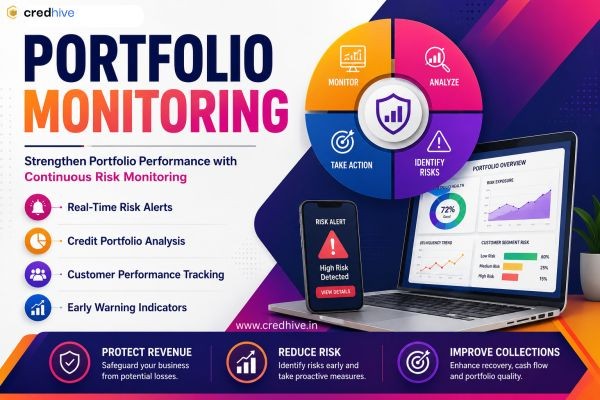
Risk does not always appear as a major event. In many cases, financial stress, compliance problems, operational issues, or credit deterioration develop gradually through smaller changes. A delayed payment, declining revenue, new litigation, regulatory non-compliance, or a change in ownership may each provide an early indication that a business relationship requires closer attention.
An early warning signals platform helps organizations identify and monitor these indicators before they develop into significant financial or operational problems. For banks, NBFCs, fintech companies, insurers, lenders, and enterprises, this can strengthen risk management and support faster, more informed decisions.
What Is an Early Warning Signals Platform?
An early warning signals platform is a technology solution that continuously monitors relevant business, financial, credit, legal, and compliance indicators to identify potential risks.
Instead of waiting for a borrower or counterparty to show clear signs of distress, organizations can monitor changes in risk indicators and investigate them when necessary.
The platform may track signals such as:
- Declining financial performance
- Payment delays or changing payment behavior
- Regulatory or GST compliance issues
- Litigation and legal developments
- Changes in directors or ownership
- Credit-related deterioration
- Significant corporate events
- Other changes affecting business stability
The exact signals monitored depend on the organization's industry, risk policies, and business relationships.
Why Are Early Warning Signals Important?
Traditional risk assessment often takes place at specific points, such as customer onboarding, loan approval, or annual reviews. However, business risk can change between these assessments.
For example, an NBFC may approve working capital financing for a company after reviewing strong financial statements. Six months later, the company's financial position may deteriorate, a significant legal dispute may arise, or its compliance status may change.
Without continuous monitoring, the lender may not identify these developments until repayment problems occur.
An early warning system provides visibility into these changes earlier, giving risk teams an opportunity to investigate and respond.
Key Features of an Early Warning Signals Platform
1. Continuous Business Monitoring
A platform continuously tracks selected indicators instead of relying solely on periodic reviews. This is particularly valuable for lenders managing large borrower portfolios or enterprises working with hundreds of suppliers.
2. Financial Risk Indicators
Changes in revenue, profitability, liabilities, cash flow, or other financial indicators can provide useful signals about a company's financial health.
A single change may not indicate distress, but multiple negative indicators occurring together can justify further investigation.
3. Legal and Litigation Monitoring
New lawsuits, regulatory actions, or other significant legal developments can affect a company's risk profile. Monitoring such events helps organizations understand whether additional due diligence is required.
4. Compliance Monitoring
Changes in GST filings, regulatory compliance, or corporate records can provide important risk indicators. Compliance intelligence can therefore become an important component of an early warning framework.
5. Ownership and Management Changes
Changes involving directors, promoters, or ownership may affect business relationships. Monitoring these events helps organizations identify situations where a refreshed assessment may be appropriate.
6. Automated Alerts and Prioritization
An effective platform should not simply generate large numbers of alerts. It should help risk teams identify which events require attention based on predefined rules, risk levels, or business priorities.
How Early Warning Signals Improve Credit Risk Management
For lenders, early warning signals can strengthen credit risk management throughout the loan lifecycle.
During underwriting, risk indicators can provide additional context before a credit decision is made. After disbursement, continuous monitoring can help identify changes that may affect repayment capacity.
For example, suppose a borrower shows declining financial performance along with increasing litigation and compliance concerns. Each indicator may require investigation, but their combination provides a stronger reason for the lender to reassess the exposure.
This enables credit teams to move from reactive problem management toward proactive portfolio risk management.
Early Warning Signals for Supplier and Counterparty Risk
The same approach applies outside lending.
Enterprises depend on suppliers, distributors, vendors, and other counterparties for critical business operations. If a major supplier experiences financial difficulties or regulatory problems, the impact can extend to procurement, production, customers, and revenue.
An early warning signals platform for supplier risk can help procurement and risk teams monitor relevant developments and identify potential disruptions earlier.
Similarly, financial institutions can use early warning signals for counterparty risk management, helping them maintain visibility into changing business relationships.
Benefits for Banks, NBFCs, and Enterprises
A well-designed early warning system can provide several practical benefits:
Earlier risk detection: Identify emerging problems before they become major losses.
Better decision-making: Give risk teams relevant information when reassessing exposure.
Improved portfolio quality: Support proactive management of borrowers and counterparties.
Operational efficiency: Reduce manual monitoring across large portfolios.
Stronger due diligence: Provide additional information for risk reviews and investigations.
Better resource allocation: Help teams focus on higher-priority cases rather than reviewing every relationship with the same intensity.
Choosing the Right Early Warning Signals Platform
Organizations should evaluate data coverage, monitoring frequency, alert quality, customization, integration capabilities, scalability, reporting, and security before selecting a platform.
The solution should integrate with existing lending, risk, procurement, CRM, or portfolio management workflows wherever possible. It should also allow organizations to define monitoring criteria according to their specific risk policies.
Most importantly, an early warning platform should produce actionable signals rather than information overload. Too many low-value alerts can increase workload and make it harder for risk teams to identify genuinely important developments.
How Credhive Supports Early Risk Detection
Credhive combines business intelligence, risk assessment, Business Information Reports, Portfolio Monitoring, and early warning signals to help organizations monitor changing business conditions. Banks, NBFCs, fintech companies, insurers, and enterprises can use these capabilities to track borrowers, customers, suppliers, and counterparties. By bringing financial, legal, compliance, and business indicators into a unified view, Credhive helps teams identify potential risks earlier and take informed action.
Conclusion
An early warning signals platform helps organizations understand how risk is changing rather than simply measuring risk at a single point in time. Continuous monitoring of financial, legal, compliance, ownership, and business indicators can provide valuable context for credit and risk decisions.
For banks, NBFCs, lenders, insurers, and enterprises, the objective is not to eliminate risk but to identify meaningful changes early enough to respond. When integrated with risk assessment and portfolio monitoring, early warning signals can become an important part of a proactive risk management strategy.
FAQs
What are early warning signals in risk management?
Early warning signals are indicators that may suggest increasing financial, credit, operational, legal, or compliance risk before a significant adverse event occurs.
How does an early warning signals platform work?
It monitors selected business and risk indicators, identifies relevant changes, and generates alerts or insights based on predefined rules and risk criteria.
Why are early warning signals important for NBFCs?
They help NBFCs monitor borrowers after loan approval, identify emerging credit risks, and determine when additional investigation or exposure review may be necessary.
Can early warning signals be used for supplier risk?
Yes. Organizations can monitor suppliers for financial, compliance, legal, ownership, and other changes that could indicate potential supply chain or third-party risk.
What is the difference between risk assessment and early warning signals?
Risk assessment evaluates risk at a particular stage, while early warning signals focus on detecting changes in risk over time through continuous monitoring.






