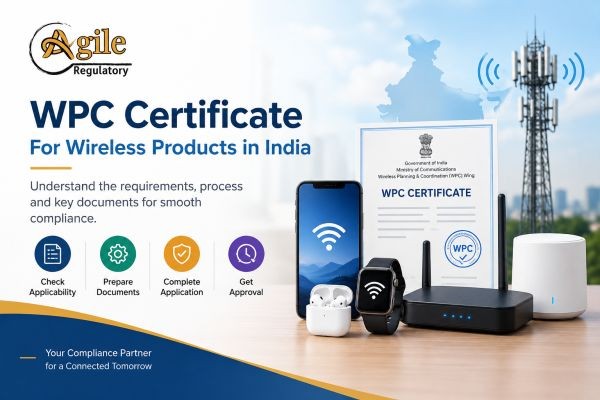
Wireless product compliance in India can involve technical documents, frequency information, testing requirements, and regulatory procedures. For businesses unfamiliar with Indian telecom regulations, understanding the correct compliance route can be challenging. Delays may occur when product specifications are incomplete, documents are inconsistent, or the wrong approval category is selected.
A WPC consultant can help businesses understand the applicable requirements and organize the information needed for their wireless products. Professional guidance can make the process more structured, although the final approval remains subject to the relevant government authority and applicable regulations.
What Does a WPC Consultant Do?
A consultant generally assists with the regulatory aspects of wireless product compliance. Depending on the product and project requirements, this may include:
- Reviewing product specifications
- Identifying the relevant approval category
- Checking technical documentation
- Coordinating required testing
- Preparing application information
- Identifying documentation gaps
- Assisting with regulatory submissions
- Following up on application-related requirements
The exact scope of assistance depends on the product, its wireless features, and the type of approval being pursued. A consultant may also help businesses understand whether their product requires a WPC Equipment Type Approval, an import-related authorization, or another applicable compliance process.
Understanding WPC Certification Cost
The WPC certification cost is not necessarily the same for every product. Expenses may depend on several factors, including the approval category, testing requirements, number of models, laboratory charges, documentation, government fees, and professional assistance.
For this reason, businesses should be cautious about websites or advertisements that present one fixed price for every wireless product. A Bluetooth device, Wi-Fi router, tracking device, radio module, or other wireless equipment may have different technical and regulatory requirements.
A more practical approach is to first evaluate the product and determine its regulatory category. Once the technical requirements are understood, businesses can estimate the likely testing, documentation, application, and consultancy expenses more accurately.
Why Technical Specifications Matter
Wireless equipment is regulated according to its technical characteristics. Important information may include:
- Operating frequency
- Transmitting power
- Wireless technology
- Antenna details
- Product model
- Manufacturer information
- RF test results
- User manual and product photographs
These details should be consistent across the application, test reports, technical datasheets, and supporting documents. If information is incomplete or inconsistent, the authority or reviewing team may request clarification, revised documents, or additional evidence.
When Professional Assistance Can Be Useful
Professional assistance can be particularly useful for importers, manufacturers, startups, and companies introducing new wireless products into India. It can help reduce avoidable errors, improve document organization, and provide a clearer understanding of the expected compliance steps.
A consultant may also help businesses plan compliance before importing or launching a product. Early review can be valuable because regulatory issues identified after shipment may lead to delays, additional costs, or difficulties with customs and market entry.
However, a consultant does not replace the regulatory authority. The final approval or authorization remains subject to applicable government requirements, document review, and the official decision-making process.
Final Thoughts
WPC compliance should begin with a proper understanding of the product rather than with the application form itself. Reviewing the wireless technology, technical specifications, testing documents, and applicable regulatory route can help businesses approach the process in a more organized and efficient way.
By preparing accurate information and seeking professional guidance where necessary, businesses can better understand potential WPC certification costs and reduce the risk of avoidable compliance delays.






