
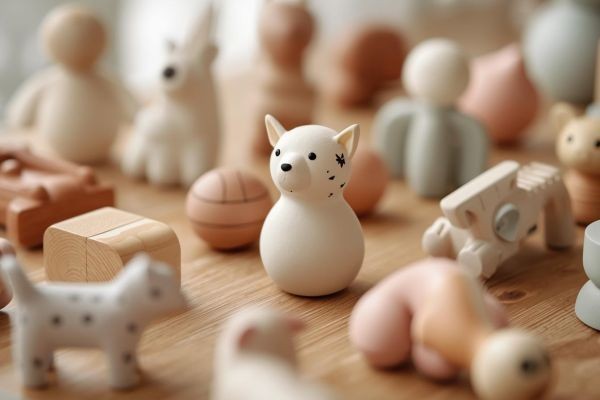
Fairy toys stand out among children's playthings for their exceptional ability to spark creativity and develop storytelling abilities. Unlike toys with predetermined functions or digital games with scripted narratives, fairy toys provide blank canvases where children write their own stories, create their own rules, and explore unlimited imaginative possibilities. This open-ended creative play builds essential skills that extend far beyond the playroom into academic success and lifelong creative thinking. At MyToyWagon, we recognize that fairy toys are not just entertainment—they're powerful tools for developing the creative and narrative abilities children need to express themselves, solve problems, and think innovatively throughout life.
Providing Open-Ended Play Opportunities
The greatest strength of fairy toys lies in their lack of predetermined outcomes or correct ways to play. When children pick up fairy dolls or arrange fairy gardens, they face infinite possibilities rather than fixed instructions. This freedom encourages original thinking as children must decide what happens next without external guidance. Should the fairy explore the forest or visit the castle? Is she brave or shy? Does she have magical powers or special friends? Every decision exercises creative muscles and builds confidence in personal ideas. Unlike toys that perform specific functions when buttons are pressed, fairy toys respond only to children's imaginations, making them the directors, writers, and performers of their own shows. This autonomy teaches children that their ideas have value and that creativity is a skill they possess and control. The absence of right or wrong answers in fairy play removes fear of failure, encouraging risk-taking and experimentation essential for creative development.
Developing Complex Narrative Structures
Playing with fairy toys naturally teaches storytelling fundamentals that form the foundation for writing and communication skills. Children instinctively create narratives with clear beginnings when they introduce fairy characters and settings. They develop middles filled with action, conflict, and adventure as fairies face challenges or go on quests. They construct satisfying endings where problems resolve and characters achieve goals. This three-act structure appears in literature, film, and communication across cultures, and children internalize it through fairy play without formal instruction. As children advance, their fairy stories incorporate more sophisticated elements like character development, multiple plot lines, foreshadowing, and themes. They learn that compelling stories need obstacles to overcome, not just happy circumstances. Fairy toys encourage creating distinct personalities for different characters, teaching that individuals have unique motivations, fears, and desires. This character depth transfers to understanding people in real life and creates more nuanced, empathetic thinkers.
Building Descriptive Language and Vocabulary
Fairy play naturally expands vocabulary and language complexity. Children describe enchanted forests with towering trees and sparkling streams, elaborate fairy dresses with flowing ribbons and glittering wings, and magical spells with mysterious powers. This rich descriptive language far exceeds everyday conversation and builds the expressive vocabulary children need for writing. Fairy scenarios introduce words like castle, kingdom, quest, enchanted, spell, wand, and potion that appear throughout fantasy literature. Children practice using adjectives, adverbs, and complex sentence structures as they narrate fairy adventures. The need to distinguish between multiple fairy characters encourages precise language and clear communication. Parents can enhance this learning by asking questions during play that prompt detailed descriptions: "What does the fairy's house look like inside?" or "How did the fairy feel when that happened?"
Fostering Problem-Solving and Plot Development
Effective stories require conflict and resolution, and fairy play teaches children to create and solve problems creatively. When a fairy faces an obstacle—a locked door, a scary dragon, a lost friend—children must imagine solutions. Should the fairy use magic, ask for help, or find a clever trick? This problem-solving through narrative builds critical thinking skills applicable far beyond play. Children learn that challenges make stories interesting and that characters grow through overcoming difficulties. They experiment with cause and effect, seeing how their narrative choices create consequences.
Encouraging Collaborative Storytelling
When children play with fairy toys together, they practice collaborative creativity, negotiating story directions, compromising on plot points, and building on each other's ideas. This cooperative storytelling teaches flexibility, active listening, and the value of diverse perspectives.
At MyToyWagon, we celebrate fairy toys as creativity catalysts that transform playtime into writing workshops, imagination gymnasiums, and storytelling laboratories where children develop the creative thinking skills that will serve them throughout education, careers, and personal expression.






