
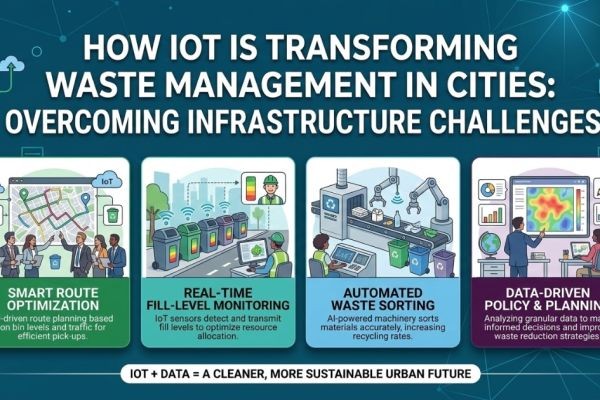
Urban waste management has become one of the most pressing challenges for modern cities. Rapid urbanization, population growth, and increased consumption generate enormous volumes of waste every day. According to the World Bank, global waste generation will reach 3.4 billion tonnes annually by 2050, up from around 2.24 billion tonnes today. Meanwhile, research from the International Telecommunication Union indicates that more than 15 billion IoT devices are already active worldwide, with cities increasingly adopting them to manage infrastructure and public services.
Municipal authorities face rising operational costs, inefficient collection routes, and limited visibility into waste generation patterns. Traditional waste collection methods depend on fixed schedules and manual monitoring. These approaches often lead to overflowing bins in busy areas and unnecessary collection trips in low-traffic zones.
The Internet of Things (IoT) introduces a data-driven approach to urban waste management. Connected sensors, real-time analytics, and automated routing help cities improve collection efficiency and reduce operational costs. Many municipalities now work with an IoT Development Company to deploy smart waste management solutions that address long-standing infrastructure issues.
The Growing Waste Management Challenge in Cities
Urban environments produce massive volumes of residential, commercial, and industrial waste. Managing this waste requires large transportation networks, collection staff, recycling infrastructure, and landfill management.
Cities face several operational barriers:
- Inconsistent waste collection schedules
- Overflowing bins in high-density areas
- High fuel and transportation costs
- Limited data on waste generation patterns
- Poor monitoring of recycling and landfill usage
Traditional waste systems rely on manual inspection or static routes. Waste trucks follow predetermined schedules regardless of whether bins are full or empty. This approach wastes resources and increases traffic congestion.
Urban infrastructure must adapt to growing populations and higher waste volumes. Municipalities now explore digital systems to support smarter waste operations.
What Is IoT-Based Waste Management?
IoT-based waste management uses connected devices, sensors, and cloud platforms to monitor and control waste collection processes.
These systems collect data from waste bins, collection vehicles, and transfer stations. The data flows into centralized platforms where analytics tools evaluate patterns and trigger operational actions.
Typical components include:
- Smart waste bins with fill-level sensors
- GPS tracking for waste collection vehicles
- Cloud-based data platforms
- Route optimization software
- Mobile dashboards for municipal staff
A specialized IoT Development Company often designs and integrates these systems with existing municipal infrastructure. The result is a connected ecosystem that provides continuous visibility into waste operations.
Key Technologies Driving Smart Waste Management
Several technologies work together to support modern waste management platforms.
1. Smart Sensors
Sensors installed in bins detect fill levels, temperature, and movement. Ultrasonic sensors measure how full a container is. When waste reaches a threshold, the system sends an alert to the central platform.
Benefits include:
- Reduced bin overflow
- Real-time monitoring
- Efficient scheduling of pickups
2. GPS and Fleet Tracking
Waste collection vehicles use GPS modules to transmit location and route information. Fleet managers can monitor vehicle performance, fuel consumption, and route efficiency.
This visibility improves scheduling and reduces unnecessary trips.
3. Data Analytics Platforms
Data analytics tools process information from thousands of bins and vehicles. Algorithms identify trends such as peak waste generation hours or high-demand areas.
These insights support better operational planning and infrastructure development.
4. Cloud and Edge Computing
Cloud platforms store and analyze large datasets generated by IoT devices. Edge computing processes certain data directly on devices to reduce latency and network load.
This architecture ensures that the system operates efficiently even in large cities.
How IoT Solves Infrastructure Challenges
Many urban waste management issues originate from infrastructure limitations. IoT technologies address these issues through real-time data and automated decision-making.
Improving Collection Efficiency
Smart bins notify waste management systems when they approach capacity. Collection teams receive alerts and dispatch vehicles only when necessary.
This method prevents:
- Overflowing bins
- Unnecessary collection trips
- Excessive fuel consumption
Optimizing Collection Routes
Route optimization algorithms analyze bin data and traffic conditions to generate the most efficient routes.
Benefits include:
- Reduced travel distance
- Lower fuel costs
- Faster collection cycles
Enhancing Recycling Programs
Smart waste systems track recycling rates and contamination levels. Authorities can identify neighborhoods where recycling participation remains low and adjust policies accordingly.
Data transparency helps cities design targeted awareness campaigns and improve recycling infrastructure.
Supporting Predictive Maintenance
Sensors also detect mechanical issues in bins or vehicles. Maintenance teams receive alerts before equipment failure occurs.
Predictive maintenance reduces downtime and extends equipment lifespan.
Real-World Example: Barcelona’s Smart Waste System
The city of Barcelona has implemented one of the most recognized IoT-based waste management systems.
Barcelona installed smart sensors in waste containers across several districts. These sensors transmit fill-level data to a central platform that optimizes collection schedules.
Results reported by the Barcelona City Council include:
- 25% reduction in waste collection costs
- Significant decrease in fuel consumption
- Improved cleanliness in public areas
The city also integrates waste management data with other smart city services, including traffic monitoring and urban planning tools.
This example demonstrates how data-driven waste systems can improve urban infrastructure while reducing environmental impact.
Role of IoT Development Companies in Implementation
Municipal waste departments rarely build IoT platforms internally. Implementation usually involves collaboration with a specialized IoT Development Company.
These companies handle several responsibilities:
- Designing sensor networks
- Integrating IoT platforms with municipal systems
- Developing analytics dashboards
- Managing device connectivity and security
- Maintaining cloud infrastructure
Successful deployments require strong integration between hardware, software, and operational workflows. IoT developers ensure that data flows reliably from devices to decision-making platforms.
Environmental and Sustainability Benefits
Smart waste systems support environmental goals by improving resource efficiency.
Key environmental advantages include:
- Lower greenhouse gas emissions from reduced vehicle travel
- Higher recycling rates due to better waste segregation
- Reduced landfill usage
- Improved urban cleanliness
Waste management systems also help cities measure environmental impact through detailed data reports.
Municipal leaders can track:
- Waste generation trends
- Recycling performance
- Emission reductions
These metrics support long-term sustainability planning.
ROI and Business Impact for Cities
IoT-enabled waste systems require initial investment in sensors, communication networks, and software platforms. However, operational savings often offset these costs.
Typical measurable impacts include:
- 20–30% reduction in collection costs
- 15–25% reduction in fuel consumption
- Lower maintenance expenses through predictive monitoring
- Improved workforce productivity
Cities also benefit from indirect economic advantages. Cleaner urban environments improve tourism and public health outcomes.
Data-driven waste management helps municipalities allocate resources more effectively and justify infrastructure investments.
Challenges in IoT Waste Management Adoption
Despite clear benefits, cities face several challenges when implementing smart waste management solutions.
Infrastructure Compatibility
Older waste systems often lack digital connectivity. Integrating sensors and analytics platforms requires upgrades to existing infrastructure.
Data Security and Privacy
IoT networks collect large volumes of operational data. Cities must ensure secure communication protocols and proper data governance.
Initial Investment Costs
Hardware installation, connectivity infrastructure, and software development require upfront funding. Budget constraints can delay projects.
Workforce Training
Municipal employees must learn how to operate new digital platforms and interpret analytics dashboards.
Addressing these challenges requires careful planning and collaboration between technology providers and city authorities.
Future Trends in Smart Waste Management
IoT waste management systems will continue evolving as new technologies emerge.
Several trends are shaping the next phase of development:
- AI-powered waste prediction models
- Robotic waste sorting in recycling facilities
- Blockchain-based waste tracking
- Autonomous waste collection vehicles
- Integration with broader smart city ecosystems
Cities increasingly view waste management as a data-driven infrastructure system rather than a manual public service.
Final Thoughts
Urban waste management requires modern infrastructure capable of handling rising waste volumes. IoT technologies provide the visibility and automation that traditional systems lack. Smart sensors, data analytics, and connected platforms allow cities to monitor waste generation and respond quickly to operational needs.
Smart waste management solutions help municipalities improve efficiency, reduce environmental impact, and control operational costs. With continued advancements in connected technologies, IoT will play a central role in shaping cleaner and more sustainable cities. Collaboration between municipal authorities and experienced technology providers will remain essential for successful deployments.
FAQs
1. What are smart waste management solutions?
Smart waste management solutions use IoT sensors, data platforms, and analytics tools to monitor waste levels and optimize collection routes. These systems improve efficiency and reduce operational costs.
2. How do IoT sensors work in waste bins?
Sensors measure fill levels using ultrasonic or infrared technology. When waste reaches a predefined level, the system sends alerts to the waste management platform.
3. Can IoT reduce waste management costs?
Yes. Cities often report reductions of 20–30% in operational costs due to optimized routes, lower fuel consumption, and fewer unnecessary collection trips.
4. Is IoT waste management suitable for small cities?
Yes. Smaller municipalities can start with limited deployments in high-density areas and expand the system gradually based on performance and budget.
5. What role does an IoT Development Company play?
An IoT Development Company designs sensor networks, develops analytics platforms, integrates systems with municipal infrastructure, and ensures secure data communication.






