
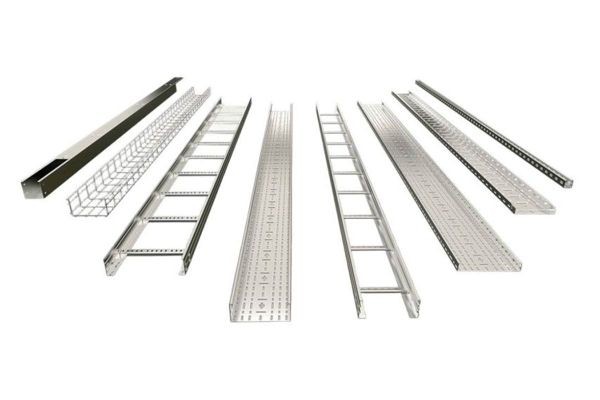
Throughout the transition to modern automated industry systems, the requirement for large capacity power distribution and frequent system upgrading has been the driving force for the choice of cable management systems over conventional conduit piping. Cable Tray has been innovatively designed as open structural support means that it does not hinder but facilitates cables routing, ensures safety, thermal efficiency, and allows scaling up without any problem. In this way, the industry enjoys the benefits of this strategy in terms of both operation and economy in the long run.
Shift from Conduit to Open Cable Support Systems
It is known that traditionally, conduits have been used as the main means for cable management due to their enclosed protection. However, as facilities grew and power densities increased, conduits started to show their shortcomings in terms of flexibility and maintenance. The open support systems give the possibility of laying, accessing, and managing cables without the need for a large dismantling, which makes these systems more appropriate for factories, data centers, and infrastructure projects that are of great interest for the future of the industry and which require the adaptability feature.
Superior Thermal Performance
Perhaps the most significant one among the advantages of open cable support is their ability to very quickly get rid of the heat generated during operation. Enclosed cable trays are often the source of heat since they tend to trap it, this is why engineers have to derate the cables or use thicker ones increasing the overall cost. Open configurations provide for natural ventilation of cables hence they can work at their full ampacity without overheating. Such a thermal efficiency is thus directly linked to longer cable life and less insulation failure in the case of continuous, duty environments.
Some of the key thermal advantages are:
- Natural convection cooling preventing the buildup of heat
- Reduced need for oversizing conductors
- Electrical safety improved under heavy load conditions
Ease of Maintenance and Faster Fault Resolution
Good maintenance performance largely contributes to industrial uptime which is very important. In the case of conduits, cables have to be pulled through long, narrow, and sometimes bent paths which is hard and time-consuming, whereas open systems make all cables visible and accessible along their length. The staff can inspect, identify, replace, or install the cables with the least possible disruption. Such an accessibility can bring down the time spent on maintenance significantly and the labor cost during the upgrading or troubleshooting stages is also lowered.
Scalability That Supports Future Expansion
Industrial facilities do not usually stay the same for a long time. Production lines get larger and new machines installed, and the electrical power needs sometimes change. Open cable routing systems are backed by future growth plans, so adding new circuits does not mean you have to install completely new routes. Their scalability is what makes them a great solution for facilities that will do a phased expansion or have frequent changes of layouts.
The scalability benefits are:
- A new cable can be easily added without any structural changes
- Expansion work can be done with less downtime
- There will be cost savings in the long run due to the reusable infrastructure
Space Optimization and Cleaner Layouts
The use of individual conduits for each of hundreds of circuits can very quickly result in a ceiling and wall area that are overcrowded and thus congested. Just one organized support system can easily hold several power and data lines in one simplified path. Besides saving space, this also makes the site look better and eases the work of other building services like HVAC and fire protection systems.
Application-Specific Designs for Diverse Needs
Different environments require different configurations. For example, perforated cable managment systems are often preferred in areas where balanced ventilation and moderate load capacity are essential, while enclosed designs may be used where cable segregation is required. Similarly, a raceway cable management system is beneficial in commercial interiors where protection and clean routing are both priorities. When paired with advanced manufacturing standards, solutions from Super Cable Tray Pvt. Ltd. using Raceway Cable Tray configurations demonstrate how structured routing can align safety, durability, and visual order within demanding industrial and commercial installations.
Lower Total Cost of Ownership Over Project Lifecycles
Open support systems for cables such as those found in industrial settings may seem to have a higher initial material cost than basic conduits, but the overall lifecycle cost is dramatically lower. The quicker installation, less maintenance of the system, and simple scalability are some of the ways that savings can be observed over the years. The industries, therefore, experience fewer shutdowns, lower labor costs, and longer service life of both cables and supporting structures.
Cost-efficiency factors are:
- Reduced installation labor and time
- Minimal use of pull boxes and complex fittings
- Long-term durability in harsh environments
Modern Industrial Compliance and Safety Standards
Open cable support systems like Perforated Cable Trays are a great help to facilities in meeting the ever, changing safety and regulatory requirements. This they do by ensuring that cables are well, organized, elevated, and properly ventilated. Inspection is made easier by the good visibility, while well, planned routing reduces the risk of cable wear, overheating, and even accidental damage. This methodical system is in line with the relevant regulations and also improves the reliability of the whole operation.
Conclusion
As industries continue to adopt automation, high-density power distribution, and scalable layouts, open cable support systems have proven to be a smarter alternative to traditional conduits. Their advantages in thermal management, maintenance efficiency, scalability, and cost control make them a preferred solution for modern infrastructure planning. With engineered solutions from Super Cable Tray Pvt. Ltd., industries can confidently invest in organized, durable, and adaptable cable management systems that support both present demands and future growth.






