
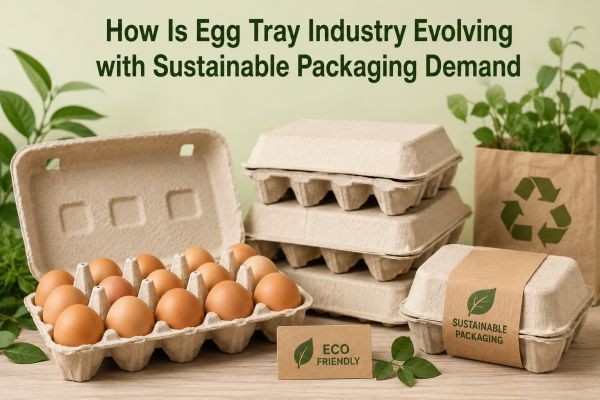
The global packaging industry is rapidly shifting toward sustainable and recyclable materials, driven by environmental regulations and changing consumer behavior. Within this transformation, molded fiber-based products such as egg trays are gaining significant traction due to their cost efficiency, protective functionality, and eco-friendly composition. Their role in reducing plastic dependency is becoming increasingly important across food distribution systems.
According to insights from the MarkNtel Advisors report on egg packaging solutions outlook, the industry is witnessing steady expansion supported by rising demand from poultry production and retail supply chains. International institutions such as the Food and Agriculture Organization (FAO) of the United Nations highlight that effective packaging plays a crucial role in reducing food losses and improving supply chain efficiency, especially in perishable protein products like eggs.
Growing Demand for Sustainable Packaging Solutions
Egg trays are primarily manufactured from recycled paper pulp, making them one of the most widely adopted biodegradable packaging solutions in the poultry industry. Their design ensures safe handling, reduced breakage, and efficient stacking during transportation. As global sustainability standards tighten, industries are increasingly transitioning from plastic-based packaging to fiber-based alternatives.
The United Nations Environment Programme (UNEP) emphasizes that reducing plastic waste through circular economy practices is essential for long-term environmental stability. This has strengthened the adoption of molded fiber packaging, including egg trays, across multiple regions.
Industry Drivers Supporting Market Expansion
The growth of the egg tray industry is closely linked to rising egg consumption worldwide and the need for efficient logistics in the food supply chain. The United States Department of Agriculture (USDA) highlights that efficient storage and transport systems are essential for maintaining food safety and minimizing post-harvest losses in poultry products.
Additionally, increasing government regulations on single-use plastics are encouraging manufacturers to adopt recyclable materials. This shift is particularly evident in developed economies where packaging waste management policies are becoming stricter.
Sustainability Regulations and Environmental Influence
Environmental policies play a major role in shaping the adoption of egg trays globally. The European Commission’s Packaging and Packaging Waste Directive promotes the use of recyclable and reusable packaging materials, pushing industries toward fiber-based alternatives.
Similarly, the United States Environmental Protection Agency (EPA) supports recycling programs that encourage the use of post-consumer waste in manufacturing processes, which directly benefits molded pulp packaging production.
Material Innovation and Manufacturing Advancements
Manufacturers in the egg tray industry are increasingly focusing on improving durability, moisture resistance, and structural integrity while maintaining recyclability. Molded pulp remains the dominant material due to its cost-effectiveness and environmental benefits. Innovations in drying technology and automated molding systems are helping improve production efficiency and scalability.
Despite these advancements, challenges such as raw material availability and moisture sensitivity continue to influence product performance in certain logistics environments. This has encouraged ongoing research into enhanced fiber blends and protective coatings.
Challenges in the Egg Tray Industry
While demand for sustainable packaging is rising, the industry faces operational constraints related to recycling supply chain fluctuations and quality consistency of raw materials. In addition, extreme weather conditions during transport can sometimes affect product durability, requiring further innovation in design and material engineering.
These challenges are prompting manufacturers to invest in advanced processing technologies and improved waste collection systems to ensure stable production cycles and product reliability.
Future Outlook
The egg tray industry is expected to remain closely aligned with global sustainability trends and circular economy initiatives. Growing regulatory support, combined with increasing consumer preference for environmentally responsible packaging, is likely to sustain demand for molded fiber solutions.
As packaging standards continue to evolve, egg trays will continue playing a vital role in food safety, logistics efficiency, and environmental protection across global supply chains.






