
If you’ve been diagnosed with a ruptured or perforated eardrum, one of the first questions you probably have is: how long will it take to heal? The answer depends on the size of the tear, the cause of the injury, and how well your ear is cared for during recovery.
ENT specialists in Austin often see patients with eardrum injuries caused by infections, loud noise trauma, pressure changes, or physical injury. The good news is that most eardrum injuries heal on their own but the timeline can vary.
In this guide, we’ll break down healing time, symptoms, treatment options, and when procedures like eardrum repair Austin services may be needed.
What Is a Ruptured Eardrum?
A ruptured (or perforated) eardrum happens when the thin tissue separating your ear canal from your middle ear gets torn.
Common causes include:
- Middle ear infections
- Sudden loud noises (acoustic trauma)
- Barotrauma (sudden pressure changes, like flying or diving)
- Injury from cotton swabs or foreign objects
- Head trauma
When the eardrum is damaged, it can affect hearing and increase the risk of infection.
How Long Does Eardrum Healing Take?
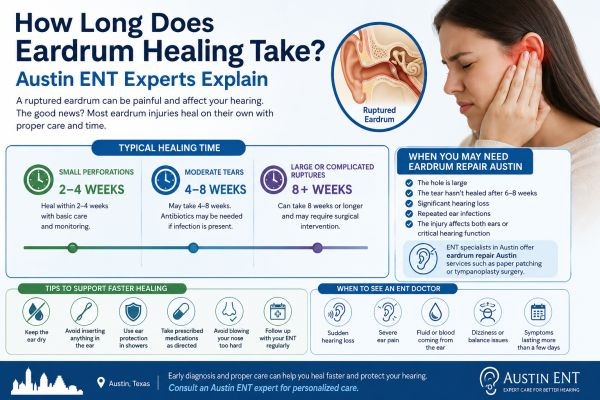
In most cases, a small ruptured eardrum heals naturally within 3 to 6 weeks. However, healing time can vary:
1. Small perforations
- Heal within 2–4 weeks
- Often require only basic care and monitoring
2. Moderate tears
- May take 4–8 weeks
- Sometimes need antibiotics if infection is present
3. Large or complicated ruptures
- Can take 8 weeks or longer
- May not heal on their own and require surgical intervention
ENT doctors in Austin emphasize that proper care during healing is critical to avoid delays or complications.
Signs Your Eardrum Is Healing
As your eardrum recovers, you may notice:
- Gradual improvement in hearing
- Less ear pain or pressure
- Reduced fluid discharge
- Fewer ringing sensations (tinnitus)
If symptoms worsen instead of improving after a couple of weeks, it may indicate infection or a non-healing perforation.
When You May Need Eardrum Repair Austin Treatment
While many cases heal naturally, some require medical procedures. eardrum repair Austin services are usually recommended when:
- The hole is large
- The tear hasn’t healed after 6–8 weeks
- Hearing loss is significant
- Repeated ear infections occur
- The injury affects both ears or critical hearing function
ENT specialists may recommend procedures such as:
- Paper patching (for small perforations)
- Tympanoplasty surgery (for larger or chronic cases)
Tympanoplasty is a common surgical solution that repairs the eardrum using a tissue graft, helping restore hearing and prevent future infections.
What Affects Healing Time?
Several factors influence how quickly your eardrum heals:
1. Size and location of the perforation
Larger tears naturally take longer to close.
2. Infection
Ongoing infections slow down healing and may worsen damage.
3. Water exposure
Water entering the ear can delay recovery or cause complications.
4. Overall health
People with diabetes or weakened immune systems may heal more slowly.
5. Treatment compliance
Following ENT instructions carefully speeds up recovery.
How to Support Faster Healing
If you want your eardrum to heal properly, ENT experts recommend:
- Keep the ear dry (avoid swimming)
- Use ear protection during showers
- Avoid inserting anything into the ear canal
- Take prescribed antibiotics if needed
- Avoid blowing your nose too hard
- Follow up with your ENT specialist regularly
Simple care habits can make a big difference in healing time.
Can You Lose Hearing Permanently?
Most eardrum perforations do not cause permanent hearing loss. Hearing usually returns to normal once the eardrum heals.
However, untreated or repeated injuries can lead to:
- Chronic hearing problems
- Persistent infections
- Middle ear damage
That’s why timely evaluation and, if necessary, eardrum repair Austin treatment is important.
When to See an ENT Doctor
You should see a specialist if you experience:
- Sudden hearing loss
- Severe ear pain
- Fluid or blood coming from the ear
- Dizziness or balance issues
- Symptoms lasting more than a few days
ENT doctors in Austin can diagnose the issue using a simple ear exam and recommend the right treatment plan.
Recovery After Treatment
If surgery like tympanoplasty is required, recovery usually involves:
- Mild discomfort for a few days
- Avoiding heavy activity for 1–2 weeks
- Keeping the ear dry for several weeks
- Follow-up visits to monitor healing
Most patients experience improved hearing after full recovery.
Final Thoughts
Eardrum injuries are common and often heal on their own within a few weeks. However, healing time depends on the severity of the damage and how well you protect your ear during recovery.
If healing is slow or symptoms persist, eardrum repair Austin treatments offered by ENT specialists can restore hearing and prevent complications.






