
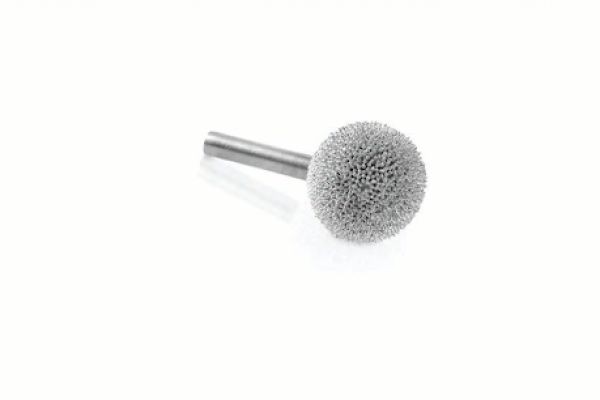
In tire repair and retreading operations, precision and surface preparation are critical for lasting, reliable results. One tool that technicians rely on for enhancing hole quality and finishing is the nail hole reamer. Although often overlooked compared to larger buffing tools, nail hole reamers play an essential role in chamfering and finishing work, especially when preparing small punctures or bias tire repairs. Their targeted function complements broader surface preparation processes, such as tire buffing for repair and the use of a tire buffing wheel.
What Is a Nail Hole Reamer?
A nail hole reamer is a specialized rotary tool designed to refine and enlarge small pre‑existing holes, such as punctures caused by nails or sharp debris, so they are better suited for patching or plug installation. Unlike drills, reamers do not create new holes; they follow an existing opening and remove a controlled, minimal amount of material to achieve a clean, uniform finish. This process ensures that the hole’s interior surface is free of irregularities and meets precise dimensional needs before repair materials are applied.
In tire applications, nail hole reamers are often part of 1/4″ shaft tool kits used by professionals. These tools are specifically indicated for bias tires and are crafted to work efficiently within the unique material properties and curvature of tire rubber.
The Role of Chamfering in Tire Repair
Chamfering refers to the process of beveling or rounding the edges of an existing hole. In tire repair, chamfering achieves several key objectives:
- Smooth Transition for Repair Inserts: A chamfered edge removes sharp, ragged rubber fibers that can interfere with patch or plug seating.
- Improved Adhesion: By creating a gradual, uniform edge, the repaired area allows adhesives and bonding agents to distribute more evenly, improving bond strength.
- Reduced Stress Concentrations: Sharp edges can lead to stress concentrations that might weaken the repair under load; chamfering distributes stress more evenly around the repair site.
How Nail Hole Reamers Enhance Finishing Work
Improved Surface Consistency
A nail hole reamer smooths irregular edges and rubber fragments, creating a uniform hole profile that enhances mechanical and adhesive contact, increasing the durability of tire repairs.
Reduced Risk of Repair Failure
Reamers remove minimal material, preserving tire structure while preparing holes for plugs and patches, reducing leaks, pull-outs, and improving overall repair reliability.
Compatibility With Other Tools
Nail hole reamers complement tire buffing for repair and a tire buffing wheel, refining holes after large-scale buffing to optimize surface texture and repair adhesion.
Best Practices for Using Nail Hole Reamers
To get the most out of nail hole reamers in chamfering and finishing work, technicians should follow these best practices:
- Use at Appropriate Speeds: Reamers are designed to remove a small amount of material; operating at excessive speeds can heat the rubber and compromise both tool life and finish quality.
- Maintain Clean Cutting Edges: Reamers should be cleaned of rubber debris to ensure consistent cutting performance and avoid friction that can deform the hole’s shape.
- Pair With Full Surface Buffing: Combining hole reaming with surface buffing ensures that both the hole and the surrounding rubber surface are optimally prepared for strong patch adhesion.
Conclusion
A nail hole reamer is more than just a small accessory in a tire technician’s toolkit; it is a precision tool that significantly improves chamfering and finishing work on punctured or damaged tires. By refining hole edges, promoting consistent surfaces, and reducing the likelihood of repair failure, reamers enhance both the quality and longevity of repairs. While broader processes like tire buffing for repair and the use of a tire buffing wheel prepare and texture larger tire areas, the focused application of a nail hole reamer, alongside a tire buffer wheel, ensures the critical final details are addressed. Properly used as part of a comprehensive repair workflow, these tools help professionals deliver secure, high‑performance tire repairs every time. In the context of tire workshops and retreading facilities, choosing quality chamfering and finishing tools, including a tire buffer wheel for initial surface prep, ensures technicians can achieve reliable, durable outcomes.






