
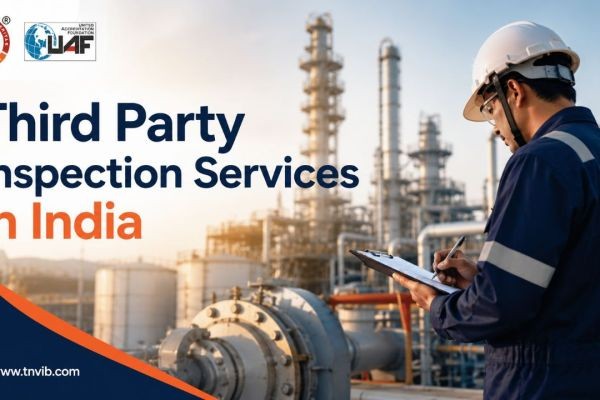
Product quality has a direct impact on customer satisfaction, brand reputation, production costs, and long-term business growth. A single defective batch can lead to rejected orders, costly rework, delayed deliveries, warranty claims, and the loss of important customers.
For manufacturers, buyers, exporters, project owners, and procurement teams, relying only on internal quality checks may not always provide enough assurance. Internal teams may be familiar with their own processes, but they may also overlook recurring issues or face pressure to meet production deadlines.
This is where third party inspection services become valuable.
Independent inspectors provide an objective assessment of products, materials, equipment, and manufacturing processes. Their role is to identify defects, verify compliance with specifications, and provide reliable evidence before products are accepted, shipped, installed, or put into use.
By using professional independent inspection services, businesses can detect quality problems earlier, improve supplier performance, and reduce the risk of defective products reaching customers.
What Are Third Party Inspection Services?
Third party inspection services are inspections performed by an independent organization that is not directly involved in the design, manufacture, purchase, or sale of the inspected product.
The inspection organization evaluates products or processes against defined requirements, such as:
- Technical specifications
- Approved drawings
- Purchase orders
- Quality plans
- Customer requirements
- Industry standards
- Contractual conditions
- Regulatory requirements
The purpose is to provide an unbiased assessment of whether the product, material, equipment, or process meets the agreed acceptance criteria.
Unlike first-party inspections conducted by the manufacturer or second-party inspections carried out by the buyer, third party inspections provide an additional level of independence and objectivity.
Why Product Quality Problems Occur
Quality problems can develop at any stage of production.
Common causes include:
- Incorrect raw materials
- Poor workmanship
- Inadequate process controls
- Uncalibrated measuring equipment
- Misinterpretation of drawings
- Supplier capability gaps
- Improper storage
- Packaging failures
- Production pressure
- Incomplete documentation
When these issues are not identified early, they can affect the entire production batch.
Professional quality inspection services help businesses identify these problems before they result in larger financial or operational losses.
How Third Party Inspection Improves Product Quality
1. It Identifies Defects at an Early Stage
One of the main benefits of third party inspection is early defect detection.
If an issue is identified before production begins or during the manufacturing process, it can usually be corrected more easily and at a lower cost.
For example, an inspector may identify:
- Incorrect raw material grades
- Dimensional deviations
- Surface defects
- Welding discontinuities
- Improper assembly
- Incorrect labeling
- Packaging weaknesses
Early detection prevents defective products from moving further through production.
This is especially important in complex manufacturing environments where one incorrect component can affect the performance of an entire system.
2. It Verifies Raw Material Quality
The quality of the final product depends heavily on the materials used during production.
Professional material inspection services help verify:
- Material grade
- Chemical composition
- Physical properties
- Dimensions
- Surface condition
- Identification markings
- Traceability records
- Material test certificates
Using the wrong material can create serious safety, performance, and compliance risks.
Independent verification helps ensure that materials meet technical and contractual requirements before they enter the production process.
3. It Improves Manufacturing Process Control
Quality cannot be controlled effectively by inspecting only the finished product.
Many defects are created during production and may not be visible after final assembly.
Professional manufacturing inspection services monitor important production stages to verify that approved methods are being followed.
Inspectors may review:
- Production procedures
- Work instructions
- Welding activities
- Assembly operations
- Heat treatment
- Machining
- Coating
- Testing
- Dimensional control
Monitoring production helps identify process deviations before they affect a large number of products.
4. It Strengthens Supplier Performance
Organizations often depend on external suppliers for materials, components, machinery, and finished products.
However, not every supplier has the same level of technical capability or quality control.
Professional supplier inspection services help buyers monitor supplier performance and verify whether the supplier is meeting agreed requirements.
Supplier inspections can evaluate:
- Production capability
- Quality systems
- Manufacturing controls
- Workforce competence
- Equipment condition
- Traceability
- Testing processes
- Delivery readiness
Regular inspections also encourage suppliers to maintain better quality standards because they know their work will be independently reviewed.
5. It Reduces Vendor-Related Risks
Large industrial and engineering projects often involve multiple vendors supplying critical equipment.
Professional vendor inspection services help project owners and buyers verify that equipment is being manufactured according to approved specifications.
Vendor inspections may cover:
- Pressure vessels
- Pumps
- Valves
- Heat exchangers
- Storage tanks
- Electrical equipment
- Piping systems
- Structural components
- Mechanical machinery
By monitoring vendors throughout production, organizations can identify delays, technical issues, and quality concerns before delivery.
6. It Verifies Product Specifications
Third party inspectors compare products against clearly defined requirements.
Professional product inspection services may verify:
- Dimensions
- Appearance
- Workmanship
- Functionality
- Quantity
- Packaging
- Labeling
- Product identification
- Performance
- Safety features
This ensures that the finished product matches the buyer's expectations and contractual requirements.
Inspection reports provide objective evidence that can be used to support acceptance or rejection decisions.
7. It Improves Factory-Level Quality Control
A factory may have quality procedures in place, but actual implementation can vary.
Professional factory inspection services help assess whether production controls are being followed consistently.
Factory inspections may examine:
- Production areas
- Storage conditions
- Quality control systems
- Calibration records
- Inspection equipment
- Personnel competence
- Process documentation
- Non-conformity controls
- Housekeeping
- Product handling
This broader assessment helps identify systemic issues that may affect product quality across multiple orders.
8. It Supports Industrial Quality Requirements
Industrial products often have strict technical and performance requirements.
Professional industrial inspection services are used to verify complex equipment, fabricated components, machinery, and infrastructure-related products.
These inspections may include:
- Visual examination
- Dimensional inspection
- Welding inspection
- Pressure testing
- Functional testing
- Coating inspection
- Documentation review
- Material verification
Industrial inspections are especially important when equipment failure could cause safety risks, production downtime, or major financial losses.
9. It Verifies Equipment Before Delivery
Equipment may look complete but still contain hidden mechanical, electrical, or functional issues.
Professional equipment inspection services help verify that machinery and systems are ready for shipment, installation, or operation.
Inspectors may check:
- Equipment configuration
- Mechanical condition
- Electrical connections
- Safety devices
- Operating controls
- Functional performance
- Test results
- Identification plates
- Documentation
This reduces the risk of receiving equipment that is incomplete, damaged, or unsuitable for its intended use.
10. It Combines Inspection with Testing
Visual inspection alone may not be sufficient for some products.
Professional inspection and testing services combine physical inspection with appropriate testing methods.
Depending on the product, testing may include:
- Dimensional testing
- Pressure testing
- Functional testing
- Electrical testing
- Load testing
- Hardness testing
- Performance testing
- Non-destructive testing
- Laboratory testing
Testing provides measurable evidence about product performance and compliance.
11. It Provides Technical Expertise
Some products require specialized knowledge to inspect correctly.
Professional technical inspection services use qualified inspectors with relevant engineering or industry experience.
Technical inspectors understand:
- Applicable standards
- Manufacturing methods
- Engineering drawings
- Inspection procedures
- Acceptance criteria
- Testing requirements
- Common failure modes
Their expertise helps ensure that inspection findings are accurate, relevant, and technically sound.
12. It Enables Onsite Quality Verification
Production issues cannot always be assessed through documents or photographs.
Professional onsite inspection services allow inspectors to observe actual conditions at the factory, supplier facility, warehouse, project site, or loading location.
Onsite inspections provide real-time information about:
- Product condition
- Workmanship
- Production progress
- Testing
- Storage
- Packaging
- Loading
- Handling
This gives buyers a clearer and more reliable understanding of product quality before making important decisions.
13. It Supports Third Party Quality Control
Effective quality control requires more than identifying defects after production.
Professional third party quality control services help businesses establish independent checks throughout the supply chain.
These services may include:
- Pre-production inspection
- During-production inspection
- Final inspection
- Pre-shipment inspection
- Container loading inspection
- Vendor inspection
- Material inspection
- Documentation review
Using multiple inspection stages creates stronger control over product quality from raw material procurement to final delivery.
14. It Reduces Rework and Waste
Defects increase production costs.
Businesses may have to:
- Rework products
- Replace materials
- Repeat testing
- Delay shipments
- Pay additional labour costs
- Dispose of rejected products
- Manage customer complaints
Third party inspections help identify issues before they become widespread.
This reduces waste, improves production efficiency, and lowers the total cost of poor quality.
15. It Improves Customer Confidence
Customers are more likely to trust suppliers that can demonstrate strong quality control.
Independent inspection reports provide evidence that products were checked against defined requirements.
This can strengthen customer confidence, especially in international transactions where the buyer cannot visit the manufacturing facility.
Third party inspections also show that the supplier is committed to transparency and continuous quality improvement.
Common Types of Third Party Inspection
Businesses may use different inspection stages depending on the product and level of risk.
Pre-Production Inspection
This is conducted before production begins to verify raw materials, components, documentation, and factory readiness.
During-Production Inspection
This is carried out while production is in progress to identify process problems and workmanship issues.
Final Random Inspection
This inspection checks finished products after production is complete.
Pre-Shipment Inspection
This verifies product quality, quantity, packaging, labeling, and shipment readiness.
Container Loading Inspection
This confirms that the correct goods are loaded properly and securely for transport.
How to Choose an Inspection Service Provider
When selecting an inspection company, businesses should consider:
- Relevant industry experience
- Technical expertise
- Qualified inspectors
- Independence and impartiality
- Geographic coverage
- Reporting quality
- Response time
- Knowledge of applicable standards
- Inspection methodology
- Communication capability
The inspection provider should also clearly understand the product, project risks, acceptance criteria, and customer expectations.
Conclusion
Third party inspection services improve product quality by providing independent verification throughout the manufacturing and supply process.
From raw material checks and supplier monitoring to equipment inspection and final product verification, third party inspections help identify defects before they reach customers.
Businesses that use professional independent inspection services, industrial inspection services, vendor inspection services, and product inspection services can reduce risk, improve supplier performance, and strengthen customer confidence.
By combining inspection, testing, technical expertise, and onsite verification, organizations can establish a stronger quality control system and achieve more consistent product outcomes.
Ultimately, third party inspections are not only about finding defects. They help prevent problems, support better decisions, and improve quality across the entire supply chain.
Frequently Asked Questions
What are third party inspection services?
Ans:Third party inspection services are independent inspections performed by an organization that is not directly involved in manufacturing, purchasing, or selling the inspected product. The purpose is to verify compliance with defined quality and technical requirements.
How do independent inspection services improve product quality?
Ans:Independent inspection services improve quality by identifying defects early, verifying materials, monitoring production, checking supplier performance, and confirming that finished products meet specifications before shipment.
What is the difference between product inspection and factory inspection?
Ans:Product inspection focuses on the quality, quantity, dimensions, performance, packaging, and condition of a specific product. Factory inspection evaluates the broader manufacturing environment, including processes, equipment, quality systems, and production capability.
When should vendor inspection services be used?
Ans:Vendor inspection services should be used when purchasing critical equipment, engineered products, machinery, or components from external vendors. They are particularly useful for high-value and technically complex orders.
What do material inspection services include?
Ans:Material inspection services may include verification of material grade, dimensions, surface condition, identification, traceability, chemical composition, physical properties, and material test certificates.
Why are onsite inspection services important?
Ans:Onsite inspection services allow inspectors to observe actual production, product condition, testing, packaging, storage, and loading activities. This provides more reliable information than relying only on documents or photographs.
Do third party inspections guarantee defect-free products?
Ans:No inspection can guarantee that every product will be completely defect-free. However, third party inspections significantly reduce risk by identifying defects, process deviations, and non-conformities before products are accepted or shipped.
Which industries use industrial inspection services?
Ans:Industrial inspection services are commonly used in manufacturing, oil and gas, construction, power generation, renewable energy, heavy engineering, infrastructure, automotive, steel fabrication, marine, and process industries.






