
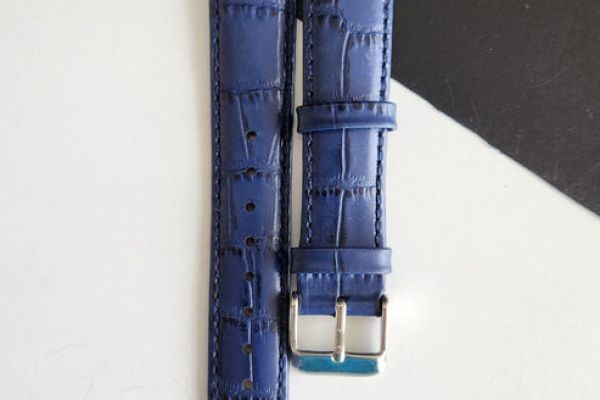
A watch strap does more than hold a timepiece in place. It defines comfort, stability, and visual balance. Lug width plays a decisive role in this relationship. Even a small mismatch can affect how the watch sits on the wrist, how secure it feels, and how refined it looks. Many strap-related frustrations trace back to inaccurate lug width measurement rather than poor strap quality.
Buyers who plan to buy 18mm watch straps online in India [https://vintagewatcholic.in/blogs/news/18mm-watch-straps] often depend on product descriptions or assumptions based on case size. This habit leads to gaps, forced fittings, or straps that never get worn. Lug width measurement takes only a short moment, yet it protects the watch case, spring bars, and overall wearing experience.
What Lug Width Means in Practical Terms?
Lug width refers to the inner distance between the two lugs where the strap attaches to the watch case. This measurement determines the exact strap width required. An 18mm lug width demands an 18mm strap, no more and no less.
A correct match ensures the strap fits snugly without pressure. It prevents side-to-side movement and keeps the watch head centered on the wrist. Precision at this stage saves time, effort, and cost later.
Why Accuracy Matters More With 18mm Straps?
The 18mm size often appears on dress watches, vintage-inspired pieces, and slim cases. These designs emphasize proportion and refinement. Any fitting error becomes immediately visible.
A loose strap creates gaps that break visual continuity. A tight strap stresses lugs and spring bars, risking damage. Measuring correctly preserves both aesthetics and structure.
Tools That Help Measure Lug Width
Accurate measurement does not require specialized equipment, but the right tools improve confidence.
Useful tools include:
-
Digital calipers for precise readings
-
Vernier calipers for manual measurement
-
Steel ruler with millimeter markings
-
Measuring tape as a backup option
Calipers offer the highest reliability. A ruler works well when handled carefully with good lighting.
Measuring Lug Width Using Calipers
Calipers provide the most dependable result. Open the jaws slightly wider than the lug gap. Place the tips inside the lugs, touching the inner edges.
Close the jaws gently until they rest against both sides without force. Read the measurement. Repeat once more to confirm accuracy. A consistent 18.0mm reading confirms the correct strap size.
Measuring Lug Width With a Steel Ruler
A steel ruler works when calipers are unavailable. Place the ruler horizontally between the lugs. Align the zero mark with one inner lug edge. Read the millimeter mark at the opposite lug.
Keep your eye level straight to avoid angle errors. Repeat the process to ensure consistency.
Measuring Without Removing the Existing Strap
Some watches make strap removal inconvenient. Measurement remains possible without removal if visibility allows.
Carefully move the strap aside to expose the lug gap. Insert the measuring tool gently, avoiding contact with the case finish. This approach requires patience but prevents unnecessary handling.
Common Errors During Measurement
Mistakes often occur due to haste or incorrect reference points. Measuring the outer lug span instead of the inner gap leads to wrong results.
Frequent errors include:
-
Measuring from lug tip to lug tip
-
Guessing based on case diameter
-
Rounding measurements up or down
-
Assuming standard sizes without checking
Attention to detail prevents these issues.
Lug Shape and Its Influence on Measurement
Lugs vary in shape. Straight lugs offer clear inner edges. Curved or recessed lugs require careful tool placement.
Some cases taper inward. Measure at the narrowest point where the strap sits. This ensures the strap fits without compression or distortion.
The Role of Spring Bars
Spring bars occupy space between the lugs. Their thickness can slightly reduce the available width. For maximum accuracy, remove spring bars before measuring.
If removal feels risky, measure carefully around them and consider this reduction when selecting strap thickness.
Strap Material and Fit Tolerance
Different materials respond differently to tight fits. Leather compresses slightly, offering minor tolerance. Rubber and metal require exact sizing. Fabric straps provide flexibility but still rely on the correct width.
An 18mm strap often appears on refined watches, making a precise fit even more important.
Visual Balance and Case Integration
A strap should appear as an extension of the case. Correct lug width ensures a smooth transition between case and strap.
Gaps disrupt this flow. Forced fits damage strap edges. Proper measurement preserves design harmony.
Measuring Vintage and Older Watches
Vintage watches often lack published specifications. Manufacturing tolerances varied widely, making measurement essential.
Wear over time may alter lug spacing slightly. Measure carefully and choose strap materials that adapt gently.
Climate Considerations for Indian Wearers
Heat and humidity affect materials. Tight fits may feel uncomfortable as materials expand slightly. Accurate lug width prevents excessive pressure during long wear.
Comfort across seasons depends on proper sizing.
Recording Lug Width for Future Use
Once measured, record the lug width in a notes app or watch log. This habit saves time during future strap changes.
Collectors benefit greatly from maintaining a simple measurement record.
FAQs
1. Why does lug width matter so much when choosing an 18mm strap?
Lug width determines how securely the strap fits between the lugs. Incorrect sizing causes gaps, instability, or stress on spring bars, affecting comfort, appearance, and long-term safety of the watch.
2. Can I assume my watch uses an 18mm strap based on style?
No. Style does not guarantee lug width. Two similar-looking watches may use different sizes. Measuring remains the only reliable method.
3. Is measuring without removing the strap accurate?
It can be, if done carefully. Visibility and steady handling matter. For best accuracy, remove the strap when possible.
4. Do curved lugs make measurement harder?
Yes. Curved or recessed lugs reduce visibility and may taper inward. Measure at the narrowest internal point where the strap rests.
5. Should spring bars always be removed before measuring?
Removing them improves accuracy, especially for slim fits. If removal feels risky, measure carefully and consider bar thickness.
6. Are all 18mm straps exactly 18mm wide?
Quality straps usually match specifications, but tolerances vary. Some straps taper slightly at the ends. Check dimensions carefully.
7. Can I force a 19mm strap into an 18mm lug?
No. Forcing a wider strap risks damaging lugs and spring bars. Always match the strap width exactly to the lug width.
8. Does strap thickness affect fit even with the correct width?
Yes. Thick strap ends may feel tight despite the correct width. Slimmer spring bars may help in such cases.
9. How often should lug width be measured?
Measure once unless the case undergoes repair or modification. Recording the measurement prevents repeated effort.
10. Why do some straps feel loose even when the width matches?
Loose fit may result from thin spring bars or flexible materials. Proper bar selection and strap construction influence stability.






