
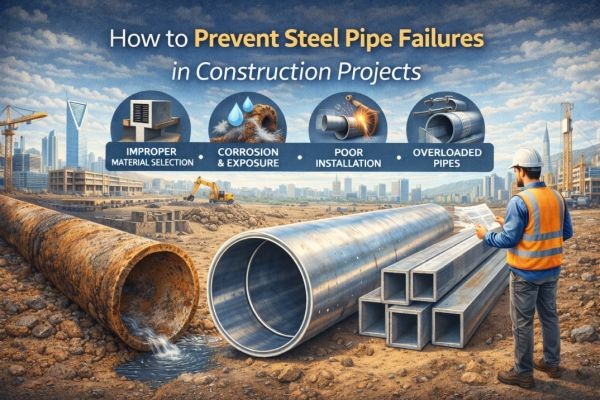
Steel pipes are widely used in construction for structural support, water distribution, fire protection, and industrial systems. Despite their strength and versatility, steel pipe failures still occur on many projects. These failures often result in safety risks, unexpected downtime, and costly repairs.
Most issues are not caused by the material itself but by poor planning, incorrect installation, or unsuitable selection. Understanding the common causes of steel pipe failures helps construction teams prevent problems before they occur.Many construction teams reduce material-related risks by working with experienced steel pipe suppliers in Saudi Arabia that follow consistent quality and manufacturing standards.
Improper Material Selection
One of the leading causes of steel pipe failure is selecting pipes without fully understanding their intended use. Pipes designed for low-pressure applications may fail when exposed to structural loads or high internal pressure.
For general construction and structural applications, mild steel tubes and pipes are widely used due to their strength, workability, and cost efficiency.
Common mistakes include:
- Using thin-walled pipes for load-bearing purposes
- Installing non-protected steel in corrosive environments
- Ignoring temperature and pressure requirements
Each application demands a specific pipe grade, thickness, and finish.
Prevention:
Clearly define whether the pipe will be used for structural support, fluid transport, or mechanical systems. Consult engineering specifications and ensure the selected pipe meets project demands.
Inadequate Corrosion Protection
Corrosion significantly weakens steel pipes over time. In outdoor or underground installations, exposure to moisture, soil chemicals, or saline air accelerates deterioration.
Early signs of corrosion include:
- Surface rust
- Reduced wall thickness
- Joint leakage
Left untreated, corrosion can lead to pipe rupture or structural instability.
Prevention:
Assess environmental exposure before installation. Use corrosion-resistant treatments such as galvanization or protective coatings where required. Regular inspection schedules should also be part of long-term maintenance planning.
Poor Installation Practices
Even high-quality steel pipes can fail if installation is not carried out correctly. Misalignment, improper welding, and incorrect joint connections are common installation-related problems.
Typical installation errors:
- Uneven pipe supports
- Over-tightened fittings
- Inadequate welding procedures
These issues place unnecessary stress on the pipe system.
Prevention:
Ensure that installation teams follow approved methods and standards. Proper training, supervision, and inspection during installation significantly reduce failure risk.
Ignoring Load and Pressure Limits
Steel pipes are engineered to perform within specific load and pressure limits. Exceeding these limits compromises safety and performance.
Failures related to overloading may include:
- Pipe deformation
- Cracking at joints
- Sudden pressure release
This is particularly common when design assumptions are not updated during project changes.
Prevention:
Reassess load and pressure calculations whenever design modifications occur. Engineers should verify that selected pipes can handle both static and dynamic loads throughout the system’s lifespan.
Lack of Quality Control
Inconsistent manufacturing quality can also contribute to pipe failures. Variations in wall thickness, straightness, or material composition affect performance and durability.
Quality issues may lead to:
- Difficulty during installation
- Uneven stress distribution
- Reduced service life
Prevention:
Source materials from suppliers that follow strict quality control processes. Request mill test certificates and verify compliance with relevant standards before delivery to site.
Insufficient Maintenance Planning
Steel pipes require periodic inspection and maintenance, especially in long-term projects. Ignoring maintenance allows minor issues to escalate into major failures.
Common maintenance oversights include:
- Failure to inspect buried pipes
- Delayed repairs
- Ignoring early corrosion signs
Prevention:
Develop a maintenance plan that includes routine inspections, timely repairs, and monitoring of high-risk areas. Preventive maintenance is far more cost-effective than emergency repairs.
Impact of Pipe Failures on Construction Projects
Steel pipe failures can affect projects in multiple ways:
- Construction delays
- Increased repair and replacement costs
- Safety hazards for workers
- Damage to surrounding structures
These consequences highlight the importance of proactive planning and proper material handling.
Best Practices for Long-Term Performance
To prevent steel pipe failures, construction teams should:
- Select pipes based on application and environment
- Ensure compliance with recognized standards
- Follow correct installation procedures
- Monitor loads and pressures
- Implement regular inspection and maintenance
Applying these practices improves reliability and protects project investments.
Conclusion
Steel pipe failures are rarely the result of material defects alone. Most problems stem from incorrect selection, poor installation, or lack of planning. By understanding common failure causes and applying preventive measures, construction professionals can significantly reduce risk.
Proper planning, quality materials, and disciplined execution ensure that steel pipes perform reliably throughout their service life, supporting safer and more efficient construction projects.






