
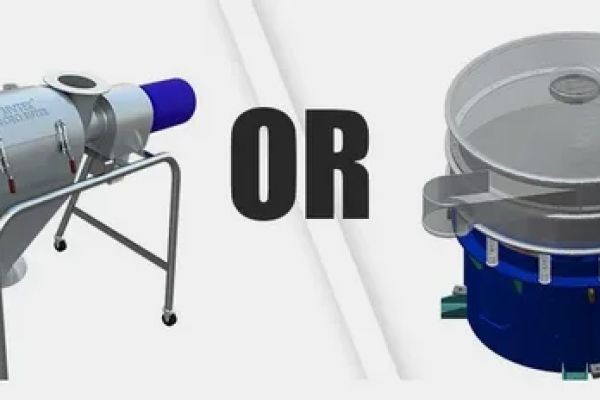
Every production line that handles powders, granules, or bulk solids has one common challenge: maintaining consistent particle size, removing unwanted contaminants, and ensuring product uniformity batch after batch. For manufacturers across food processing, pharmaceuticals, chemicals, and agriculture, the solution to that challenge sits in one piece of equipment — the vibrator sifter. Choosing the right one for your specific production line is not a matter of picking the cheapest option available. It is a technical decision that directly impacts product quality, throughput efficiency, and compliance with industry standards. This guide is designed to help plant managers and production engineers in Pakistan and South Asia make that decision with confidence.
What Is a Vibrator Sifter?
A vibrator sifter — also commonly referred to as a vibrating sieve or vibratory screener — is an industrial separation machine that uses controlled mechanical vibration to sort, classify, or filter bulk materials by particle size. The machine passes material over one or more mesh screens while vibrating at a precisely calibrated frequency and amplitude. Particles smaller than the mesh aperture pass through, while oversized particles or foreign matter are separated and discharged separately. Modern vibrating sieve machines range from compact, single-deck laboratory units to large multi-deck industrial screeners capable of processing several tonnes of material per hour, making them adaptable to virtually any production scale.
Key Features & Benefits
A well-specified vibrator sifter delivers measurable improvements across your production operation:
- Precise Particle Separation: Vibrating sieves achieve highly accurate separation across a wide range of mesh sizes — from coarse grading of granules down to fine screening of powders — ensuring your final product consistently meets specification.
- Multi-Deck Configuration: Industrial vibrator sifters can be fitted with multiple screen decks simultaneously, allowing a single machine to classify material into several size fractions in one continuous pass, reducing equipment footprint and handling time.
- Hygienic, Easy-Clean Design: Food-grade and pharmaceutical-grade vibrator sifters are constructed from stainless steel with quick-release clamps and tool-free screen changes, enabling rapid cleaning between product batches and full compliance with food safety standards.
- High Throughput Capacity: Vibratory screeners are engineered for continuous, uninterrupted operation across long production shifts, maintaining consistent output rates without operator intervention.
- Low Maintenance and Long Service Life: With few moving parts beyond the vibration motor and spring mounts, a quality vibrator sifter demands minimal maintenance while delivering years of reliable operation — keeping your total cost of ownership low.
Industrial Applications
Vibrator sifters are among the most versatile pieces of separation equipment in industry, serving critical functions across multiple sectors:
- Food Processing: Screening flour, sugar, spices, salt, starch, and powdered food ingredients to remove lumps, foreign particles, and off-spec material before packaging or further processing — a mandatory quality control step in any food manufacturing facility.
- Pharmaceutical Industry: Classifying active pharmaceutical ingredients (APIs), excipients, and granules to precise particle size distributions required by formulation specifications and GMP compliance frameworks.
- Chemical Manufacturing: Separating chemical powders, pigments, fertilizer granules, and detergent compounds by size to ensure consistent product quality and eliminate contamination risks in downstream processes.
- Plastic and Polymer Industry: Grading plastic pellets, regrind material, and polymer powders to remove fines, dust, and oversized particles before extrusion or molding operations.
- Agriculture and Grain Processing: Cleaning and grading seeds, grains, pulses, and dried fruits to remove dust, chaff, broken kernels, and foreign matter ahead of storage or packaging.
- Mining and Minerals: Classifying fine minerals, silica sand, calcium carbonate, and other industrial minerals into commercial size fractions for downstream processing or direct sale.
How to Choose the Right One
Selecting the best vibrating sieve for your production line requires evaluating several interconnected technical and operational factors:
1. Define Your Material Characteristics: Before specifying any machine, fully characterize your bulk material — particle size range, bulk density, moisture content, flowability, and abrasiveness. Sticky, hygroscopic, or extremely fine powders behave very differently on a vibrating screen than free-flowing granules, and the machine design must account for these properties.
2. Determine Required Mesh Size: Identify the cut point — the particle size at which you need to separate your material. This determines the screen mesh aperture. For fine powders, ultrasonic deblinding systems may be necessary to prevent mesh blinding and maintain consistent throughput.
3. Select the Correct Deck Configuration: If you need to separate material into more than two fractions simultaneously, a multi-deck vibrator sifter with stacked screens is the efficient solution. Single-deck machines suit simple scalping or quality-control screening applications.
4. Match Capacity to Your Production Rate: Calculate your required throughput in kilograms or tonnes per hour and select a machine with a screen diameter or area that comfortably handles your peak production volume — with a reasonable safety margin for operational variability.
5. Consider Material of Construction: For food, pharmaceutical, or corrosive chemical applications, stainless steel construction is non-negotiable. For general industrial or agricultural use, mild steel machines offer a more economical option where hygiene requirements are less stringent.
6. Evaluate Drive Mechanism and Vibration Type: Circular, linear, and elliptical vibration patterns each suit different material types and separation tasks. Circular motion vibrator sifters excel at fine powder screening, while linear screeners are preferred for high-capacity scalping of coarser materials.
7. Assess After-Sales Support and Spare Parts: Screen meshes, vibration motors, and spring mounts are consumable components. Confirm that your supplier can provide local technical support and readily available spare parts to minimize production downtime when maintenance is needed.
Why Quality Matters
A poorly built vibrating sieve creates problems that cascade through your entire production line. Substandard screen meshes fail prematurely, allowing off-spec particles to contaminate finished product. Unbalanced vibration motors cause excessive noise, accelerated wear on surrounding equipment, and structural fatigue in the machine frame. Inadequate sealing allows dust leakage, creating housekeeping problems and potential health hazards for operators.
In industries like food and pharmaceuticals, a single contamination incident traced back to a screening failure can trigger product recalls, regulatory action, and permanent reputational damage. In Pakistan's increasingly competitive manufacturing environment, where export quality standards are rising and domestic food safety regulations are tightening, investing in a properly engineered vibrator sifter is not an overhead cost — it is a quality assurance investment that protects your brand and your bottom line.
Conclusion
Selecting the best vibrator sifter for your production line comes down to a careful match between your material properties, production capacity, regulatory requirements, and long-term operational economics. The right machine will deliver consistent separation accuracy, reliable continuous operation, and a service life that justifies the investment many times over. Cutting corners on screening equipment is a false economy that inevitably costs more in rejected product, unplanned downtime, and compliance failures. For industrial-grade vibratory screening solutions engineered for Pakistan's demanding processing environments, you can explore more at vibrator sifter.






