
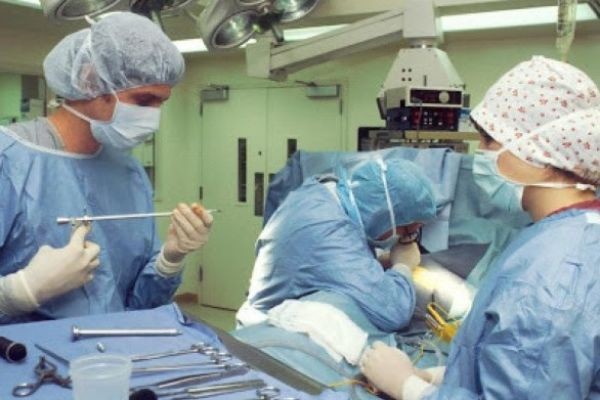
In the high-pressure environment of modern healthcare, the Central Sterile Supply Department (CSSD) serves as the heart of surgical operations. As hospitals transition toward higher surgical volumes and more complex robotic instrumentation, the traditional "manual" approach to instrument reprocessing is no longer sufficient. This is where Lean Six Sigma—a combined methodology focused on removing waste (Lean) and reducing variation (Six Sigma)—becomes an essential framework for high-volume decontamination units. By applying these industrial principles to healthcare, facilities can drastically reduce the occurrence of "holes in wrappers," missing instruments, and bioburden residues, ensuring that the Operating Room (OR) receives perfect trays every single time.
Defining the "Waste" in Sterile Processing Environments
The "Lean" aspect of the methodology focuses on the identification and elimination of eight specific types of waste, often referred to by the acronym DOWNTIME (Defects, Overproduction, Waiting, Non-utilized talent, Transportation, Inventory, Motion, and Extra-processing). In a decontamination setting, "Motion" waste is incredibly common; technicians may find themselves walking excessive distances to retrieve chemical indicators or PPE because the workstation layout was not ergonomically optimized. By mapping the value stream of a single surgical tray—from the point of use in the OR back to the sterilizer—managers can identify where the "flow" is interrupted by unnecessary steps or bottlenecks.
Training plays a pivotal role in identifying these inefficiencies before they impact the surgical schedule. Through a professional sterile processing technician course, students learn the importance of standardized work. Standard Work is a Lean tool that ensures every technician performs a task in the exact same "best" way every time. This consistency is the only way to establish a baseline for improvement. Without a standard process, it is impossible to tell if a delay was caused by a faulty machine or a variation in human technique. Lean Six Sigma thrives on this predictability, turning the decontamination area into a highly tuned engine of productivity.
Reducing Variation with Six Sigma Precision
While Lean focuses on speed and flow, Six Sigma focuses on quality and the elimination of errors. In sterile processing, a "defect" isn't just an inconvenience; it is a potential life-threatening risk for a patient. Six Sigma aims for a statistical goal of 3.4 defects per million opportunities. While this sounds ambitious for a manual cleaning process, it encourages a "zero-defect" mindset. This involves using data to track the most common errors—such as moisture in a container after sterilization—and performing a Root Cause Analysis (RCA) to determine if the issue lies with the steam quality, the loading pattern, or the drying time settings on the autoclave.
This analytical approach is a core competency taught in a modern sterile processing technician course. Technicians are taught to use "Poka-Yoke" (mistake-proofing) devices, such as count sheets and illuminated magnifiers, to catch errors at the source. By catching a speck of organic matter during the manual cleaning phase, the technician prevents that instrument from reaching the assembly area, where it would cause a much more expensive disruption. Six Sigma provides the statistical tools to prove that an intervention—like switching to a more effective enzymatic cleaner—actually resulted in a measurable decrease in bioburden failures.
5S Methodology: Organizing for Safety and Efficiency
One of the most visible applications of Lean in decontamination is the 5S system: Sort, Set in order, Shine, Standardize, and Sustain. A high-volume SPD can quickly become cluttered with broken instruments, outdated wrap sizes, and excess chemical stock. The 5S process begins by removing everything that isn't essential for the daily workflow. Once the "Sort" is complete, the remaining items are assigned a permanent, labeled home. This "visual management" ensures that a technician can see at a glance if a vital cleaning brush is missing or if the ultrasonic cleaner is low on detergent, reducing the mental fatigue associated with "searching" for tools.
The discipline required to maintain a 5S environment is a testament to the professionalism expected in the industry. Graduates of a sterile processing technician course are often the champions of these organizational standards. They understand that a clean, organized workspace is not just about aesthetics; it is about preventing cross-contamination. When the "Shine" phase (cleaning) is integrated into the daily routine, equipment stays in better condition, and the work environment becomes safer for the staff. Sustainment is often the hardest part, but it is achieved through regular audits and a culture that values continuous improvement over the status quo.
The Human Element: Empowering Technicians through Education
Ultimately, Lean Six Sigma is not a top-down management strategy; it is a philosophy that relies on the "Gemba"—the place where the actual work happens. The best ideas for process improvement usually come from the technicians at the sinks and the assembly tables. For a hospital to truly achieve high-volume efficiency, it must invest in the education of its frontline staff. Empowering employees to suggest changes to the tray assembly process or the loading of the washer-disinfector creates a sense of ownership. When staff members feel like problem-solvers rather than just laborers, the turnover rate drops and the quality of work rises.






