
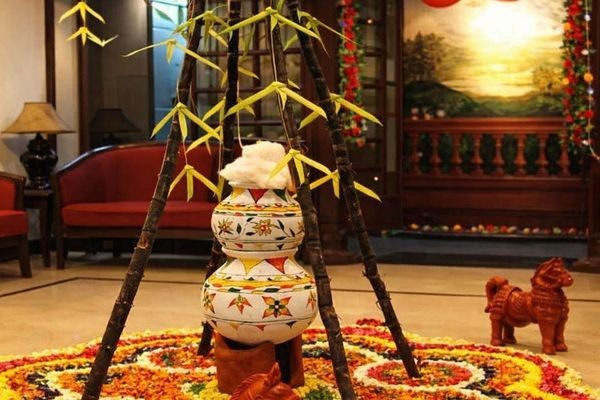
Most Indian homeowners do not want a fully Western minimalist flat, and they do not want a museum of old furniture either. They want both. That is exactly what is happening across Indian cities right now: traditional motifs, handloom fabrics, and brass fixtures sitting next to modular kitchens and clean lined sofas. This piece looks at the Indian interior design styles actually shaping modern homes in 2026, backed by real industry data, and how you can apply them even in a regular 2BHK.
What Makes Indian Interior Design Styles Stand Out?
Indian interior design styles lean on colour, texture, and family first layouts more than Western minimalism does. A living room here often doubles as a guest room, a puja corner, and a place where three generations sit together in the evening.
This is why open shelf showcases, low seating, and multipurpose furniture show up so often in Indian homes. The design has to work for a joint family gathering on Sunday and a quiet Tuesday evening just as well.
The Indian interior design market reflects this shift toward functional, design led spaces. According to IMARC Group, the market was valued at USD 36.89 billion in 2025 and is projected to reach USD 74.73 billion by 2034, growing at a CAGR of 8.16 percent. Residential projects account for roughly 60 percent of this market in 2025, ahead of commercial spaces, according to the same report.
What Are the Most Popular Indian Interior Design Styles for Modern Homes?
There is no single Indian style. Designers and homeowners are currently working across five broad approaches, and most homes end up mixing two or three of them rather than picking just one.
Indo-Contemporary Style
Indo-contemporary design mixes Indian handicrafts, block printed cushions, cane furniture, or a carved wooden mirror frame, with simple Scandinavian style layouts. A teakwood console with brass handles next to a plain grey sofa is a fairly common example.
This style works well in rented flats too, since you can add the Indian elements through movable pieces instead of permanent fittings. Industry research has also flagged the rising influence of Indo-contemporary design as traditional Indian craftsmanship blends more with modern aesthetics across the market.
Traditional Ethnic and Heritage Style
This style keeps carved wooden furniture, jaali lattice screens, and rich jewel tones such as maroon, mustard, and emerald front and centre. It suits larger homes, heritage bungalows, and anyone who wants a living room that feels rooted rather than trendy.
Rajasthani havelis and South Indian wooden pillars are common reference points for this look, even for flats located far from those regions.
Minimalist Modern Indian Style
Here, the palette stays neutral, whites, beiges, warm wood tones, but one or two Indian decor items, a single brass diya stand or a handloom throw, carry the cultural weight. This style has grown quickly in metro apartments where space is limited and storage matters more than decoration.
Coastal and Regional Influences
Goan, Kerala, and Bengal inspired interiors are showing up well outside their home regions too. Think rattan furniture, terracotta tiles, and louvred windows, usually softened with pastel walls.
Vastu Aligned Layouts
Many Indian families still plan furniture placement, entrance direction, and room use around Vastu Shastra principles. Interior designers across India routinely factor this into early planning stages, alongside structural and aesthetic decisions.
How Is Sustainability Changing Indian Interior Design?
Sustainability is no longer a niche request in Indian interior design. It is becoming closer to a baseline expectation. Data from Verified Market Research shows that green construction floor area in India rose from 4.5 billion square feet in 2019 to 7.55 billion square feet in 2023, and roughly 75 percent of those projects used recycled materials or energy efficient fixtures.
For homeowners, this is translating into reclaimed wood furniture, natural fibre rugs, and low VOC paints showing up in mid range projects, not only premium ones.
Smart home integration is moving in the same direction. India's smart home segment is projected to reach USD 13.5 billion by 2026, growing at a 20.7 percent CAGR, which is pushing automated lighting and IoT enabled fittings into mainstream interior design briefs rather than treating them as a luxury add on.
How Do You Adapt These Styles for a Small Indian Home?
A 2BHK apartment in India typically falls between 800 and 1,200 square feet, according to multiple real estate sources, so most of these styles need some editing before they suit a compact space.
Stick to one dominant style instead of mixing all five. A single jaali room divider or one wall of traditional tiles reads as intentional. Five different motifs crammed into one room reads as clutter.
Use vertical storage and foldable or stackable furniture, charpai stools, nesting tables, wall mounted shelves, so the floor stays as open as possible. Light wall colours paired with one or two bold Indian textiles, a Kantha throw or an ikat cushion, usually work better than dark, heavy palettes in small rooms.
Mirrors placed opposite windows help bounce natural light around the room, which matters more in compact flats that often have fewer windows per room than larger homes.
What Interior Design Trends Should You Watch in 2026?
Three trends stand out heading into 2026. First, organised design platforms are expanding into tier-2 and tier-3 cities. Livspace, for instance, reported 23 percent year on year revenue growth in FY25 to USD 170.7 million, and has announced plans to grow from over 150 stores across 90 cities to more than 200 stores in over 100 cities by March 2026.
Second, Indo-contemporary design keeps growing as the bridge between heritage and minimalism, particularly among first time homeowners in their late twenties and thirties.
Third, government housing programmes such as PM Awas Yojana are expected to push demand for affordable, design aware interiors into smaller cities, not only metros, as more first time buyers enter the market.
Frequently Asked Questions
What is the most popular interior design style in India right now?
Indo-contemporary design is among the fastest growing styles, since it blends Indian handicraft elements with simple, modern layouts that work for both large and small homes.
Is Vastu important in modern Indian interior design?
Many Indian families still consider Vastu Shastra while planning furniture placement and room layouts, even within otherwise modern, minimalist interiors.
How much does interior design cost for a small apartment in India?
Costs vary widely by city, materials, and scope of work, so it helps to get quotes from two or three designers or platforms before settling on a budget.
Are sustainable materials commonly used in Indian homes now?
Yes. Green and sustainable construction has grown sharply in India, and reclaimed wood, natural fibre textiles, and energy efficient fittings are increasingly common in residential interiors.
Can traditional Indian decor work in a small flat?
Yes, if it is limited to a few intentional pieces rather than spread across multiple motifs. One well chosen statement piece per room usually works better than several smaller ones competing for attention.
Indian interior design in 2026 is not really about choosing between traditional and modern. It is about deciding how much of each you want in a given room, and being deliberate about that choice. Whether you lean toward Indo-contemporary, ethnic heritage, or a stripped back minimalist look with a single brass accent, the same rule holds up: fewer, better chosen pieces almost always outperform a room full of competing styles.






