
Inorganic Catalyst Market Opportunities, Competitive Landscape & Forecast, 2026-2035
The Inorganic Catalyst Market continues to play a vital role across multiple industrial sectors, including chemical manufacturing, petroleum refining, environmental protection, and specialty materials production. Increasing demand for efficient catalytic processes, stricter environmental regulations, and advancements in catalyst formulations are supporting steady market expansion. Manufacturers are focusing on improving catalyst durability, selectivity, and operational efficiency to meet evolving industrial requirements while reducing emissions and production costs.
The growing adoption of sustainable manufacturing technologies and investments in advanced chemical processing facilities are further strengthening the demand for inorganic catalysts. Industries are increasingly utilizing metal oxides, zeolites, and chemical compounds to improve reaction efficiency and support cleaner production methods.
- 2025 Market Size: USD 28.55 Billion
- Projected 2035 Market Size: USD 39.89 Billion
- Growth Forecast (2026–2035): 3.4%
Regional Performance Highlights
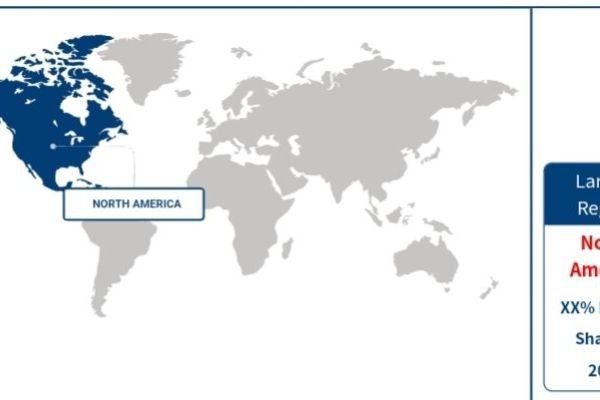
North America remains a significant market driven by advanced petrochemical infrastructure, stringent environmental standards, and continuous investments in clean energy technologies. Demand for emission-control catalysts and refining catalysts continues to support regional growth.
Europe benefits from strict sustainability regulations and increasing adoption of green chemical production. Manufacturers are investing in recyclable catalyst technologies and low-emission industrial processes to align with the European Green Deal.
Asia Pacific represents the fastest-growing regional market due to rapid industrialization, expanding chemical manufacturing capacity, increasing refinery projects, and rising investments in specialty chemicals across China, India, Japan, and Southeast Asia.
Market Segment Analysis
Chemical Compounds emerged as the leading product segment, holding 43.04% of the inorganic catalyst market in 2025. Their excellent catalytic activity, thermal stability, and broad industrial applicability make them the preferred choice across chemical manufacturing and petroleum processing industries.
Chemical Synthesis dominated the application landscape with a 43.04% market share in 2025. Increasing production of industrial chemicals, fertilizers, polymers, and specialty compounds continues to generate significant demand for highly efficient inorganic catalysts.
Request Free Sample Report @ https://www.fundamentalbusinessinsights.com/request-sample/15279
Top Market Trends Transforming the Inorganic Catalyst Market
1. Growing Focus on Sustainable and Low-Emission Catalysts
Environmental regulations worldwide are encouraging manufacturers to develop catalysts that reduce greenhouse gas emissions and improve process efficiency. Companies are investing in recyclable catalyst materials and longer-lasting formulations that minimize industrial waste while supporting cleaner production technologies.
2. Increasing Demand from Chemical Manufacturing
Rapid expansion of specialty chemicals, polymers, fertilizers, and industrial intermediates is driving continuous demand for high-performance inorganic catalysts. Advanced catalyst technologies are enabling manufacturers to improve reaction selectivity while reducing energy consumption and operational expenses.
3. Innovation in Nanostructured Catalyst Technologies
Nanotechnology is significantly improving catalyst performance through enhanced surface area, greater catalytic activity, and longer operational life. Research institutions and catalyst manufacturers are increasingly commercializing nanostructured inorganic catalysts for chemical synthesis, hydrogen production, and environmental applications.
4. Expansion of Hydrogen and Clean Energy Applications
The global transition toward hydrogen production and renewable energy systems is creating new opportunities for inorganic catalysts. Advanced catalyst materials are supporting electrolysis, fuel cell technologies, carbon capture, and renewable fuel production, making them essential components of future clean energy infrastructure.
Request Free Sample Report @ https://www.fundamentalbusinessinsights.com/request-sample/15279
Recent Company Developments
BASF SE continued expanding its catalyst portfolio through investments focused on sustainable chemical processing and emission-control technologies, strengthening its presence across refining and industrial catalyst applications.
Johnson Matthey introduced advanced catalyst technologies designed to improve hydrogen production efficiency and support decarbonization initiatives across industrial manufacturing sectors.
Clariant AG expanded production capabilities for specialty catalysts while focusing on catalysts that improve process efficiency and reduce carbon emissions across petrochemical operations.
- R. Grace & Co.continued investing in refinery catalyst innovation, introducing enhanced FCC catalyst technologies that improve fuel yields and operational efficiency.
Haldor Topsoe A/S accelerated commercialization of catalysts supporting renewable fuels, green hydrogen production, and carbon reduction technologies through strategic technology partnerships.
Honeywell UOP expanded advanced catalyst solutions for petrochemical processing and sustainable aviation fuel production, supporting cleaner industrial operations worldwide.
Evonik Industries AG strengthened research activities focused on high-performance catalyst materials designed for specialty chemical manufacturing and environmental protection applications.
Albemarle Corporation continued enhancing catalyst technologies serving petroleum refining and clean fuel production, emphasizing improved operational efficiency and sustainability.
Axens introduced advanced catalyst solutions supporting renewable feedstock processing and cleaner refinery operations while expanding its technology licensing business.
Umicore continued investing in catalyst technologies supporting automotive emission control, industrial pollution reduction, and circular economy initiatives through sustainable material recovery.
Request Free Sample Report @ https://www.fundamentalbusinessinsights.com/request-sample/15279
Related Reports
About
Fundamental Business Insights:
Fundamental Business Insights is global market research and consulting company which is engaged in providing in depth market reports to its various types of clients like industrial sectors, financial sectors, universities, non-profit, and corporations. Our goal is to offer the correct information to the right stakeholder at the right time, in a format that enables logical and informed decision making. We have a team of consultants who have experience in offering executive level blueprints of markets and solutions. Our services include syndicated market studies, customized research reports, and consultation.
Contact us:
Robbin Fernandez
Head of Business Development
Fundamental Business Insights and Consulting
Email: sales@fundamentalbusinessinsights.com
Read This Report in Regional Languages -
https://www.fundamentalbusinessinsights.com/ko/industry-report/inorganic-catalyst-market-15279
https://www.fundamentalbusinessinsights.com/ja/industry-report/inorganic-catalyst-market-15279
https://www.fundamentalbusinessinsights.com/de/industry-report/inorganic-catalyst-market-15279
https://www.fundamentalbusinessinsights.com/it/industry-report/inorganic-catalyst-market-15279
https://www.fundamentalbusinessinsights.com/es/industry-report/inorganic-catalyst-market-15279
https://www.fundamentalbusinessinsights.com/fr/industry-report/inorganic-catalyst-market-15279






