
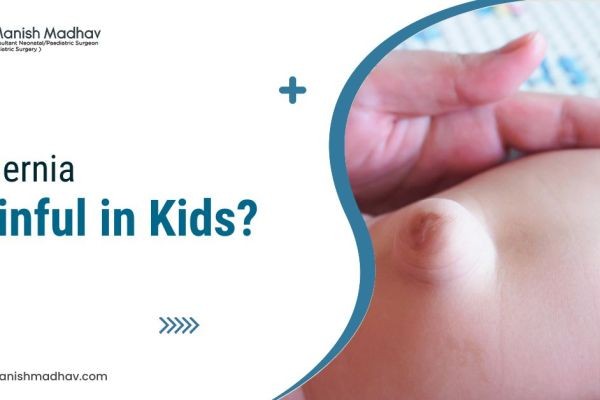
Hernia is quite common in babies and children, often noticed by parents as a small swelling or bulge on the body. It can be worrying at first, even if your child looks fine.
In kids, a hernia may or may not be painful in the early stage, but it should never be ignored. It happens when an organ inside the body pushes through a weak spot in the muscle, and that shows up as a small bulge you can see or feel.
This article will cover how a hernia develops, its signs, types, pain factor, and when treatment is needed. For proper evaluation, parents often consult a Child Hernia Surgeon in Siliguri.
How a Hernia Develops in Children
A hernia in kids usually starts quietly. It’s not something that appears suddenly in most cases. It develops when a small weak area in the belly wall allows internal tissue to slip out. Here’s how it typically happens in a more real-world sense:
A weak spot is already there
In many children, this weak area is present from birth. During development, the muscles in the lower abdomen don’t fully close the way they should.
- This is more common around the groin area
- Premature babies tend to have it more often
- The area stays slightly open, even after birth
It doesn’t cause trouble at first, so parents usually don’t notice anything unusual.
A soft bulge starts appearing
Once pressure finds that weak spot, a small part of tissue or intestine can slip through and show up outside.
- You may notice a soft lump in the groin or belly area
- It often becomes more visible when the child cries or strains
- It may go back in when the child is resting or calm
This is usually the first thing parents notice.
The passage that should have closed stays open
In some children, a natural opening that normally closes after birth doesn’t shut completely.
- This leftover opening creates space for tissue to move through
- It’s one of the most common reasons for hernias in infants
- The condition is present from early life, even if symptoms show later
Some kids are just more prone to it
Not every child develops a hernia, even with similar habits. Body structure and early development also play a role.
- Some are born with weaker muscle support
- Premature birth increases the chances
- It sometimes runs in families
Types of Hernia in Kids
Hernia in children isn’t just one single type. It can show up in different areas of the body, and each type has its own pattern.
Inguinal Hernia (Groin Hernia)
This is the most common type in children.
- Happens in the lower belly or groin area
- More common in boys than in girls
- Appears as a soft swelling near the groin or scrotum
You’ll often notice it more when the child cries, coughs, or is active. It may reduce when the child is calm or lying down.
Umbilical Hernia (Belly Button Hernia)
This usually appears around the belly button area.
- Looks like a tiny protrusion at the tummy.
- Very prevalent in newborns and infants
- More often seen when the infant cries or strains
In many instances, it closes spontaneously as the infant grows.
Incisional Hernia (After Surgery Hernia)
This type is not very common in kids, but it can show up after surgery.
- Near a recent surgical incision
- Occurs when the muscle layer doesn’t mend well
- It can appear as a protrusion near the surgical scar
If it expands or causes discomfort, it often requires medical intervention.
Hiatal Hernia (Rare in Kids)
This one is not very common in children, but it can still occur.
- Happens inside the chest area
- Part of the stomach pushes up through the diaphragm
- May cause symptoms like acid reflux or discomfort after eating
It’s usually detected through medical tests rather than visible swelling.
Early Signs of Hernia in Kids You Shouldn’t Ignore
Hernia in children often starts with small, easy-to-miss changes. Many parents notice something is off, but assume it’s temporary. The thing is, these early signs can give the first clear clue.
A soft lump or bulge
This is usually the most noticeable sign.
- Appears in the groin, belly button, or lower abdomen
- Becomes more visible when the child cries or strains
- May shrink or disappear when the child is relaxed
Even if it comes and goes, it’s worth paying attention to.
Mild discomfort or irritation
Not every child will clearly say they’re in pain, but you may notice small changes in behavior.
- The child becomes fussy during movement.
- Pulling legs up or holding the area
- Crying more than usual without a clear reason
In many cases, it’s more discomfort than sharp pain.
Pain during activity (in some cases)
Older children might describe it better.
- Feel pain while running, jumping, or playing
- Discomfort after long periods of activity
- Relief when resting
These are the earlier signs that mean the hernia is getting noticeable.
No symptoms at first
Sometimes there are no clear signs except a small bulge.
- The child behaves completely normally.
- No pain or discomfort
- Swelling is the only hint
That’s why regular observation matters more than waiting for pain.
When Is Surgery Needed for Hernia Treatment?
- Doesn’t heal on its own: If the hernia doesn’t go away over time or keeps coming back, surgery may be needed.
- Bulge getting bigger: If the swelling keeps growing, surgery is usually needed.
- Vomiting or distress: Feeling pain with vomiting or unusual restlessness requires medical care.
Conclusion
In conclusion, a hernia is a common condition in kids, but it can be treated easily if you do a proper checkup and do not ignore the early signs. Ignoring these signs can be a reason for a major issue in the future.
If you are looking for a Child Hernia Surgeon in Siliguri, Dr. Manish Madhav is a trusted and the best option, providing extra care and attention, and helping many families with clear guidance and confident treatment decisions.






