
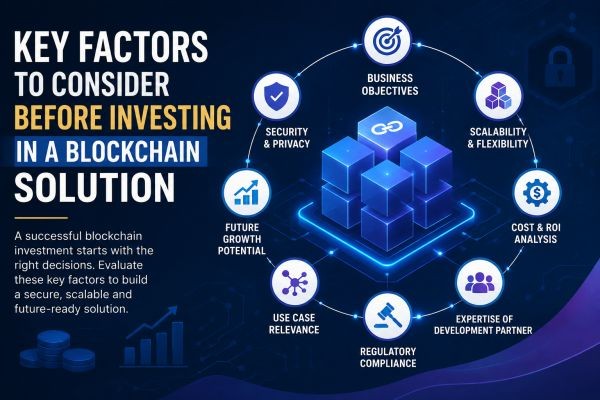
Blockchain technology has moved beyond being associated only with cryptocurrencies. Today, businesses across industries are exploring blockchain solutions to improve transparency, strengthen security, automate processes, and create more efficient digital ecosystems. From supply chain management and healthcare to finance and real estate, blockchain is helping organizations rethink how data is stored, shared, and verified.
However, investing in a blockchain solution is a major business decision that requires careful planning. While blockchain offers several advantages, implementing the wrong solution without understanding business requirements can lead to unnecessary costs, technical challenges, and limited returns.
Before investing in blockchain development, businesses need to evaluate multiple factors, including their goals, technology requirements, security needs, and long-term strategy. Understanding these key considerations can help organizations choose a blockchain solution that delivers measurable value.
1. Define Your Business Objectives Clearly
Before adopting blockchain technology, businesses should identify the specific problems they want to solve. Blockchain should not be implemented simply because it is a trending technology. Instead, it should address a real business challenge.
Organizations should evaluate whether they need blockchain for improving data transparency, reducing operational inefficiencies, enhancing security, automating transactions, or creating decentralized systems.
A clear understanding of objectives helps businesses determine whether blockchain is the right solution and what type of implementation will provide the greatest benefits.
2. Understand the Right Blockchain Type
Not every blockchain solution works the same way. Businesses need to choose between different blockchain models based on their requirements.
Public blockchains allow anyone to participate and verify transactions, while private blockchains provide controlled access for specific organizations. Consortium blockchains allow multiple trusted parties to manage a shared network.
Each option has different advantages related to privacy, scalability, speed, and governance. Selecting the appropriate blockchain type ensures that the solution aligns with business operations and compliance needs.
3. Evaluate Scalability Requirements
Scalability is one of the most important factors when investing in blockchain technology. A solution that works for a small number of users may face performance issues as transaction volumes increase.
Businesses should consider future growth and analyze factors such as transaction speed, network capacity, and user demand before selecting a blockchain platform. Organizations looking for scalable blockchain development solutions for growing businesses can benefit from customized approaches that are designed around their specific operational needs, scalability goals, and future expansion plans, ensuring the technology supports long-term success.
A scalable blockchain solution allows organizations to expand operations without experiencing performance limitations or requiring major system changes in the future.
4. Consider Security and Data Protection
One of the biggest advantages of blockchain technology is its strong security framework. However, proper implementation is essential to maximize these benefits.
Businesses should evaluate how the blockchain solution handles data protection, access control, encryption, authentication, and potential vulnerabilities.
A reliable blockchain system should protect sensitive information while maintaining transparency and trust among authorized participants. Security should be considered from the initial planning stage rather than added later.
5. Analyze Integration With Existing Systems
Most businesses already use various software platforms, databases, and digital tools. A blockchain solution should work effectively with existing systems rather than creating unnecessary complexity.
Before investing, organizations should assess integration requirements with current applications, enterprise software, cloud platforms, and other technologies.
A well-planned integration strategy ensures smoother implementation, reduces operational disruption, and helps businesses achieve faster adoption.
6. Assess Development and Maintenance Costs
Blockchain implementation involves more than initial development expenses. Businesses should consider long-term costs, including maintenance, upgrades, security monitoring, infrastructure, and technical support.
A detailed budget plan helps organizations understand the overall investment required and avoid unexpected expenses.
Working with experienced blockchain professionals can help businesses select cost-effective solutions while ensuring quality, reliability, and future scalability.
7. Choose the Right Blockchain Development Partner
The success of a blockchain project depends heavily on the expertise of the development team. Businesses should carefully evaluate potential technology partners based on their experience, technical knowledge, previous projects, and understanding of industry requirements.
A reliable blockchain development partner can provide valuable guidance throughout the process, from strategy planning and architecture design to implementation and ongoing support.
Choosing an experienced team reduces risks and increases the chances of building a solution that meets business goals.
8. Ensure Regulatory and Compliance Requirements
Different industries have specific regulations regarding data management, privacy, financial transactions, and digital operations. Businesses must ensure that their blockchain solution complies with relevant legal requirements.
Organizations should evaluate factors such as data privacy regulations, industry standards, and reporting obligations before deployment.
A compliant blockchain solution protects businesses from potential legal challenges and builds trust among customers and stakeholders.
9. Focus on User Experience
Although blockchain technology operates behind the scenes, the final solution should provide a simple and efficient experience for users.
Complex blockchain processes should be designed in a way that users can interact with the system easily. Poor usability can limit adoption, even if the underlying technology is advanced.
Businesses should prioritize intuitive interfaces, smooth workflows, and user-friendly features when developing blockchain applications.
10. Plan for Future Innovation
Blockchain technology continues to evolve rapidly. Businesses should invest in solutions that can adapt to future changes and support new opportunities.
Organizations should consider whether the chosen blockchain platform can support additional features, emerging technologies, and changing business requirements.
A future-ready blockchain solution provides greater long-term value and helps businesses remain competitive in a digital economy.
Conclusion
Investing in a blockchain solution can provide businesses with improved transparency, enhanced security, automation, and operational efficiency. However, successful blockchain adoption requires careful evaluation and strategic planning.
Before making an investment, businesses should define their goals, choose the right blockchain model, consider scalability, evaluate security requirements, analyze costs, and select a trusted development partner.
A well-planned blockchain strategy ensures that organizations do not simply adopt new technology but create a solution that delivers meaningful business outcomes. By considering these key factors, businesses can make informed decisions and unlock the full potential of blockchain innovation.






