
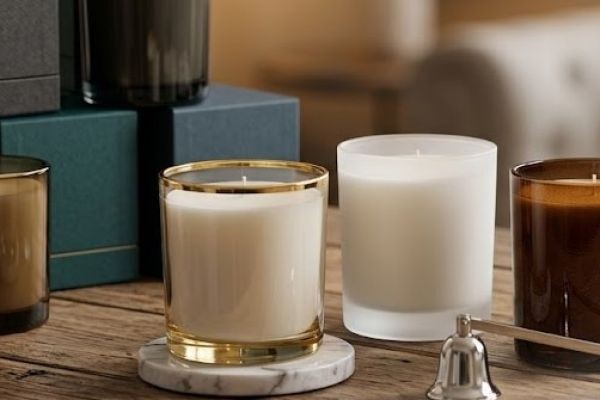
The global luxury candle market is witnessing robust expansion, supported by rising consumer demand for premium home fragrance products, growing investment in residential wellness, and increasing adoption of spatial scenting solutions across luxury hospitality and real estate sectors. According to market estimates by Future Market Insights (FMI), the market was valued at USD 2.4 billion in 2025 and is projected to reach USD 2.6 billion by the end of 2026. Over the forecast period from 2026 to 2036, the industry is expected to grow at a CAGR of 6.3%, reaching approximately USD 4.8 billion by 2036.
Luxury candles are increasingly evolving beyond decorative home accessories into strategic lifestyle and interior design assets, driven by consumer preference for immersive sensory experiences, premium aesthetics, and long-lasting fragrance performance.
Key Market Projections and Strategic Insights
- Global market expected to reach USD 4.8 billion by 2036
- Forecast CAGR of 6.3% (2026–2036)
- Soy Wax segment expected to account for 42.4% share in 2026
- Woody fragrance segment projected to hold 34.2% market share
- Specialty Stores expected to contribute 45.1% of total sales
- United Arab Emirates anticipated to register the highest growth at 9.1% CAGR
- China projected to grow at 8.2% CAGR
- Rising adoption of spatial scenting strategies reshaping premium fragrance consumption
Get detailed market forecasts, competitive benchmarking, and pricing trends. https://www.futuremarketinsights.com/reports/sample/rep-gb-32298
Market Overview and Growth Drivers
The luxury candle market continues to grow steadily as affluent consumers increasingly invest in premium home ambiance solutions that combine fragrance performance, aesthetic appeal, and lifestyle expression. Luxury candles are becoming an integral component of residential wellness, hospitality branding, and interior design strategies.
Growth is further supported by increasing demand for prestige home fragrance products, expansion of specialty retail formats, and rising popularity of experiential luxury consumption. In addition, growing remote work culture and heightened focus on creating elevated home environments are encouraging consumers to allocate greater spending toward premium scent products.
Analyst Perspective
According to FMI analysts, “The luxury candle market is increasingly defined by vessel design, scent architecture, and emotional brand positioning rather than fragrance composition alone. Consumers are investing in products that function as permanent design objects long after the wax has been consumed. Brands capable of combining premium craftsmanship, recognizable aesthetics, and consistent fragrance performance are expected to secure significant competitive advantages throughout the forecast period.”
Competitive Landscape and Market Structure
The global luxury candle market remains moderately concentrated, with established fragrance houses, luxury lifestyle brands, and premium niche manufacturers competing across prestige retail and direct-to-consumer channels.
Key companies include:
- Diptyque
- Jo Malone London
- Byredo
- Trudon
- Le Labo
These companies continue strengthening market positions through premium fragrance innovation, exclusive collaborations, sustainable sourcing initiatives, and expansion into luxury hospitality partnerships.
Meanwhile, emerging players such as Boy Smells, D.S. & Durga, and Acqua di Parma are attracting consumers through contemporary branding strategies, gender-neutral fragrance portfolios, and differentiated storytelling approaches.
Production and Consumption Analysis
Production remains concentrated in Europe and North America, where established fragrance expertise, premium vessel manufacturing capabilities, and access to high-quality botanical ingredients support product differentiation.
Manufacturers are increasingly investing in sustainable wax formulations, refillable vessel concepts, and ethically sourced fragrance materials to align with evolving consumer expectations and environmental standards.
On the consumption side, North America and Europe remain mature markets characterized by strong luxury spending and established fragrance cultures. Asia Pacific is emerging as a high-growth region, supported by rising disposable incomes, expanding luxury retail infrastructure, and increasing demand for premium lifestyle products.
Supply Chain and Value Chain Evolution
The luxury candle supply chain is evolving rapidly to accommodate growing demand for sustainability, customization, and premium customer experiences.
Key trends include:
- Expansion of direct-to-consumer distribution networks
- Increased sourcing of premium botanical extracts
- Growth of refillable and reusable vessel programs
- Adoption of sustainable packaging solutions
- Integration of digital fragrance discovery and sampling initiatives
Country-Level Market Outlook
- China (8.2% CAGR): Growth supported by rising luxury consumption, premium retail expansion, and increasing appreciation for branded home fragrance products.
- South Korea (7.8% CAGR): Strong demand driven by luxury lifestyle trends, celebrity collaborations, and premium gifting culture.
- Japan (7.5% CAGR): Market expansion supported by strict quality expectations and demand for sophisticated fragrance experiences.
- France (6.4% CAGR): Benefiting from heritage fragrance expertise, premium craftsmanship, and established luxury consumer bases.
- United Kingdom (6.1% CAGR): Growth driven by rising interest in home wellness, interior aesthetics, and prestige fragrance products.
- United States (5.8% CAGR): Strong luxury retail ecosystem and growing direct-to-consumer fragrance brands continue supporting market expansion.
- United Arab Emirates (9.1% CAGR): Fastest-growing market due to luxury real estate developments, premium hospitality projects, and widespread adoption of spatial scenting strategies.
Technology and Innovation Outlook
Key innovations include:
- Sustainable soy and coconut wax formulations
- Refillable and reusable luxury vessel systems
- Smart scent sampling solutions for e-commerce
- Advanced fragrance oil stabilization technologies
- Customized scent programs for hospitality and luxury real estate sectors
Manufacturers are also investing in clean-burning formulations, low-soot technologies, and enhanced fragrance diffusion systems to improve overall product performance and customer satisfaction.
Segmental Insights
- Soy Wax (42.4% share): Leads the market due to superior fragrance retention, cleaner burn performance, and sustainability advantages.
- Woody Fragrances (34.2% share): Preferred for their sophisticated, gender-neutral scent profiles and compatibility with luxury interior environments.
- Specialty Stores (45.1% share): Remain the leading distribution channel by offering immersive fragrance discovery experiences and premium brand storytelling.
- Luxury Hospitality and Residential Applications: Emerging as key growth segments as scent becomes a strategic component of environmental branding and wellness-focused design.
Conclusion
The luxury candle market is entering a sustained growth phase driven by rising premiumization trends, increasing investment in residential wellness, and growing demand for immersive sensory experiences. As consumers increasingly view luxury candles as both fragrance products and interior design assets, manufacturers that successfully combine craftsmanship, sustainability, aesthetic appeal, and scent performance are expected to capture significant long-term growth opportunities across global markets.
Why Choose FMI: https://www.futuremarketinsights.com/why-fmi






