
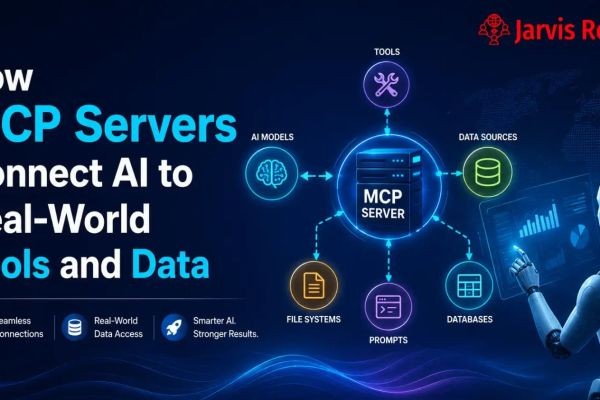
As artificial intelligence becomes more capable, businesses need secure and reliable ways to connect AI models with real-world information. An MCP Server (Model Context Protocol Server) provides a standardized solution for linking AI applications with APIs, enterprise systems, databases, and file storage. Instead of giving an AI model direct access to sensitive resources, the MCP Server acts as a secure intermediary, ensuring that information is retrieved efficiently and safely.
Whether you're developing an AI assistant, automating business workflows, or building enterprise applications, understanding how an MCP Server works is essential. This guide explains MCP Servers, MCP Clients, APIs, SQL databases, authentication, prompt templates, and other core concepts that power modern AI platforms.
What Is an MCP Server?
An MCP Server is software that implements the Model Context Protocol, allowing AI applications to communicate with external tools and data sources through a standardized interface.
Instead of embedding business logic inside an AI model, organizations expose resources through an MCP Server. This makes AI systems more flexible, secure, and easier to maintain.
An MCP Server can connect AI to:
- Enterprise data
- APIs
- SQL databases
- File systems
- Cloud storage
- Internal business applications
- Third-party services
This architecture helps AI deliver accurate, real-time responses based on trusted information.
Understanding the MCP Client
The MCP Client is the application that communicates with the MCP Server on behalf of an AI model.
Its responsibilities include:
- Sending user requests
- Receiving server responses
- Managing sessions
- Handling authentication
- Maintaining conversation context
The MCP Client allows AI applications to access external resources without directly connecting to databases or business systems.
API Integration Through MCP Server
Most organizations use multiple software applications that communicate through APIs. An MCP Server simplifies these integrations by providing a single interface for AI systems.
Common API integrations include:
- CRM software
- Email platforms
- Calendar services
- Payment gateways
- Customer support systems
- Marketing automation tools
Instead of building separate integrations for every AI application, developers connect these services once through the MCP Server.
Accessing Enterprise Data Securely
Every organization generates valuable enterprise data that can help AI provide better answers.
Examples include:
- Customer information
- Product catalogs
- Sales reports
- Knowledge bases
- Employee documentation
- Business analytics
An MCP Server retrieves only the required information while enforcing security and access controls, helping organizations protect sensitive data.
Working with SQL Databases
Many businesses store critical information in SQL databases.
An MCP Server can securely communicate with databases such as:
- MySQL
- PostgreSQL
- Microsoft SQL Server
- Oracle Database
- SQLite
Rather than allowing AI models unrestricted database access, the server processes queries safely and returns only relevant information.
Managing Multiple Data Sources
Organizations rarely rely on a single source of information. Modern businesses use many different data sources, including:
- SQL databases
- REST APIs
- Cloud storage
- Document management systems
- Internal knowledge bases
- File systems
An MCP Server combines these resources into one unified system, making it easier for AI applications to retrieve information.
Prompt Templates Improve AI Responses
Prompt templates help standardize communication between AI models and external systems.
Benefits include:
- Consistent formatting
- Better response quality
- Reduced prompt errors
- Faster automation
- Easier maintenance
Businesses often create reusable templates for customer support, report generation, document summarization, and internal workflows.
Stateless vs Stateful Communication
Understanding stateless and stateful communication is important when designing AI systems.
Stateless Communication
Each request is processed independently without remembering previous interactions.
Advantages include:
- Better scalability
- Faster processing
- Easier load balancing
- Simpler infrastructure
Stateful Communication
Stateful systems remember previous interactions during a session.
Benefits include:
- Personalized conversations
- Context-aware AI responses
- Better customer experiences
- More natural interactions
Many AI platforms combine both methods depending on the application's requirements.
Authentication and Security
Security is one of the most important responsibilities of an MCP Server.
Common authentication methods include:
- API keys
- OAuth
- Access tokens
- Role-based permissions
- Secure HTTPS communication
Strong authentication ensures that only authorized users and AI systems can access protected business resources.
Using File Systems with MCP Server
Not all business information is stored in databases. Many organizations rely on file systems for storing documents and reports.
An MCP Server can access:
- PDF documents
- Microsoft Word files
- Excel spreadsheets
- CSV files
- Technical documentation
- Company policies
This allows AI assistants to answer questions using information already stored within an organization.
Backends and AI Platforms
An MCP Server works with various backends and modern AI platforms, including:
- Enterprise applications
- Customer service software
- Workflow automation systems
- Business intelligence platforms
- Internal knowledge systems
- Large language models
Its standardized approach makes it easier to switch AI providers without rebuilding existing integrations.
Benefits of an MCP Server
Organizations choose MCP Servers because they provide:
- Secure AI access to business data
- Standardized API communication
- Improved scalability
- Simplified maintenance
- Better security controls
- Flexible backend integrations
- Efficient prompt management
- Faster AI deployment
These advantages help businesses build reliable and future-ready AI solutions.
Best Practices for MCP Server Deployment
To maximize performance and security:
- Use strong authentication methods.
- Restrict access to sensitive resources.
- Encrypt all communications.
- Monitor API activity regularly.
- Keep prompt templates updated.
- Validate incoming requests.
- Perform regular security audits.
- Test integrations before deployment.
Following these practices ensures a stable and secure AI environment.
Conclusion
The MCP Server has become a key component of modern AI infrastructure by enabling secure communication between AI applications and external systems. Whether connecting MCP Clients to APIs, enterprise data, SQL databases, file systems, or multiple backends, MCP provides a standardized and scalable solution.
As businesses continue adopting AI across departments, understanding concepts such as authentication, prompt templates, stateless and stateful communication, and enterprise integrations will become increasingly important. By implementing an MCP Server, organizations can build intelligent AI applications that are secure, efficient, and ready for future growth.






