
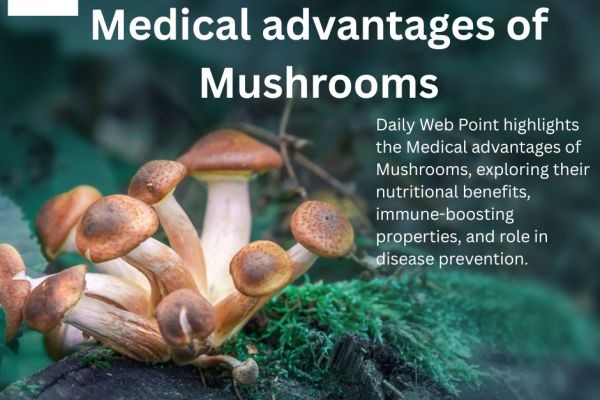
In recent years, mushrooms have moved beyond their role as a culinary ingredient and gained recognition as a powerful functional food. Backed by growing scientific research, the medical advantages of mushrooms are now being explored in clinical nutrition, preventive medicine, and integrative healthcare. Rich in bioactive compounds, medicinal mushrooms offer therapeutic potential that supports both physical and metabolic health.
At Daily Web Point, we focus on evidence-based insights, and mushrooms present a compelling case where traditional knowledge aligns with modern science.
Nutritional Composition and Bioactive Compounds
Mushrooms are low in calories yet dense in nutrients, making them uniquely beneficial for long-term health. They contain essential vitamins such as B-complex vitamins (riboflavin, niacin, and pantothenic acid), minerals like selenium, potassium, and copper, as well as dietary fiber.
What truly distinguishes mushrooms is their concentration of bioactive compounds, including beta-glucans, polysaccharides, terpenoids, and phenolic antioxidants. These compounds are responsible for many of the medical advantages of mushrooms, particularly their immunomodulatory and anti-inflammatory properties.
Immune System Modulation and Disease Resistance
One of the most well-documented health benefits of medicinal mushrooms is immune system support. Beta-glucans found in varieties such as shiitake, maitake, and reishi interact with immune receptors, enhancing the body’s natural defense mechanisms.
Scientific studies suggest that these compounds help regulate immune responses rather than overstimulate them, making mushrooms valuable for maintaining immune balance. This property is particularly important in reducing susceptibility to infections while minimizing chronic inflammation, a key contributor to many non-communicable diseases.
Role in Cardiovascular and Metabolic Health
The medical advantages of mushrooms extend to cardiovascular health. Certain mushroom species contain compounds that help regulate cholesterol levels by inhibiting cholesterol absorption and improving lipid metabolism. Additionally, their potassium content supports blood pressure regulation by counteracting the effects of sodium.
Mushrooms also play a role in metabolic health. Their low glycemic index and high fiber content contribute to improved blood sugar control, making them beneficial for individuals managing insulin resistance or type 2 diabetes. Emerging research indicates that mushroom polysaccharides may enhance insulin sensitivity at the cellular level.
Anti-Cancer Properties and Cellular Protection
Medicinal mushrooms have attracted attention in oncology research due to their potential anti-cancer effects. Laboratory and clinical studies indicate that mushroom-derived polysaccharides may inhibit tumor growth, promote apoptosis (programmed cell death), and support immune-mediated cancer defense.
While mushrooms are not a substitute for conventional cancer treatment, they are increasingly studied as complementary nutritional agents. Their antioxidant capacity also helps protect cells from oxidative stress, reducing DNA damage linked to cancer development.
Cognitive Function and Neuroprotective Benefits
Certain mushroom species, such as lion’s mane, have demonstrated neuroprotective properties. These mushrooms contain compounds that stimulate nerve growth factor (NGF) synthesis, which is essential for neuron maintenance and regeneration.
Regular consumption of medicinal mushrooms may support cognitive performance, memory retention, and overall brain health. This makes them a promising dietary component for aging populations and individuals seeking preventive neurological support.
Gut Health and Anti-Inflammatory Effects
Gut health plays a central role in overall wellness, and mushrooms contribute positively through their prebiotic fibers. These fibers nourish beneficial gut bacteria, promoting a balanced microbiome that supports digestion, immunity, and nutrient absorption.
The anti-inflammatory effects associated with the medical advantages of mushrooms further benefit individuals dealing with chronic inflammatory conditions, including autoimmune disorders and digestive inflammation.
Conclusion: A Clinically Relevant Natural Resource
From immune modulation to metabolic regulation and neuroprotection, the medical advantages of mushrooms are supported by an expanding body of scientific evidence. Their unique bioactive profile positions them as more than just food—they are a clinically relevant natural resource with broad health applications.
At Daily Web Point, we emphasize informed wellness, and incorporating medicinal mushrooms into a balanced diet represents a scientifically grounded approach to preventive healthcare. As research continues to evolve, mushrooms are likely to play an increasingly important role in functional nutrition and medical science.






