
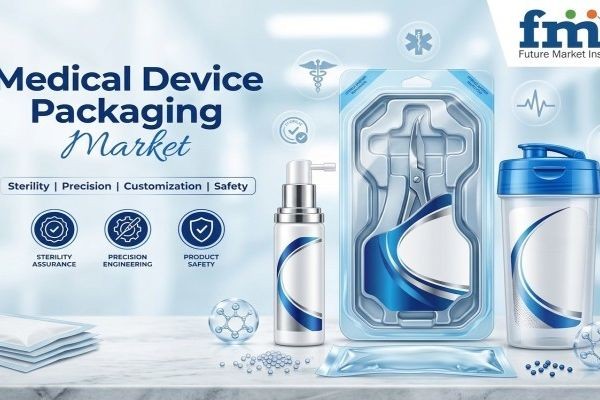
The global medical device packaging market is witnessing consistent expansion as healthcare systems, device manufacturers, and regulatory authorities increasingly emphasize sterility assurance, traceability, compliance requirements, and patient safety. Packaging is evolving from a conventional protective layer into an essential component of quality management and regulatory risk mitigation.
The Medical Device Packaging Market was valued at USD 43.2 billion in 2025 and is projected to reach USD 45.2 billion in 2026. Over the forecast period from 2026 to 2036, the market is anticipated to attain USD 68.4 billion, expanding at a CAGR of 4.2%. Rising medical device production, coupled with stringent regulatory standards, is accelerating demand for high-performance packaging solutions capable of preserving product integrity throughout the supply chain.
Get detailed market forecasts, competitive benchmarking, and pricing trends:
https://www.futuremarketinsights.com/reports/sample/rep-gb-5679
Quick Stats: Medical Device Packaging Market
- Market Size (2025): USD 43.2 Billion
- Market Size (2026): USD 45.2 Billion
- Market Size (2036): USD 68.4 Billion
- Growth Rate: 4.2% CAGR (2026-2036)
- Fastest-Growing Countries: China (6.2%), India (6.0%), Brazil (5.3%)
- Leading Material Segment: Plastic (42.7% share in 2026)
- Leading Packaging Format: Bags & Pouches (21.5% share in 2026)
- Major Application Segment: Sterile Packaging (58.0% share in 2026)
Growing Importance of Sterility Assurance and Regulatory Compliance
Manufacturers are increasingly adopting packaging systems that safeguard medical devices during sterilization, transportation, storage, and end use. Key requirements driving procurement decisions include:
- Seal integrity validation and transit testing
- Sterility assurance and documentation capabilities
- Compatibility with multiple sterilization processes
- Compliance with evolving regulatory standards
- Extended shelf-life and product protection
As packaging validation becomes closely integrated with regulatory approval pathways, suppliers offering advanced sterile barrier technologies are strengthening their competitive positioning.
Rising Adoption of Single-Use Devices Fueling Packaging Demand
The growing use of disposable medical products continues to support market expansion owing to:
- Higher utilization of single-use surgical instruments
- Expanding demand for diagnostic and monitoring kits
- Increasing production of implantable medical devices
- Rising healthcare expenditure across emerging economies
These applications require individually validated packaging systems that preserve sterility while ensuring safe storage and transportation.
Expansion of Global Manufacturing Networks
Rapid growth in medical device manufacturing across key regions is creating new opportunities for packaging companies.
Regional developments include:
- China: Accelerating device production alongside tighter regulatory frameworks
- India: Government initiatives encouraging domestic manufacturing and packaging investments
- Brazil: Expanding healthcare infrastructure supporting sterile packaging adoption
- North America and Europe: Increased focus on compliance, validation protocols, and advanced packaging technologies
Industry participants are also investing heavily in cleanroom converting facilities, high-barrier films, and sterile packaging materials to meet growing demand.
Material Innovation Driven by Sterilization Requirements
Material selection has become increasingly critical as manufacturers seek compatibility with diverse sterilization technologies and sustainability objectives.
Major considerations include:
- Ethylene oxide sterilization compatibility
- Resistance to radiation and steam sterilization
- Effective microbial barrier performance
- Breathability and sealing reliability
- Environmental compliance and reduced emissions
Growing concerns surrounding ethylene oxide sterilization are encouraging the development of next-generation materials suitable for alternative sterilization methods.
Procurement Strategies Centered on Compliance Expertise
Medical device manufacturers are increasingly prioritizing technical competence and regulatory support over pricing considerations alone.
Key supplier selection criteria include:
- ISO 11607-compliant packaging solutions
- ISO 13485-certified manufacturing practices
- Cleanroom production capabilities
- Traceability and documentation support
- Validation expertise and audit preparedness
Suppliers capable of streamlining qualification procedures and reducing regulatory complexities are securing long-term partnerships.
Lifecycle Support Enhancing Customer Value
Beyond manufacturing, companies are seeking packaging partners that provide ongoing support through:
- Validation and qualification assistance
- Sterilization compatibility consulting
- Packaging performance monitoring
- Regulatory documentation services
- Continuous quality improvement programs
Comprehensive technical support is increasingly becoming a key differentiator in strengthening customer relationships and driving repeat business.
Sustainability Initiatives Creating New Opportunities
Environmental considerations are reshaping packaging innovation across the healthcare industry.
Emerging trends include:
- Development of recyclable sterile barrier systems
- Lightweight packaging configurations
- Material reduction strategies without compromising sterility
- Growing adoption of mono-material packaging structures
These initiatives are expected to generate new avenues for growth while maintaining stringent healthcare safety and performance requirements.
Competitive Landscape
Major market participants including Amcor plc, DuPont de Nemours, Inc., Nelipak Corporation, Oliver Healthcare Packaging Company, Klöckner Pentaplast Group, Wipak Group, PAXXUS, Inc., Sterimed Group, Tekni-Plex, Inc., and UFlex Limited are competing through:
- Medical-grade material innovation
- Advanced cleanroom converting capabilities
- Development of sterile barrier technologies
- Comprehensive validation and documentation services
- Expansion of global manufacturing and distribution networks
As regulatory standards become increasingly stringent, competitive differentiation is shifting toward validation expertise, sterilization compatibility, and the ability to deliver compliant packaging solutions for Class II and Class III medical devices.
Realted Reports:
https://www.openpr.com/news/4528118/pet-straps-market-to-reach-usd-3-8-billion-by-2036-driven
https://www.openpr.com/news/4528125/pe-film-market-to-reach-usd-32-7-billion-by-2036-driven
https://www.openpr.com/news/4528129/shrink-sleeve-labels-market-to-reach-usd-22-4-billion-by-2036
About Future Market Insights (FMI)
Future Market Insights, Inc. (FMI) is an ESOMAR-certified, ISO 9001:2015 market research and consulting organization, trusted by Fortune 500 clients and global enterprises. With operations in the U.S., UK, India, and Dubai, FMI provides data-backed insights and strategic intelligence across 30+ industries and 1200 markets worldwide.






