
Manual data entry is one of the biggest hidden costs in retail. Every time staff re‑type an order, adjust stock by hand, or update prices in multiple systems, there’s a chance something will go wrong. Automated sales and inventory updates—powered by a unified commerce retail OS for retailers—dramatically reduce those errors.
Where Errors Come From
Most mistakes happen because systems are disconnected:
- The pos system in your shop runs separately from your ecommerce store.
- Social commerce orders are tracked manually.
- Inventory is updated in one place but not another.
This leads to inconsistent stock, wrong picks, and frustrated customers who are told, “We thought we had that item, but we don’t.”
How Automation Changes the Game
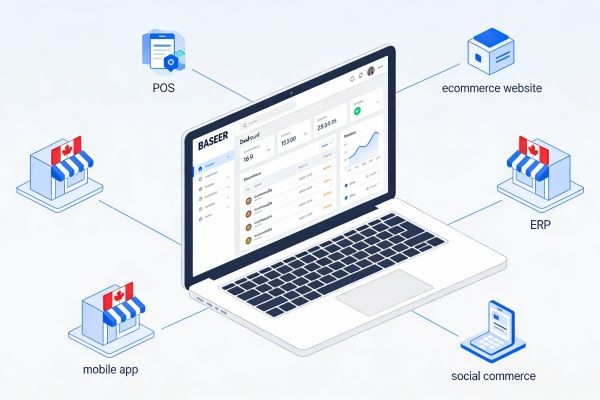
With an omnichannel retail OS platform, every sale—whether from the point of sale, ecommerce website, or social channel—automatically:
- Reduces stock in the central inventory.
- Updates available quantities across all channels.
- Creates or updates order records for picking, packing, and accounting.
Because the unified omnichannel retail operating system holds one shared product and stock database, you’re never reconciling different versions of the truth.
Integrating POS, Ecommerce, and ERP
Effective automation usually connects three core pieces:
- Your in‑store point of sale.
- Your ecommerce store (website, marketplaces, social checkout).
- Your erp system or back‑office processes.
When all three sit inside or connect through a unified commerce retail OS for retailers, you can set up rules like:
- “When stock hits 5 units, create a purchase suggestion.”
- “When an order is cancelled, return items to available stock.”
- “When a price changes in ERP, update it everywhere—including the ecommerce website.”
Example: Electronics Store Eliminating Overselling
Imagine an electronics store that sells popular gadgets both online and in‑store. During big promotions, orders come in quickly from all sides. Before automation, they often oversold products because online stock wasn’t reduced quickly enough after in‑store purchases.
After adopting a unified omnichannel retail operating system:
- Every sale at the point of sale immediately updated stock, which the ecommerce store and marketplaces could see.
- When an online order arrived, items were reserved in inventory so staff wouldn’t accidentally sell them in‑store.
- Staff saw a single “available to sell” number for each SKU.
The result: fewer cancelled orders, fewer angry customers, and more accurate reporting on what truly sold during each campaign.
Operational Benefits Beyond Fewer Mistakes
Automated sales and inventory updates don’t just remove errors; they also:
- Save staff hours of manual reconciliation every week.
- Improve supplier negotiations by giving you accurate demand data.
- Support better planning for promotions, markdowns, and new product launches.
Because your point of sale, ecommerce solutions, and erp system are all in sync, you can trust the numbers when making decisions.
Conclusion
Minimizing errors in retail is less about telling staff to “be careful” and more about designing systems that don’t rely on manual updates. By using an omnichannel retail OS platform that automates sales and inventory across your point of sale, ecommerce store, and erp system, you dramatically cut mistakes while saving time and money. That level of automation turns your tech stack into a quiet partner that keeps everything accurate in the background, so your team can focus on selling and serving customers.






