
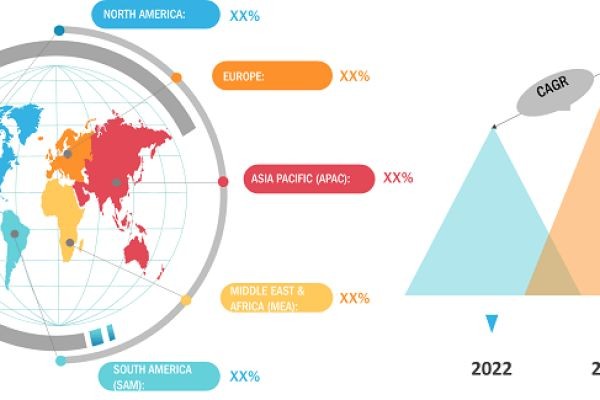
The structural integrity of every tyre on the road depends on a reinforcement layer that most drivers never think about. The Tire Cord Fabrics Market is projected to grow from US$ 7.17 Billion in 2025 to US$ 10.76 Billion by 2034, registering a CAGR of 5.21% over the forecast period 2026–2034. That steady expansion is anchored in global vehicle production growth, the accelerating shift toward radial tyre technology in developing markets, and the evolving material requirements of electric vehicle tyres that carry heavier loads and operate under distinct thermal and performance conditions.
What Are Tire Cord Fabrics?
Tire cord fabrics are high-tenacity textile reinforcement materials embedded within the rubber matrix of a tyre carcass, belt, and cap ply to provide tensile strength, dimensional stability, and resistance to fatigue under the cyclic stresses of rolling contact. Made from materials including rayon, nylon, polyester, polyethylene naphthalate, and increasingly aramid and hybrid constructions, they determine the tyre's structural performance characteristics, including load capacity, speed rating, and resistance to impact damage. The cord fabric type and construction are among the most consequential material decisions in tyre engineering.
Request a Sample Copy of the Report: https://www.theinsightpartners.com/sample/TIPRE00007033
What Is Driving Demand for Tire Cord Fabrics?
Global vehicle production is the primary volume driver, and it remains on a growth trajectory across most major automotive markets. Passenger car production in Asia Pacific, South Asia, and South and Central America continues to expand as rising household incomes drive first-time vehicle ownership, while commercial vehicle fleets grow alongside infrastructure investment and logistics network expansion. Every tyre produced consumes tire cord fabric, creating a direct and durable link between vehicle output and cord fabric demand across both OEM and aftermarket distribution channels.
The transition from bias to radial tyre construction in emerging markets is a structural demand accelerator that goes beyond simple volume growth. Radial tyres, which have been standard in passenger car applications across North America and Europe for decades, are still displacing bias tyres in truck and agricultural tyre applications across parts of Asia, Africa, and South and Central America. Radial construction requires higher-performance cord fabrics, particularly polyester and nylon cap ply materials, at greater quantities per tyre than their bias equivalents. As this technology transition progresses, it drives both volume and value growth simultaneously in the tire cord fabric supply chain.
Electric vehicles are reshaping tyre performance requirements in ways that directly influence cord fabric specification. EV tyres must support the higher kerb weight of battery-equipped vehicles, withstand the instantaneous high-torque loads generated by electric motors, and maintain low rolling resistance to maximise driving range. These requirements push tyre engineers toward stiffer, higher-modulus cord constructions, with polyethylene naphthalate and hybrid rayon-nylon systems gaining specification traction in premium EV tyre programmes. As EV production scales from niche to mainstream across all vehicle segments, this technical upgrade cycle in cord fabric specification represents a meaningful average selling price uplift for fabric producers.
The aftermarket distribution channel provides a consistent and growing demand stream independent of new vehicle production cycles. The global installed base of passenger and commercial vehicles is enormous, and tyre replacement intervals of three to six years generate continuous replacement tyre demand that consumes cord fabric at rates uncorrelated with OEM production fluctuations. As vehicle parc sizes grow across Asia Pacific and emerging markets, the aftermarket channel's contribution to total tire cord fabric demand is increasing year by year.
Tire Cord Fabrics Market Segmentation Overview
By Tire Type: Radial Tires dominate passenger car and increasingly commercial vehicle production, requiring polyester body ply, nylon cap ply, and high-modulus belt reinforcement in multi-layer constructions. Bias Tires retain relevance in off-road, agricultural, and certain heavy-duty applications where sidewall stiffness and puncture resistance take priority over rolling resistance.
By Material: Rayon delivers excellent adhesion to rubber and dimensional stability at elevated temperatures, retaining use in premium passenger and high-performance tyre applications. Nylon offers superior impact resistance and fatigue performance, widely used in cap ply and bias tyre carcass applications. Polyethylene Naphthalate provides higher modulus and thermal stability than standard polyester, gaining specification in EV and performance tyre programmes. Polyester is the highest-volume material in radial passenger tyre carcasses globally, combining performance, processability, and cost efficiency. Others include aramid, glass fibre, and hybrid cord constructions for speciality applications.
By Distribution Channel: OEMs account for the majority of cord fabric consumption, supplying the world's major tyre manufacturers through long-term supply agreements. Aftermarket demand is supplied through replacement tyre production, which draws on the same cord fabric supply chains as OEM manufacturing.
By Vehicle Type: Passenger Cars, Light Commercial Vehicles, and Heavy Commercial Vehicles.
By Geography: North America, Europe, Asia Pacific, and South and Central America.
Key Market Players
- SRF Group
- Indorama Ventures Public Company Limited
- Star Polymers Inc.
- Kolon Industries, Inc.
- HYOSUNG ADVANCED MATERIALS
- Kordsa Teknik Tekstil A.S.
- Toray Hybrid Cord, Inc.
- CORDUS
- Century Enka Limited
- Shenma Industrial Co., Ltd.
The competitive landscape is dominated by vertically integrated textile and polymer companies with dedicated tyre cord divisions. Kordsa, Hyosung Advanced Materials, and Kolon Industries are among the most globally recognised names in high-performance tyre reinforcement fabrics, with technical development relationships with the world's major tyre manufacturers. SRF Group and Century Enka represent India's growing competitive presence, while Shenma Industrial anchors China's significant domestic production base. Indorama Ventures brings polyester feedstock integration advantages to its cord fabric operations.
Sustainability and Innovation Trends
Sustainability is becoming a genuine competitive differentiator in tire cord fabrics. Several major producers are developing bio-based polyester and rayon cord fabrics using feedstocks derived from sugarcane, wood pulp, and recycled PET, responding to tyre manufacturer sustainability commitments and end-consumer expectations around product environmental footprint. Recycled polyester cord fabrics incorporating post-consumer PET bottle content are advancing toward commercial qualification with tier-one tyre customers. On the performance innovation front, hybrid cord constructions combining two or more fibre types within a single twisted yarn are enabling tyre engineers to achieve combinations of modulus, fatigue resistance, and weight reduction that single-material cords cannot deliver. These hybrid solutions command premium pricing and are particularly relevant to the EV tyre and ultra-high-performance passenger tyre segments.
Buy Premium Report: https://www.theinsightpartners.com/buy/TIPRE00007033
Regional Outlook
Asia Pacific dominates the tire cord fabrics market by volume, accounting for the majority of both production capacity and consumption. China is the world's largest tyre producer and a major cord fabric manufacturer in its own right, with Shenma Industrial and several other domestic producers supplying both local tyre factories and export markets. India is a fast-growing secondary market, with SRF Group and Century Enka serving a domestic tyre industry expanding on the back of rising vehicle sales and an active replacement tyre market.
Europe maintains a technically sophisticated demand base, with premium tyre manufacturers in Germany, France, Italy, and Spain specifying high-performance cord constructions for passenger and commercial vehicle applications. Kordsa's Turkish manufacturing base serves European tyre customers with competitive lead times and strong technical support capabilities.
North America is a stable, mature market where OEM demand from domestic tyre plants is supplemented by a large aftermarket replacement channel. South and Central America offers growth potential anchored by Brazil's integrated automotive and tyre manufacturing industry, with Mexican tyre production also contributing as North American supply chain integration deepens.
Related Reports:
Fiber Reinforced Polymer (FRP) Panels and Sheets Market
About The Insight Partners
The Insight Partners is among the leading market research and consulting firms in the world. We take pride in delivering exclusive reports along with sophisticated strategic and tactical insights into the industry. Reports are generated through a combination of primary and secondary research, solely aimed at giving our clientele a knowledge-based insight into the market and domain. This is done to assist clients in making wiser business decisions. A holistic perspective in every study undertaken forms an integral part of our research methodology and makes the report unique and reliable.
Contact Us:
If you have any queries about this report or if you would like further information, please contact us:
Phone: +1-646-491-9876
E-mail: sales@theinsightpartners.com
Also Available in: Korean | German | Japanese | French | Chinese | Italian | Spanish






