
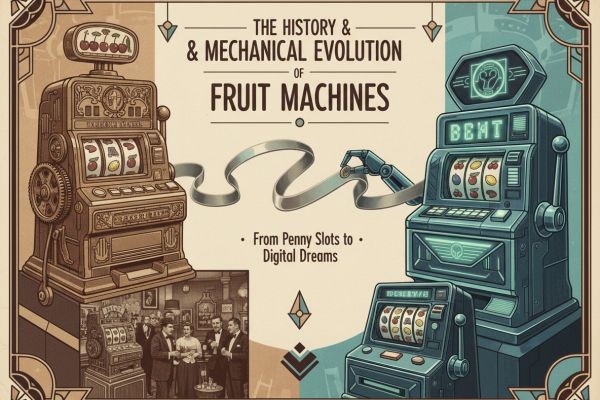
The history of gaming machines spans over a century, beginning with simple mechanical devices in the late nineteenth century. These early machines, often referred to as fruit machines, relied on physical gears, springs, and reels to function. Players pulled a lever to spin the reels, which were printed with symbols like cherries, lemons, and bells. The simplicity of these mechanisms captured the public's imagination, paving the way for the gaming industry. Understanding this historical evolution helps us appreciate the complex digital games we see today. The core concepts of reels, paylines, and random outcomes remain unchanged, despite the shift to digital platforms. By studying this history, we can see how mechanical limitations shaped early game design and regulations.
The Mechanical Pioneers
The first widely successful mechanical slot machine was the Liberty Bell, invented by Charles Fey in San Francisco. This machine featured three spinning reels and five symbols, including diamonds, spades, hearts, horseshoes, and the liberty bell. The mechanical simplicity of the three-reel design allowed for automatic payouts, which was a major innovation at the time. Fey's design became the blueprint for the industry, inspiring numerous copies and variations. These early machines were entirely mechanical, relying on the physical rotation of the reels to determine the outcome. A system of braking levers stopped the reels in sequence, revealing the final symbol combination. This physical mechanism provided a tangible, auditable form of randomness that players could see and trust.
The Shift to Microprocessors
In the mid-twentieth century, electromechanical systems began to replace pure mechanical designs. These new machines used electrical circuits to control the reels and calculate payouts, though the physical lever remained. The introduction of electronics allowed for more complex payout structures and larger coin hoppers. It also made the machines more reliable, reducing mechanical wear and tear. By the late twentieth century, microprocessors were introduced, paving the way for the modern video slot. These microprocessors allowed developers to replace physical reels with virtual reels displayed on video screens. This technological shift removed many of the physical limitations of slot design, allowing for more paylines and bonus features.
The Core of Digital Gaming
The most significant breakthrough in slot history was the development of the Random Number Generator. This software replaced the physical braking levers and electronic circuits, managing the outcome of every spin mathematically. The RNG continuously generates numbers, selecting the latest value the moment the player initiates a spin. This innovation ensured that each spin was completely independent of the last, eliminating any predictability. It also allowed for the creation of progressive jackpot pools, where machines could be linked to accumulate prize potential. Today, all digital slots rely on this technology, which is audited by independent testing laboratories. Understanding how RNGs work is key to recognizing the fairness of modern educational platforms, such as a educational gaming hub which focus on quality and transparency for their visitors.
Preserving the Classic Style in the Digital Age
Despite the advanced graphics of modern games, retro fruit machines remain highly popular. Many developers produce digital titles that replicate the look, sound, and simplicity of early mechanical slots. These retro games often feature three reels, simple paytables, and classic symbols like fruit and bars. The appeal lies in their straightforward gameplay, which offers a nostalgic experience for players. It also provides a simple introduction to slot mechanics for beginners, who may find modern video slots overwhelming. By preserving these classic designs, the industry maintains a connection to its roots while utilizing modern security and software. This balance of history and technology continues to define the evolution of digital gaming.






