
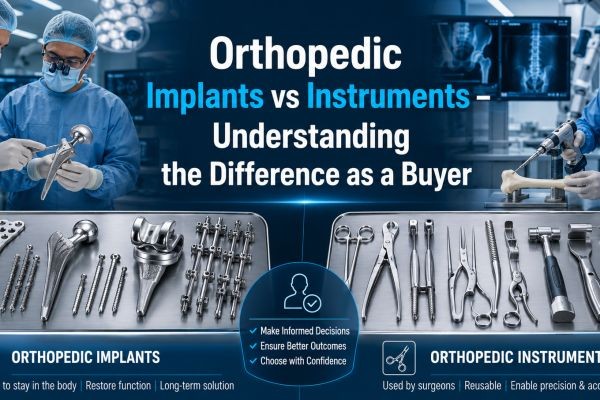
Modern healthcare procurement involves sourcing a wide range of medical devices for different surgical specialties through reliable Surgicals Online Shopping platforms and trusted medical suppliers. Buyers working with orthopedic departments must clearly understand the difference between orthopedic implants and orthopedic instruments before making purchasing decisions. Although these two categories are often discussed together, they serve completely different purposes inside the operating room.
Orthopedic implants are medical devices placed inside the body to support, replace, or stabilize damaged bones and joints. Orthopedic instruments are the specialized surgical tools used by doctors to perform procedures involving those implants. Knowing how they differ helps hospitals, clinics, and distributors avoid procurement mistakes while ensuring better surgical outcomes.
What Are Orthopedic Implants?
Orthopedic implants are devices designed to remain inside the patient’s body either temporarily or permanently. They help restore movement, stabilize fractures, or replace damaged joints caused by trauma, aging, or disease.
Common orthopedic implants include:
- Bone plates
- Surgical screws
- Intramedullary nails
- Hip replacement implants
- Knee replacement systems
- Spinal fixation devices
These implants are manufactured using biocompatible materials such as titanium, stainless steel, and cobalt-chromium alloys. Since implants directly interact with human tissue and bone, manufacturers must follow strict safety and quality standards.
Important Features Buyers Should Check in Implants
Material Durability
The implant material should resist corrosion and remain stable inside the body for many years.
Regulatory Compliance
Reliable implants usually carry certifications such as ISO, CE, or FDA approvals.
Precision Engineering
Accurate dimensions and finishing are critical for proper fit and surgical success.
Long-Term Performance
Buyers should evaluate clinical reliability and durability before purchasing large quantities.
What Are Orthopedic Instruments?
Orthopedic instruments are reusable surgical tools used during operations involving bones, joints, and implants. Unlike implants, these products are not left inside the body after surgery. Their purpose is to assist surgeons throughout the procedure.
Some commonly used orthopedic instruments include:
- Bone holding forceps
- Retractors
- Surgical hammers
- Bone cutters
- Drills and taps
- Screwdrivers
- Rongeurs
- Depth gauges
These instruments help surgeons perform precise movements during surgery, ensuring implants are positioned correctly and procedures are completed safely.
How Implants and Instruments Work Together
Orthopedic surgery depends on the coordinated use of both implants and instruments. During fracture fixation or joint replacement surgery, instruments help surgeons prepare the bone and place implants accurately.
For example:
- Surgical retractors expose the treatment area.
- Drills create openings in the bone.
- Measuring tools determine implant size.
- Specialized screwdrivers secure plates and screws.
Without high-quality instruments, even premium implants may not perform effectively. This is why buyers should evaluate both categories carefully instead of focusing only on implants.
Major Differences Between Orthopedic Implants and Instruments
Purpose
Implants are designed to remain inside the patient’s body, while instruments are temporary tools used during surgery.
Usage
Implants are generally single-use products, whereas instruments are reused after sterilization.
Manufacturing Standards
Implants require biocompatibility testing, while instruments focus more on strength, precision, and repeated sterilization resistance.
Inventory Management
Implants require multiple size options and detailed tracking systems. Instruments are usually organized into reusable surgical sets.
Cost Structure
Implants are often more expensive due to material requirements and long-term body compatibility standards.
Why Quality Matters for Buyers
Purchasing low-quality orthopedic products can create serious operational and medical complications. Inferior implants may fail inside the body, while poorly manufactured instruments can reduce surgical precision.
Healthcare providers should always prioritize:
- Certified manufacturing standards
- High-grade stainless steel or titanium materials
- Reliable supplier reputation
- Product consistency
- Proper sterilization compatibility
A dependable supplier not only provides quality products but also offers technical support, replacement availability, and long-term service reliability.
Choosing the Right Supplier
Selecting a trustworthy manufacturer is one of the most important responsibilities for healthcare procurement teams.
Experience in the Industry
Established suppliers usually have better manufacturing expertise and quality control systems.
Wide Product Availability
Suppliers offering both implants and instruments simplify procurement and inventory management.
Customization Support
Some hospitals require customized surgical sets tailored to surgeon preferences.
Technical Assistance
Reliable after-sales support helps hospitals maintain surgical efficiency.
Global Standards
Products that meet international compliance standards provide better confidence and safety assurance.
In many hospitals, procurement teams handling trauma and specialty departments also manage devices related to Ophthalmic Surgical Instruments, making it important to work with suppliers capable of maintaining consistent quality across multiple surgical categories.
Growing Importance of Precision Surgical Equipment
The demand for orthopedic procedures continues to rise globally due to sports injuries, road accidents, aging populations, and increasing joint replacement surgeries. Modern healthcare facilities now focus heavily on surgical precision, patient safety, and faster recovery times.
Because of this, hospitals and distributors are becoming more selective when choosing orthopedic products. Buyers who understand the difference between implants and instruments can make smarter investments, reduce procurement errors, and improve surgical efficiency.
Healthcare facilities that invest in durable implants and precision-engineered tools ultimately achieve better patient outcomes, lower maintenance costs, and smoother surgical workflows using Orthopedic Surgical Instruments.






