
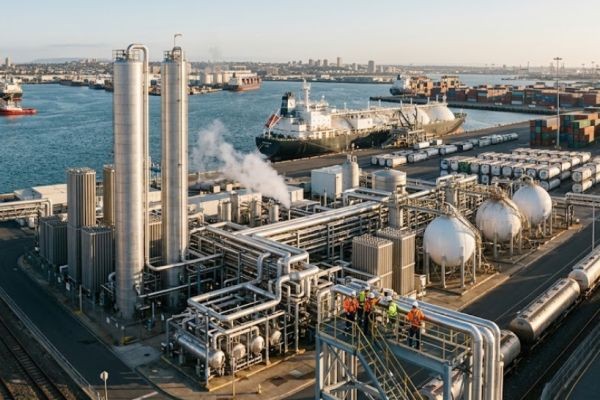
The Oxygen Price [https://www.procurementresource.com/resource-center/oxygen-price-trends] in 2025 reflects a mixed global market, shaped by uneven supply expansion, healthcare demand, and infrastructure gaps. While some regions experienced price stabilization due to new production capacities and improved distribution systems, others saw price increases driven by supply shortages and maintenance issues. The primary demand sectors—healthcare, steel manufacturing, and chemical processing—continued to support strong consumption levels. Supply conditions improved in regions investing in new liquid oxygen plants, particularly in East Africa, while parts of Asia faced disruptions due to under-maintained COVID-era facilities. Feedstock influence, particularly energy and natural gas costs, also played a role in shaping production economics and pricing dynamics.
Market Snapshot
Market Snapshot
- Market Direction: Mixed (Stable to Rising)
- Primary Demand Sector: Healthcare and Industrial Manufacturing
- Key Feedstock: Air separation (energy-intensive process influenced by electricity and natural gas costs)
- Major Supply Region: Asia Pacific, Middle East, East Africa (emerging)
- Short-Term Outlook: Stable to Slightly Bullish
Key Drivers Affecting Oxygen Prices
Key factors influencing the global oxygen price trend include:
- Energy Cost Fluctuations: Oxygen production via air separation units depends heavily on electricity and natural gas prices
- Supply-Demand Imbalance: Insufficient infrastructure in developing regions continues to create localized shortages
- Healthcare Demand: Persistent demand from hospitals and emergency medical systems supports baseline consumption
- Industrial Consumption: Steel, welding, and chemical industries drive bulk oxygen usage
- Production Capacity Expansion: New plants, particularly in East Africa, are easing supply constraints
- Logistics and Distribution: Cylinder transport and storage infrastructure significantly impact final pricing
Why Prices Increased or Decreased Recently
Recent movements in the oxygen price index can be explained by regional supply shifts:
- Prices declined in East Africa due to new liquid oxygen plants in Kenya and Tanzania under the East African Program on Oxygen Access (EAPOA), improving supply and stabilizing distribution costs
- Prices increased in parts of Asia due to the deterioration of COVID-era oxygen plants, forcing reliance on costly external suppliers
- Improved financing tools enabled suppliers in some regions to maintain price ceilings and reduce volatility
- Ongoing infrastructure gaps, including storage and pipeline limitations, kept prices sensitive to disruptions
Real Global Events Affecting the Market
Several real-world developments influenced the global oxygen market trend:
- Post-pandemic infrastructure challenges: Many emergency oxygen plants built during COVID-19 lacked long-term maintenance
- Healthcare system investments: Programs like EAPOA boosted production capacity in Africa
- Energy price volatility: Rising natural gas and electricity costs increased operational expenses for air separation units
- Global supply shortages: Reports indicated many countries still lack sufficient oxygen supply, sustaining demand pressure
- Logistics disruptions: Weak distribution networks in developing regions affected availability and pricing
Regional Market Analysis
North America
Demand remained stable, supported by industrial and healthcare sectors. Supply chains are well-established, leading to relatively stable pricing with minor fluctuations tied to energy costs.
Asia Pacific
The region experienced mixed trends. While industrial demand remained strong, supply disruptions due to poorly maintained oxygen plants caused localized price increases.
Europe
Stable demand from manufacturing and healthcare sectors, but energy cost volatility influenced production costs, leading to moderate price fluctuations.
Middle East & Africa
East Africa saw improving supply conditions due to new investments, resulting in easing prices. However, other parts of Africa still faced supply constraints, keeping prices uneven.
Industry Expert Insight
Industry analysts indicate that expanding regional production capacity, particularly in emerging markets, is gradually reducing price volatility, although long-term stability depends on infrastructure maintenance, financing mechanisms, and national healthcare planning.
Market Outlook
The oxygen price forecast suggests:
- Short-Term: Stable to slightly bullish, supported by persistent healthcare demand and uneven supply recovery
- Medium-Term: Gradual stabilization expected as new plants become operational and infrastructure improves
- Increased investment in storage and pipeline systems will reduce logistical inefficiencies
- Energy price trends will remain a critical factor influencing production costs
- Continued industrial growth will sustain baseline demand
Overall, the oxygen market outlook remains cautiously optimistic, with improved supply expected to balance demand over time.
FAQs
What affects Oxygen prices?
Energy costs, supply-demand balance, infrastructure, and industrial demand significantly affect oxygen prices.
Why did Oxygen prices fall recently?
Prices declined in regions like East Africa due to increased production capacity and improved distribution systems.
What industries use Oxygen?
Oxygen is widely used in healthcare, metal fabrication, steel production, and chemical industries.
Which region produces the most Oxygen?
Asia Pacific leads global production, followed by North America and Europe.
What is the future outlook for Oxygen prices?
The oxygen price trend is expected to stabilize with gradual supply improvements and sustained industrial demand.
Final
The oxygen supply demand analysis highlights a transitioning market where regional investments are improving stability, but infrastructure gaps still create volatility.






