
Summary
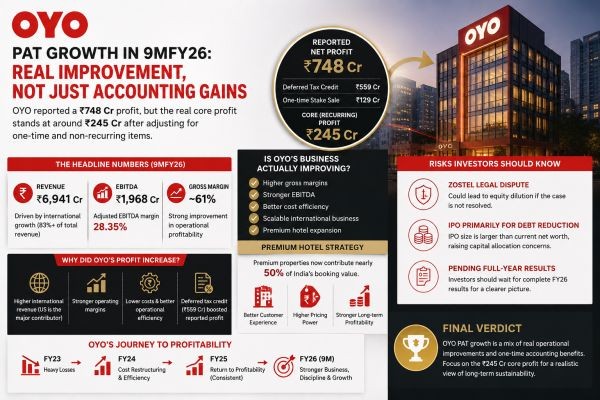
OYO PAT growth has sparked investor interest after the company reported a ₹748 crore net profit in 9MFY26. While the headline number signals a strong turnaround, nearly ₹559 crore came from a deferred tax credit and ₹129 crore from a one-time gain. Excluding these, OYO's core profit is around ₹245 crore. Even so, stronger margins, improved efficiency, and a growing premium hotel portfolio indicate that OYO's operational recovery is real.
Key Takeaways
- OYO PAT growth reached ₹748 crore in 9MFY26.
- Adjusted core profit is approximately ₹245 crore.
- Gross margin increased to nearly 61%.
- Adjusted EBITDA margin improved to 28.35%.
- International operations contribute more than 83% of revenue.
- Premium hotels continue to strengthen long-term growth.
- Legal and IPO-related risks remain important.
Introduction
The latest OYO PAT growth figures highlight a company that has significantly improved its operations. However, headline profits alone don't tell the full story. By separating accounting gains from operating performance, investors can better understand whether OYO's profitability is built for the long term.
The Headline Numbers OYO Actually Reported
For the first nine months of FY26, OYO reported ₹6,941 crore in revenue, ₹1,968 crore in EBITDA, and ₹748 crore in net profit. Revenue growth was driven by stronger hotel demand, booking commissions, and continued expansion in international markets.
The Real Story Behind OYO PAT Growth
The biggest reason behind OYO PAT growth was the deferred tax credit, which increased reported profit without generating additional operating cash. After removing this accounting benefit and the one-time subsidiary gain, OYO's recurring profit is much lower, offering a clearer picture of its actual earning capacity.
Is the Operational Story Actually Strong?
Yes. OYO has improved its gross margins, expanded EBITDA, reduced operating expenses, and increased efficiency. These improvements suggest that the company's financial turnaround is supported by stronger business fundamentals rather than accounting adjustments alone.
The Premiumization Strategy
A major factor behind OYO PAT growth is the company's move toward premium, company-managed hotels. This shift has helped improve service quality, occupancy, pricing power, and profitability while reducing reliance on budget hotel listings.
Risks Investors Should Watch
While OYO PAT growth is encouraging, investors should consider the unresolved Zostel legal dispute, possible equity dilution, and the company's debt-focused IPO plans. The release of full-year FY26 results will provide a better assessment of earnings sustainability.
OYO's Profit Growth Explained
The rise in OYO PAT growth reflects stronger international revenue, improving operating margins, disciplined cost management, and accounting-related tax benefits. Although the business is performing better, not every component of the reported profit is expected to continue in future years.
OYO's Path to Profitability
OYO has steadily recovered from significant losses by streamlining operations, lowering costs, and focusing on higher-value hospitality offerings. This transformation has positioned the company for a stronger IPO than its previous attempts.
Final Verdict
The latest OYO PAT growth demonstrates that OYO has made meaningful progress in improving its business. However, investors should look beyond the headline ₹748 crore profit and focus on the company's recurring earnings, operational efficiency, and long-term growth strategy. The adjusted ₹245 crore profit provides a more accurate measure of sustainable performance.
Frequently Asked Questions
What drove OYO PAT growth in 9MFY26?
The increase was driven by stronger operations, international expansion, better margins, and a deferred tax credit.
Is OYO's profit sustainable?
The operational business appears stronger, but part of the reported profit comes from non-recurring accounting benefits.
What are the biggest risks for investors?
The Zostel legal case, debt repayment plans, and pending FY26 results remain the key risks.
Conclusion
The recent OYO PAT growth story is about more than just rising profits. OYO has improved its operations, expanded globally, and strengthened margins, but one-time accounting gains have also inflated reported earnings. For a realistic assessment of the business, investors should focus on recurring profits, operational performance, and the company's long-term ability to sustain growth.






