
Introduction
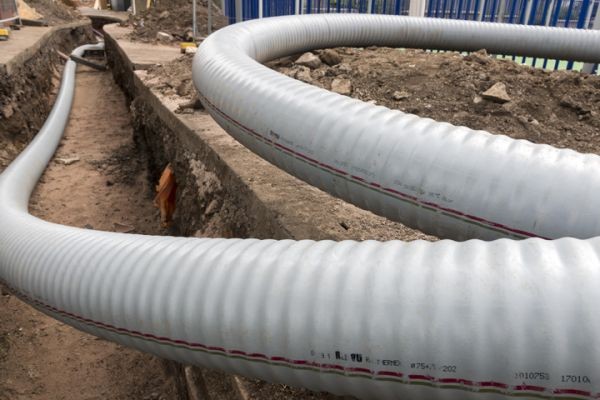
Pre-insulated pipes have become an important solution for transporting heating, cooling, and process fluids across modern thermal infrastructure. These systems generally combine a service pipe, insulation layer, and protective outer casing, providing an integrated structure designed to reduce thermal losses and protect the pipeline from external conditions.
The pre-insulated pipes market landscape is evolving as governments, utilities, industries, commercial property developers, and infrastructure operators place greater emphasis on energy efficiency, sustainability, reliable thermal distribution, and lifecycle cost management.
District heating, district cooling, renewable thermal energy, waste heat recovery, industrial modernization, and data center development are contributing to changing demand patterns. At the same time, manufacturers are introducing improved insulation materials, digital monitoring systems, advanced jointing technologies, and customized solutions.
Growing Importance of Energy-Efficient Thermal Networks
Energy efficiency is a central factor shaping the industry.
Thermal distribution systems can experience energy losses when insulation is inadequate or deteriorates over time. These losses can increase operating costs and reduce the overall efficiency of heating and cooling networks.
Pre-insulated pipes address this issue by incorporating insulation during manufacturing.
Integrated construction can provide consistent insulation performance and reduce some onsite insulation activities. As customers increasingly assess infrastructure according to lifecycle economics, energy-efficient piping solutions are gaining attention.
District Heating Segment
District heating remains one of the most established applications.
Centralized heat-generation facilities distribute thermal energy through underground networks to residential, commercial, institutional, and industrial users.
Modern district heating projects increasingly focus on improving network efficiency, reducing heat losses, integrating renewable energy, and strengthening reliability.
Pre-insulated pipes can support these objectives by providing efficient thermal transportation.
Replacement of aging district heating networks is also creating opportunities. Older infrastructure may suffer from insulation deterioration, leakage, corrosion, and increasing maintenance requirements.
District Cooling Development
District cooling is expanding the industry's application base.
Centralized cooling plants can provide chilled water to multiple buildings through dedicated distribution networks.
Pre-insulated pipes can reduce unwanted heat gain during transportation, helping maintain chilled-water performance.
Commercial developments, hospitals, universities, hotels, residential communities, industrial facilities, and data centers can all require efficient cooling infrastructure.
As urban cooling demand increases, district cooling networks can become an increasingly important source of demand.
Renewable Thermal Energy
Renewable energy integration is creating new opportunities for thermal piping systems.
Geothermal energy, solar thermal installations, biomass heating, and other renewable sources require reliable infrastructure to transport heat.
Pre-insulated pipes can connect generation facilities with thermal storage systems, district networks, and end users.
The increasing integration of renewable heat may encourage manufacturers to develop products capable of supporting different temperature ranges, pressure conditions, and network configurations.
Waste Heat Recovery
Waste heat recovery is another emerging application.
Industrial plants, data centers, power facilities, and large commercial buildings can generate recoverable heat.
Instead of releasing this energy, organizations can transport it to nearby facilities or district heating networks.
Pre-insulated pipes can help preserve thermal energy during transportation.
This creates opportunities for manufacturers as businesses and utilities seek to improve resource utilization and reduce energy waste.
Industrial Applications
Industrial facilities represent a diverse application segment.
Manufacturing plants may require hot water, chilled water, process fluids, equipment cooling, and other thermal utilities.
Pre-insulated systems can help maintain fluid temperatures and improve thermal efficiency.
Industrial modernization can therefore support demand for specialized piping.
Some projects require products designed for high temperatures, pressure variations, challenging soil conditions, or specific chemical environments.
This creates opportunities for manufacturers with strong engineering and customization capabilities.
Data Center Cooling
The expansion of data centers is creating new requirements for thermal management.
Cloud computing, artificial intelligence, high-performance computing, and digital services are increasing computing capacity.
Higher-density computing environments can generate substantial heat and require dependable cooling systems.
Pre-insulated pipes can support chilled-water distribution by reducing heat gain and improving thermal efficiency.
Data center developers may increasingly consider specialized piping systems as part of broader strategies for reliable and efficient cooling infrastructure.
Product and Technology Landscape
The product landscape is becoming more technologically advanced.
Manufacturers are improving insulation materials, protective casings, jointing systems, and pipe configurations.
High-performance insulation can reduce thermal losses, while improved protective layers can enhance resistance to moisture and environmental exposure.
Jointing innovations can simplify installation and strengthen system integrity.
These developments are helping manufacturers address increasingly complex project requirements.
Smart Monitoring and Leak Detection
Digital technologies are becoming an important part of modern thermal infrastructure.
Sensors can monitor temperature, pressure, moisture, and other operating conditions.
Leak detection systems can identify abnormal conditions and help maintenance teams investigate potential problems before major failures occur.
Remote monitoring platforms can provide centralized visibility across extensive networks.
These technologies can improve maintenance planning and reduce dependence on manual inspection.
Predictive Maintenance
The combination of sensors and data analytics is supporting predictive maintenance.
Historical operating data can help identify unusual patterns and potential deterioration.
Operators can use this information to prioritize maintenance activities according to actual asset conditions.
Predictive maintenance can reduce unexpected interruptions and potentially extend the useful life of thermal infrastructure.
This development is also creating opportunities for manufacturers to provide software and service solutions alongside physical piping products.
Manufacturing Developments
Manufacturing processes are evolving alongside product technology.
Automation can improve dimensional accuracy, insulation consistency, quality control, and production efficiency.
Digital manufacturing systems can help monitor production parameters and identify potential defects.
Improved manufacturing efficiency can help companies manage customization while maintaining competitive costs.
Production flexibility is increasingly valuable because thermal infrastructure projects often have different technical requirements.
Sustainability and Lifecycle Performance
Sustainability is becoming increasingly important in purchasing decisions.
Customers may evaluate products based on energy performance, material efficiency, service life, environmental impact, and maintenance requirements.
Pre-insulated pipes can contribute to energy conservation by reducing thermal losses.
Manufacturers are also exploring ways to reduce material waste and improve the sustainability of production.
Long service life can further improve lifecycle economics by reducing replacement frequency.
Installation and Construction Efficiency
Installation efficiency can influence project economics.
Factory-integrated insulation reduces some onsite construction activities.
Improved jointing methods and standardized components can further simplify installation.
Modular product designs can help contractors manage complex projects and reduce construction time.
This can be particularly valuable in urban environments where excavation may disrupt roads, traffic, businesses, and public access.
Competitive Landscape
Competition is increasingly based on technical capabilities and total lifecycle value.
Manufacturers can differentiate themselves through thermal performance, durability, customization, digital monitoring, engineering services, installation support, and after-sales assistance.
Companies with broad product portfolios can serve district heating, district cooling, industrial, renewable energy, and commercial applications.
Strong project management and reliable delivery can also provide competitive advantages.
Supply-Chain Considerations
The industry remains exposed to supply-chain conditions.
Service pipe materials, insulation components, protective casings, fittings, and other inputs need to be available on schedule.
Raw material price changes can influence manufacturing costs.
Large pre-insulated pipes can also require specialized transportation and handling.
Manufacturers are therefore focusing on supplier diversification, inventory management, production planning, and logistics coordination.
Regional Market Dynamics
Regional demand varies according to infrastructure development and energy requirements.
Mature district heating markets may emphasize replacement and modernization.
Rapidly urbanizing regions can create opportunities for new district heating and cooling networks.
Industrializing economies can generate demand through manufacturing, energy infrastructure, and commercial construction.
Regions investing in renewable thermal systems and waste heat recovery may provide additional growth opportunities.
Key Factors Shaping the Landscape
Important factors influencing the industry include:
-
District heating expansion
-
District cooling development
-
Energy-efficiency requirements
-
Renewable thermal energy
-
Waste heat recovery
-
Industrial modernization
-
Data center construction
-
Aging infrastructure replacement
-
Advanced insulation
-
Smart monitoring
-
Leak detection
-
Predictive maintenance
-
Sustainable materials
-
Manufacturing automation
-
Product customization
-
Supply-chain resilience
Future Industry Direction
The industry is likely to become increasingly connected with digitalization, sustainability, and energy-efficient infrastructure.
Future piping systems may combine high-performance insulation with embedded monitoring technologies and predictive maintenance capabilities.
Renewable thermal energy and waste heat recovery can broaden the range of applications, while district energy modernization can create long-term replacement demand.
Manufacturers will need to balance innovation with cost, installation simplicity, reliability, and environmental performance.
Conclusion
The pre-insulated pipes market landscape is being shaped by the growing need for efficient, reliable, and sustainable thermal infrastructure.
District heating and cooling, renewable thermal energy, waste heat recovery, industrial modernization, and data center development are creating diverse opportunities.
At the same time, advanced insulation, smart monitoring, predictive maintenance, automated manufacturing, and sustainable design are changing the capabilities of modern piping systems.
Companies that combine strong thermal performance with digital technologies, durable products, customization, and technical support can be better positioned to navigate the evolving industry landscape.
As energy efficiency and infrastructure modernization remain important priorities, pre-insulated pipes are likely to continue playing a significant role in the development of advanced thermal distribution networks.






