
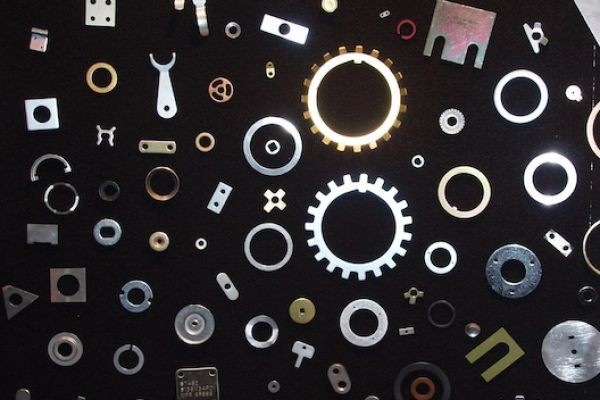
The Role of Customization in Washer Production
In modern industrial engineering, custom metal washers manufacturing has become essential for applications that demand precision, durability, and application-specific performance. Unlike standard off-the-shelf components, custom washers are engineered to meet exact dimensional, material, and functional requirements. This allows manufacturers to support industries where tolerances are tight and operational conditions are highly variable, such as automotive systems, aerospace assemblies, heavy machinery, and electronics.
The growing complexity of mechanical systems has increased the need for washers that are not only dimensionally accurate but also tailored for specific stress loads, vibration resistance, and environmental exposure. Customization allows engineers to select from a wide range of materials, including stainless steel, brass, copper, carbon steel, and specialty alloys. Each material provides unique performance characteristics, such as corrosion resistance, conductivity, or tensile strength.
Another key advantage of custom manufacturing is flexibility in design. Engineers can specify inner and outer diameters, thickness, surface finishes, and hardness levels to match precise operational needs. This level of control ensures that washers perform optimally within their intended applications, reducing the risk of mechanical failure and extending the lifespan of equipment.
Manufacturing Processes and Engineering Precision
The production of custom washers relies heavily on advanced stamping and machining technologies. Manufacturers typically begin with detailed CAD designs that define exact specifications. These designs are then translated into precision tooling used in high-speed stamping presses. Depending on the complexity of the component, progressive die stamping or CNC machining may be used to achieve the desired geometry and tolerances.
Material selection is a critical stage in the process. Engineers evaluate mechanical requirements such as load-bearing capacity, temperature resistance, and environmental exposure before selecting the appropriate raw material. Once chosen, metal sheets or coils are fed into automated presses that cut, shape, and form washers with high repeatability.
Heat treatment processes are often applied to enhance mechanical strength and durability. This may include hardening, annealing, or tempering depending on application needs. Surface finishing techniques such as zinc plating, nickel coating, or passivation are used to improve corrosion resistance and extend product lifespan.
Quality assurance systems play a vital role in ensuring consistency. Advanced measurement tools, including laser scanning and coordinate measuring machines (CMM), are used to verify that every washer meets strict engineering tolerances. This ensures reliability across large production batches and minimizes defects in critical applications.
Metric and Rubber Washers Specialists in Modern Engineering
A leading group of metric and rubber washers specialists plays a crucial role in supplying components that meet both international measurement standards and specialized sealing requirements. Metric washers are widely used in global manufacturing systems where standardized sizing ensures compatibility across machinery and equipment. These washers are essential in industries that require precise fastening solutions aligned with ISO and DIN standards.
Rubber washers, on the other hand, serve a different but equally important function. They are primarily used for sealing, vibration dampening, and insulation. Made from materials such as EPDM, neoprene, silicone, or nitrile rubber, these washers help prevent leakage, reduce noise, and absorb mechanical shock in dynamic systems.
When combined with metal components, rubber washers create hybrid sealing solutions that enhance performance in demanding environments. This combination is especially valuable in automotive assemblies, plumbing systems, electrical enclosures, and industrial machinery where both structural integrity and environmental protection are required.
Specialists in this field must understand both material science and precision engineering. The ability to match rubber compounds with appropriate metal configurations ensures optimal performance under varying temperature, pressure, and chemical exposure conditions. As industries continue to evolve, demand for advanced sealing and fastening solutions continues to grow, making expertise in both metric and rubber washer manufacturing increasingly important.
Industrial Applications and Performance Requirements
Custom washers are used across a wide range of industries where reliability and precision are critical. In automotive manufacturing, they are used in engines, suspension systems, braking assemblies, and transmission components. These environments require washers that can withstand high vibration, thermal expansion, and mechanical stress without losing structural integrity.
In aerospace applications, washers must meet extremely strict tolerances and material certifications due to safety-critical requirements. Lightweight yet high-strength materials are often used to reduce overall aircraft weight while maintaining structural performance.
Electronics manufacturing relies on miniature washers for circuit boards, connectors, and sensitive assemblies where even minor dimensional inconsistencies can lead to performance failures. Industrial machinery and construction equipment also depend on durable washer solutions to maintain alignment, reduce wear, and ensure long-term operational stability.
The versatility of custom washers allows engineers to solve complex design challenges by tailoring components to specific operational environments. This adaptability ensures improved efficiency, reduced maintenance costs, and enhanced equipment longevity across industries.
Quality Control and Manufacturing Standards
Quality control is a foundational aspect of washer manufacturing, especially when producing custom components for critical applications. Manufacturers implement multi-layer inspection systems to ensure consistency from raw material selection through final production.
Dimensional accuracy is verified using advanced metrology tools, while material properties are tested to confirm strength, hardness, and corrosion resistance. Statistical process control systems help monitor production trends and identify deviations early, ensuring that corrective actions can be taken before defects occur.
Surface quality is also carefully inspected, particularly for washers used in sealing or high-friction environments. Any imperfections in coating or finishing can impact performance, making strict inspection protocols essential. Manufacturers often comply with international quality standards such as ISO certifications to ensure global reliability and acceptance.
Continuous improvement programs are also implemented to enhance production efficiency and reduce waste. Automation, robotics, and digital monitoring systems are increasingly used to improve accuracy and scalability in modern manufacturing environments.
Future Trends in Washer Manufacturing Technology
The future of custom washer manufacturing is being shaped by advancements in automation, materials science, and digital engineering. Smart manufacturing systems are enabling greater precision and faster production cycles while reducing human error and material waste.
Additive manufacturing and hybrid production techniques are also emerging as potential solutions for producing highly specialized washer designs that were previously difficult or cost-prohibitive to manufacture. These innovations allow for greater design flexibility and rapid prototyping capabilities.
Sustainability is also becoming a major focus, with manufacturers adopting eco-friendly materials and energy-efficient production methods. Recycling metal waste and optimizing production processes contribute to reduced environmental impact while maintaining high-quality output.
As global industries continue to demand higher performance and tighter tolerances, custom washer manufacturing will remain a critical component of engineering innovation. Companies that invest in advanced technology and material research will be best positioned to meet the evolving needs of automotive, aerospace, electronics, and industrial markets worldwide.






