
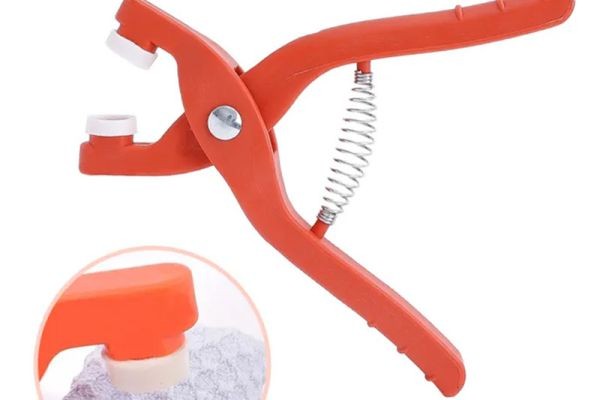
In workshops filled with measured noise and focused energy, there exists a tool that rarely draws attention yet defines the quality of everything it touches. The Press Tool does not announce itself with sparks or spectacle. Instead, it operates with calm authority, transforming raw materials into purposeful forms through pressure, accuracy, and timing.
At first glance, a press tool may appear simple—solid, functional, and unadorned. But behind its straightforward appearance lies a world of engineering intelligence. It is a device built on balance: too much force and materials fail, too little and nothing changes. Mastering this balance is what gives the press tool its quiet power.
Where Pressure Becomes Precision
A press tool works by applying controlled force to shape, cut, or assemble materials. Yet its true value lies not in strength alone, but in consistency. In industries where precision determines safety, performance, and durability, consistency is everything.
Each motion of a press tool is deliberate. It follows a path calculated down to fractions of a millimeter. This predictability allows manufacturers to reproduce components with remarkable accuracy, whether they are shaping metal sheets, forming components, or assembling parts that must fit together perfectly.
In this way, the press tool becomes a translator—turning design ideas into physical reality without distortion.
The Human Mind Behind the Tool
While machines carry out the action, human thought defines the purpose. Every press tool is the result of planning, testing, and refinement. Engineers design them not only to perform a task, but to perform it repeatedly without error.
Operators develop an intuitive understanding of the press tool’s rhythm. They listen to subtle changes in sound, feel resistance through vibration, and notice when motion deviates from expectation. This partnership between human awareness and mechanical precision is what keeps the process alive.
The press tool does not replace skill; it amplifies it.
Evolution Through Innovation
The earliest press tools were simple, relying on manual force and basic leverage. Over time, they evolved into complex systems powered by hydraulics, pneumatics, and advanced control mechanisms. Modern press tools can adjust pressure automatically, respond to feedback in real time, and integrate seamlessly into automated production lines.
Despite these advancements, the core principle remains unchanged: controlled force creates form. What has changed is the level of intelligence embedded within the process. Sensors now monitor alignment. Software predicts wear before failure occurs. Precision has become proactive rather than reactive.
The press tool has grown smarter, but it has not lost its identity.
More Than an Industrial Device
Although commonly associated with factories, the press tool represents something broader. It symbolizes transformation through patience and accuracy. Nothing about its process is rushed. Every cycle is intentional. Every result is earned.
In a world that often values speed over care, the press tool stands as a reminder that quality requires pressure applied at the right moment, in the right direction, and for the right duration. It teaches that force without control is wasteful, while controlled force is creative.
Reliability Built Into Steel
One of the most impressive qualities of a press tool is its reliability. Designed to endure thousands—sometimes millions—of cycles, it is built with durability in mind. Materials are chosen not only for strength, but for endurance. Maintenance becomes a ritual rather than a repair, ensuring longevity through respect rather than reaction.
This reliability builds trust. When a process depends on precision, trust in the tool is non-negotiable. The press tool earns that trust through performance, repetition, and resilience.
The Invisible Impact
Most people never see a press tool in action, yet they encounter its results daily. From household appliances to vehicles, from electronics to infrastructure, countless objects owe their form to this quiet force. The press tool leaves its mark invisibly, hidden beneath surfaces and inside structures.
Its success is measured not by recognition, but by absence of failure.
A Lesson in Controlled Power
Beyond its physical role, the press tool offers a metaphor. Pressure, when applied thoughtfully, can create clarity rather than damage. Structure, when designed carefully, allows freedom rather than restriction. The press tool embodies these principles without ever needing to explain them.
It simply works.
Conclusion
The press tool may never command attention, but it commands respect. It is a cornerstone of precision, a product of human ingenuity, and a reminder that progress is often shaped quietly.
In every carefully formed component, in every perfectly aligned piece, the press tool leaves behind evidence of balance between force and finesse. It does not rush. It does not improvise. It transforms—one controlled motion at a time.






