
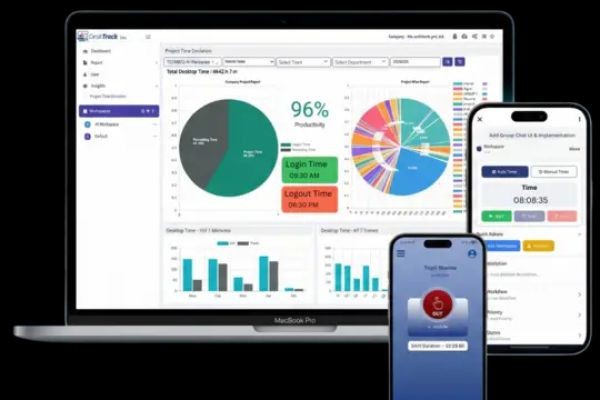
In the past, keeping track of employee productivity was fairly straightforward. Managers could personally oversee teams, and workplace trust often made constant supervision unnecessary. But things have changed. With remote work, hybrid models, and rapidly evolving technology, relying on manual monitoring is no longer practical.
Today, businesses depend on productivity monitoring software to maintain efficiency, accountability, and performance across teams.
What is Productivity Monitoring Software?
At its core, productivity monitoring software is a digital solution designed to track and analyze how employees spend their work time. It collects activity data and converts it into meaningful insights that help organizations improve performance.
Who Does It Monitor?
It focuses on your employees—the most valuable resource of any organization. Understanding how they work helps you support them better and improve overall output.
How Does It Work?
Most employee monitoring software can be customized based on your company’s needs. Once configured, the system tracks activities in real time, such as application usage, active hours, and task progress.
These tools then generate detailed reports that make performance evaluation more accurate and data-driven.
Key Features of Productivity Monitoring Software
To truly understand how these tools improve efficiency, it’s important to look at their core features.
Real-Time Monitoring
As the name suggests, real-time productivity monitoring allows managers to view ongoing work activities instantly. Instead of physically checking in, you get a virtual overview through screen tracking and activity logs.
Behavior Analytics
Modern tools go beyond basic tracking. With behavior analytics, you can analyze screen activity, keystrokes, and idle time. This helps identify productivity patterns and detect inefficiencies early.
Seamless Integrations
Good software doesn’t work in isolation. It integrates with tools like project management systems and payroll platforms. These workflow integrations create a unified ecosystem, making operations smoother and faster.
Work-Hour Monitoring
Also known as time tracking software, this feature records how employees spend their working hours. It highlights top performers and identifies areas where time is being underutilized.
How Productivity Monitoring Software Improves Efficiency
Now comes the real question—how do these features translate into better results?
Increased Productivity
With access to real-time data, managers can make smarter decisions. productivity tracking tools provide actionable insights that help boost individual and team productivity.
Streamlined Workflows
Real-time reports allow quick adjustments in task allocation. Managers can redistribute workloads efficiently without interrupting ongoing operations, leading to smoother workflows.
Improved Transparency
When employees know their work is being tracked fairly, it creates accountability. At the same time, clear data builds trust and encourages open communication within teams.
Better Resource Management
Detailed insights make it easier to allocate resources where they are needed most. This ensures that no effort is wasted and every team member contributes effectively.
Conclusion
Real-time productivity monitoring has become essential in today’s dynamic work environment. With features like real-time tracking, behavior analytics, integrations, and time tracking, these tools offer a complete view of employee performance.By using the right productivity monitoring software, businesses can improve efficiency, enhance transparency, and make smarter decisions based on real data.If you’re looking for a reliable solution, tools like DeskTrack can help you manage your workforce effectively while boosting overall productivity.






