
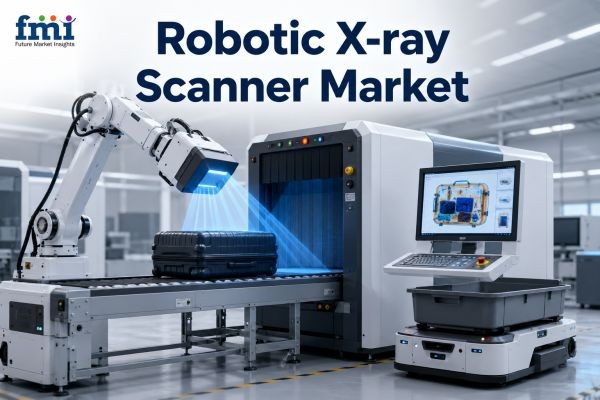
According to the latest analysis by Future Market Insights (FMI), the global robotic X-ray scanner market is experiencing robust growth as healthcare providers increasingly deploy robotic imaging technologies to improve diagnostic accuracy, streamline clinical workflows, and enhance patient care outcomes. The integration of robotics, artificial intelligence, and advanced digital imaging platforms is transforming radiology departments, enabling healthcare facilities to address workforce challenges while improving imaging consistency and efficiency.
The market is benefiting from growing investments in healthcare infrastructure modernization, rising demand for minimally invasive diagnostic procedures, expanding use of AI-powered imaging systems, and continuous innovation in robotic positioning technologies designed to optimize imaging performance and patient throughput.
Get Detailed Market Forecasts, Competitive Benchmarking, and Pricing Trends: https://www.futuremarketinsights.com/reports/sample/rep-gb-1257
Market Growth Path
The global robotic X-ray scanner market is projected to grow from USD 636.8 million in 2026 to approximately USD 1,977.9 million by 2036, registering a CAGR of 12.0% during the forecast period.
The market is expected to create an incremental opportunity of nearly USD 1.34 billion over the next decade, supported by increasing healthcare automation, rising imaging procedure volumes, growing adoption of intelligent diagnostic systems, and expanding investments in advanced radiology infrastructure worldwide.
Market Overview
Robotic X-ray scanners represent the next generation of diagnostic imaging technology, combining robotic positioning systems with digital radiography to automate image acquisition and improve examination precision. These systems are designed to reduce manual intervention, improve workflow efficiency, and deliver consistent imaging quality across a broad range of clinical applications.
As healthcare systems worldwide face growing patient volumes and increasing demand for accurate diagnostic imaging, robotic X-ray technologies are becoming an essential component of modern healthcare delivery. Their ability to support standardized imaging protocols while reducing operator workload is driving widespread adoption across hospitals, diagnostic imaging centers, and surgical facilities.
Key Growth Drivers
The increasing prevalence of chronic diseases, musculoskeletal disorders, cardiovascular conditions, and trauma-related injuries continues to drive demand for advanced imaging technologies. Healthcare providers are increasingly adopting robotic X-ray systems to improve diagnostic capabilities while addressing staffing shortages and operational challenges.
Growing emphasis on workflow automation and healthcare efficiency is further supporting market growth. Automated positioning capabilities reduce examination times, improve patient throughput, and help healthcare facilities manage increasing imaging volumes without compromising quality.
The expanding use of artificial intelligence in radiology is also creating favorable opportunities for robotic imaging systems, as standardized image acquisition improves the effectiveness of AI-assisted diagnostic tools and clinical decision-support systems.
Technology & Innovation Trends
Technological innovation remains a major growth catalyst in the robotic X-ray scanner market. Manufacturers are developing advanced robotic positioning platforms capable of automatically adjusting imaging angles, patient positioning, and scanning parameters to optimize image quality.
Artificial intelligence integration is becoming increasingly important, enabling real-time image enhancement, automated workflow management, and diagnostic support. Robotic imaging systems are also being equipped with advanced software platforms that facilitate seamless integration with hospital information systems and digital healthcare networks.
The emergence of robotic C-arm imaging systems, intelligent detector technologies, and automated radiography suites is further expanding the clinical applications of robotic X-ray scanners across emergency medicine, orthopedics, surgery, and diagnostic radiology.
Market Challenges & Restraints
Despite strong growth prospects, the robotic X-ray scanner market faces several challenges.
The high acquisition and installation costs associated with robotic imaging systems may limit adoption among smaller healthcare facilities and budget-constrained institutions. Healthcare providers often require significant capital investment to upgrade existing imaging infrastructure and integrate robotic technologies into clinical workflows.
Technical complexity and the need for specialized operator training may also create implementation barriers. In addition, regulatory compliance requirements, equipment maintenance costs, and concerns regarding return on investment can influence purchasing decisions across certain healthcare markets.
Segment Analysis
Based on application, the market is segmented into trauma, surgery, and orthopaedics.
The trauma segment is expected to maintain a substantial share of market demand throughout the forecast period due to increasing emergency care requirements and the growing need for rapid diagnostic imaging in critical care environments.
Based on end users, the market is segmented into hospitals, ambulatory surgical centres, and diagnostic imaging centres.
Hospitals are projected to remain the dominant end-user segment, accounting for approximately 29.7% of market revenue in 2026, supported by continuous investments in advanced imaging technologies, high patient volumes, and increasing adoption of automated diagnostic systems.
Regional Analysis
North America continues to represent one of the largest markets for robotic X-ray scanners, supported by advanced healthcare infrastructure, high healthcare expenditure, widespread adoption of medical automation technologies, and strong demand for innovative diagnostic imaging solutions.
Europe maintains steady market growth due to increasing investments in hospital modernization, growing adoption of digital healthcare technologies, and strong focus on improving diagnostic efficiency across healthcare systems.
Asia Pacific is expected to emerge as the fastest-growing regional market throughout the forecast period. Rapid healthcare infrastructure development, increasing healthcare spending, rising patient populations, and growing demand for advanced medical imaging technologies are driving substantial market opportunities across the region.
China is anticipated to remain a key growth engine due to large-scale healthcare expansion programs and increasing adoption of advanced imaging systems.
Latin America and the Middle East & Africa are expected to experience gradual market expansion as healthcare modernization initiatives and diagnostic imaging capabilities continue to improve across emerging healthcare markets.
Competitive Landscape
The global robotic X-ray scanner market remains highly competitive, with leading manufacturers focusing on technological innovation, automation capabilities, artificial intelligence integration, and advanced imaging performance.
Market participants are investing heavily in research and development activities aimed at enhancing robotic mobility, improving image quality, expanding clinical applications, and strengthening interoperability with digital healthcare ecosystems.
Leading market participants include Siemens Healthineers, GE HealthCare, Philips Healthcare, Canon Medical Systems Corporation, Carestream Health, Hitachi Healthcare, Samsung Healthcare, Shimadzu Corporation, Fujifilm Holdings Corporation, and Agfa-Gevaert Group.
Future Outlook
The global robotic X-ray scanner market is expected to maintain strong momentum through 2036 as healthcare providers increasingly prioritize automation, diagnostic accuracy, and operational efficiency.
Advancements in robotics, artificial intelligence, image processing software, and digital healthcare integration will continue to expand the capabilities of robotic imaging systems. As healthcare facilities seek solutions that improve patient outcomes while optimizing clinical workflows, robotic X-ray scanners are expected to play an increasingly important role in the future of diagnostic imaging.
Explore More Related Studies Published by FMI Research
https://www.openpr.com/news/4538008/molecular-spectroscopy-market-growth-driven-by-pharmaceutical
https://www.openpr.com/news/4538014/automated-suturing-devices-market-to-reach-usd-7-5-billion
https://www.openpr.com/news/4538016/non-fusion-spinal-devices-market-reaches-usd-7-5-billion-by-2036
FMI Custom Research: Strategic Intelligence for Confident Decision-Making
In today's rapidly evolving business environment, leadership teams need more than market data—they need clear, actionable intelligence tailored to their strategic objectives. FMI's Custom Research solutions are designed around the specific business questions organizations need answered, enabling executives to evaluate growth opportunities, validate investments, assess competitive dynamics, and reduce uncertainty before making critical decisions. By combining deep industry expertise, primary research, and proprietary market intelligence, FMI delivers insights that help organizations move from assumptions to evidence-based strategies with greater speed and confidence.
Key Executive Benefits
- Decision-Ready Insights: Research tailored to your specific business challenges, growth plans, and investment priorities.
• Reduced Strategic Risk: Validate market opportunities, customer demand, and competitive positioning before committing resources.
• Market Entry Confidence: Assess opportunity size, regulatory barriers, channel dynamics, and competitive landscapes with precision.
• Competitive Advantage: Gain proprietary intelligence unavailable through syndicated reports or internal datasets.
• Faster Growth Decisions: Accelerate expansion, product development, portfolio optimization, and investment planning.
• Primary Market Validation: Access real-world customer, buyer, and stakeholder insights that support high-confidence decision-making.
• Global Industry Expertise: Powered by 100+ analysts, 20,000+ published reports, and 1.6 million+ hours of research experience.
• Proven Track Record: Over 7,000 market-entry engagements completed across six regions and 14 industry sectors with strong client retention.
Business Impact
FMI helps organizations transform market complexity into strategic clarity, enabling leadership teams to identify growth opportunities faster, optimize resource allocation, strengthen competitive positioning, and make high-stakes business decisions with confidence.
About Future Market Insights (FMI)
Future Market Insights, Inc. (ESOMAR certified, recipient of the Stevie Award, and a member of the Greater New York Chamber of Commerce) provides deep insights into governing factors elevating demand in the market. FMI stands as a leading global provider of market intelligence, consulting services, and syndicated research reports across healthcare, chemicals, materials, energy, industrial automation, sustainability, and renewable energy sectors.
Contact
Future Market Insights Inc.
Christiana Corporate, 200 Continental Drive, Suite 401, Newark, Delaware 19713, USA
Email: sales@futuremarketinsights.com






