
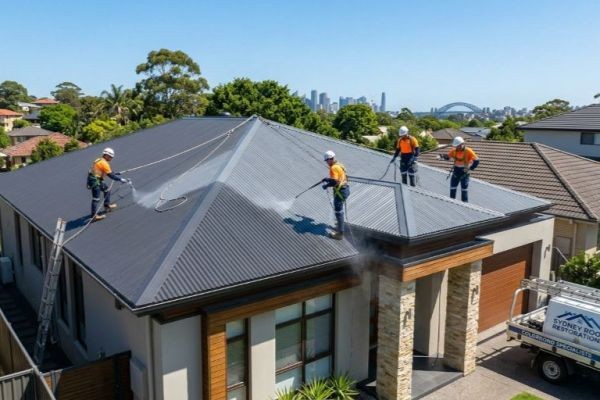
A roof repair fixes a specific problem—a cracked tile, a leaking valley, a rusted flashing. But when your entire roof starts showing its age across multiple areas, chasing individual repairs becomes a frustrating, expensive cycle. This is where roof restoration changes the game. It’s not just a bigger repair; it’s a comprehensive process that resets your roof’s health, often adding 15 to 20 years of service without the disruption and cost of a full replacement.
Restoration tackles every element that wears down over time. High-pressure or soft washing removes years of ingrained dirt, moss, and lichen. Loose or damaged ridge caps are completely rebedded and repointed with modern flexible compounds that move with the roof, resisting cracks. Broken tiles are replaced, rusted sections treated, and all flashings inspected and resealed. Finally, a protective coating—often a UV-resistant, heat-reflective membrane—is applied across the entire surface, locking in the rejuvenated surface and improving energy efficiency.
The difference from repair lies in scope and warranty. With a repair, you fix what’s broken today, but the rest of the roof continues aging around it. Restoration brings the whole roof back to a near-new condition in one planned investment. The bundled warranty that follows covers the entire work, giving peace that no neglected weak spot will surprise you next season.
If your roof is over 20 years old, showing widespread wear, or simply needs more than two or three separate fixes, a professional roof restoration could be the smarter, longer-lasting solution. For expert advice on whether restoration or repair is right for your home, visit All Your Roofing Needs and explore clear, practical guidance from roof-first specialists.






