
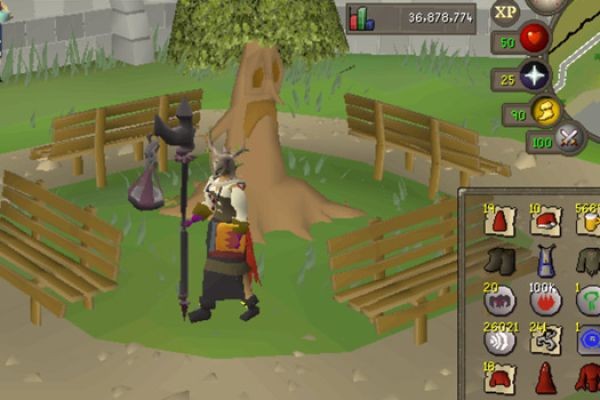
You can have hundreds of RuneScape gold kills at one boss and still feel completely lost when you try a new one. Your stats are higher. Your gear is better. You've watched the guide. And yet somehow, it feels like you've never played RuneScape before.
That doesn't mean you're bad.
It means you learned a boss, not PvM. Having a lot of RuneScape gold can be very helpful.
A lot of players approach PvM like learning songs on a guitar. You memorize the notes for one track. Then another. Then another. You can perform each one individually, but if someone hands you the instrument and asks you to improvise, you freeze.
Boss guides teach you where to stand, when to eat, what to pray, and what kills you if you mess up. That works perfectly - for that boss. But when mechanics shift, the script disappears. New boss. New 20-minute guide. Repeat.
Real PvM skill isn't a collection of memorized encounters. It's understanding the system underneath all of them.
And that system runs on two things: ticks and tiles.
Everything Happens on a Tick
RuneScape does not register your clicks instantly. The game updates every 0.6 seconds. That interval is called a game tick.
You can click whenever you want - but your action only begins on the next tick. If something feels delayed, you're not lagging. You just clicked halfway through a cycle and had to wait.
Every action works this way:
Attacking
Eating
Switching gear
Turning on prayers
Moving
They all queue and execute on ticks.
Here's the first key principle:
Click once with purpose.
Spam clicking doesn't make actions faster. It just creates messy inputs and panic. Clean, deliberate clicks aligned with ticks give you control.
Once you understand ticks, weapon speed suddenly makes sense. A whip attacks every four ticks. A blowpipe every three. Godswords are slower. That's why high max-hit weapons can deal less damage over time - their attack cycle is longer.
And here's something many players don't realize: if you switch weapons mid-cycle, you still have to wait for the previous weapon's delay to finish before attacking again. Switching targets doesn't reset that timer either.
Ticks govern everything.
Prayers: Timing Beats Speed
Protection prayers are one of the strongest mechanics in the game. But mastering them isn't about speed - it's about timing.
When you activate a prayer, it becomes effective on the next tick. That's practically instant. The real question is: when does the boss calculate damage?
Older monsters usually roll damage when their attack animation begins. More modern bosses often roll damage when the hitsplat appears. Some give you time to react to projectiles mid-air.
That inconsistency is part of the learning curve.
Here's the second key principle:
Have the right prayer up at the right time.
Not early. Not late. On the tick that matters.
Once you start recognizing boss rhythm - the cadence of attacks - prayer switching feels less like panic and more like music. Even when attack styles change randomly, there's still a tempo to follow.
The Grid Changes Everything
RuneScape is tile-based. You aren't moving freely - you're stepping across a grid.
Walking moves you one tile per tick. Running moves you two.
That difference matters more than most people realize.
Many mechanics check your position once per tick. If you run two tiles in one tick, you can skip over damaging floor tiles, lightning, poison, or wave attacks. That's why experienced players seem to "ghost" through hazards.
But this cuts both ways.
Movement happens on the tick after you click. If you react too late, the damage check has already happened.
The real PvM skill is pre-movement - stepping onto RS gold for sale a safe tile before danger resolves, not after it appears.






