
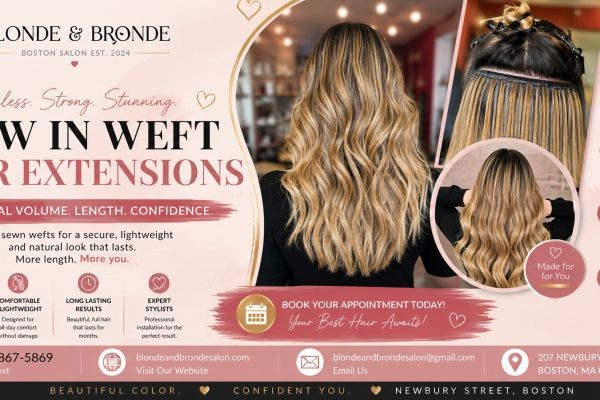
If you want longer, fuller hair without relying on clip-ins every day, sew in weft hair extensions [https://www.blondeandbrondesalon.com/beaded-sewin-weft]can be a practical option. They are designed to blend with your natural hair while adding length, volume, or both. With the right installation and maintenance, they can also create a polished look that feels natural.
However, choosing extensions is not simply about picking the longest or thickest hair available. Your natural hair type, desired look, lifestyle, and the method used for installation all matter.
At Blonde and Bronde Salon, understanding these details is an important part of creating a comfortable and natural-looking extension service. A professional consultation can help determine whether sew-in wefts or another method is better suited to your hair.
What Are Sew In Weft Hair Extensions?
Sew in weft hair extensions are sections of hair attached to a weft, or a strip of hair. During installation, the stylist creates a secure foundation using the client's natural hair and attaches the weft to it.
Unlike temporary clip-in extensions, sew-in wefts are intended to stay in place for an extended period. This makes them convenient for people who want a consistent style without installing extensions each morning.
The final result depends heavily on proper sectioning, placement, tension, and blending. A skilled stylist should consider the condition and density of your natural hair before deciding how and where to install the wefts.
How Do Sew In Weft Extensions Work?
The installation process typically starts with a consultation. Your stylist evaluates your natural hair and discusses your goals, such as adding length, creating fullness, or improving the appearance of a particular hairstyle.
The hair is then sectioned carefully so the extensions can be positioned where they will blend naturally.
Depending on the technique and your hair, the process may involve:
-
Preparing clean, detangled natural hair
-
Creating appropriate sections or rows
-
Securing the weft to the prepared foundation
-
Checking tension and comfort
-
Cutting and blending the extensions with your natural hair
-
Styling the finished look
The goal is not simply to attach additional hair. The extensions should work with your natural hair rather than placing unnecessary stress on it.
Sew In Weft Extensions vs. Beaded Row Extensions
You may also hear about beaded row extensions, another popular method for adding length and volume. Both techniques can produce beautiful results, but the installation process and maintenance requirements can differ.
Sew-in methods generally use a stitched foundation, while beaded row techniques use small beads or another attachment system to secure the hair.
Neither method is automatically better for everyone. Your stylist should consider factors such as hair density, texture, previous chemical services, desired volume, and how often you want to maintain the extensions.
A professional consultation is especially useful if you have fine or fragile hair because extension weight and installation tension need to be carefully managed.
Choosing the Right Hair Extensions
The quality and type of extension hair can make a noticeable difference in the finished style. Your stylist should consider how closely the extension hair matches your natural texture, color, and density.
For the most natural appearance, think beyond length.
Consider:
Hair Texture
Straight, wavy, and curly hair may require different extension choices and blending techniques. Extensions that do not match your natural texture may require more styling to look seamless.
Length and Volume
More hair is not always better. Excessive length or weight can make extensions uncomfortable and may make blending more difficult.
Instead, choose an amount that supports the look you actually want.
Color Matching
A good color match helps the extensions disappear into your natural hair. If you color your hair regularly, your stylist may also recommend a shade that complements your current color rather than simply matching the roots.
How to Care for Sew In Weft Hair Extensions
Proper aftercare is one of the most important parts of maintaining extensions. Even high-quality hair needs regular care to stay smooth and manageable.
Start by brushing gently from the ends upward. Avoid aggressively pulling through the attachment areas.
When washing, concentrate shampoo on the scalp and roots while allowing the product to rinse through the lengths. Use conditioner mainly on the mid-lengths and ends unless your stylist recommends otherwise.
Helpful habits include:
-
Brush gently before washing.
-
Avoid sleeping with wet hair.
-
Use a heat protectant before hot styling.
-
Keep heavy products away from attachment points.
-
Dry the roots and attachment areas thoroughly.
-
Follow your stylist's recommended maintenance schedule.
Your exact routine may vary depending on your hair type and the extension method used.
Common Mistakes to Avoid
One of the biggest mistakes is treating extensions exactly like natural hair. The added hair requires a little more attention, particularly around brushing, drying, and heat styling.
Another common mistake is waiting too long between maintenance appointments. As your natural hair grows, the position of the extensions changes. Leaving them in longer than recommended can make brushing and styling more difficult.
Avoid installing extensions without professional guidance, especially if you are unsure about the appropriate weight or attachment method.
Also, do not ignore discomfort. Extensions should feel secure, but persistent pulling, pain, or excessive tightness is a reason to contact your stylist.
Frequently Asked Questions
How long do sew in weft hair extensions last?
Their wear time varies depending on the installation method, natural hair growth, maintenance routine, and individual lifestyle. Your stylist can recommend an appropriate maintenance schedule.
Are sew-in wefts good for adding volume?
Yes. They can be used to add fullness as well as length. A stylist can adjust the number and placement of wefts based on the amount of volume you want.
Can I wash sew-in extensions?
Yes. They can generally be washed, but they need a gentle cleansing and conditioning routine. Your stylist can recommend products and techniques based on the extension hair.
Are sew-in extensions suitable for fine hair?
They may be suitable for some people with fine hair, but the weight and placement must be carefully considered. A professional assessment is important before installation.
What are beaded row extensions?
Beaded row extensions are installed using rows secured with small beads or similar attachment systems. They are another option for adding length and volume.
Can I use heat tools with sew-in extensions?
Heat styling may be possible, but excessive heat can dry or damage extension hair. Always use heat protection and follow your stylist's recommendations.
How should I sleep with extensions?
Gently brush the hair and secure it in a loose braid or low ponytail before sleeping. Avoid going to bed with wet hair, as this can contribute to tangling.
Conclusion
Sew in weft hair extensions can be a great way to add length, fullness, and versatility when they are professionally selected and installed. The best results come from choosing the right extension weight, matching the hair properly, and following a consistent maintenance routine.
Whether you are comparing sew-in wefts with beaded row extensions or simply want a fuller hairstyle, start with a professional consultation. At Blonde and Bronde Salon [https://www.blondeandbrondesalon.com/], you can discuss your hair goals and find an extension approach that works with your natural hair and lifestyle.
Ready for a Fuller, Longer Look?
If you are considering sew in weft hair extensions, schedule a consultation with Blonde and Bronde Salon to discuss your desired length, volume, color, and maintenance needs. A personalized approach can help you achieve extensions that look polished, comfortable, and naturally blended.






