
Introduction
Advances in biotechnology and wearable electronics are rapidly transforming how we monitor health. Among the most promising innovations is the skin-patch DNA biosensor - a flexible, wearable device capable of detecting genetic material directly from the skin. By combining molecular biology, nanotechnology, and wearable sensor design, these patches offer a non-invasive, real-time, and highly specific approach to health diagnostics. As research accelerates, skin-patch DNA biosensors are poised to redefine personalized medicine, disease detection, and continuous health monitoring.
Definition
Skin-Patch DNA Biosensors are wearable, noninvasive sensing devices integrated into skin-adhesive patches that detect and analyze specific DNA sequences or genetic biomarkers directly from the body (such as through sweat, interstitial fluid, or skin contact). They combine biosensing elements with flexible electronics and biochemical recognition systems to enable real-time, on-body genetic monitoring for applications in health diagnostics, disease detection, environmental exposure tracking, and personalized medicine.
What Are Skin-Patch DNA Biosensors?
A skin-patch DNA biosensor is a wearable analytical device designed to detect specific DNA or RNA sequences from biological fluids such as sweat, interstitial fluid, or skin secretions. Unlike traditional DNA testing, which requires blood samples and laboratory analysis, these biosensors operate directly on the skin, providing near real-time results.
The patch typically consists of several integrated components:
- A biorecognition element (such as DNA probes or aptamers) that selectively binds to target genetic sequences
- A transducer that converts the biological interaction into a measurable signal
- A flexible substrate that adheres comfortably to the skin
- A signal processing and communication module for data transmission to smartphones or medical systems
This integration allows continuous or on-demand genetic analysis without needles, lab visits, or long waiting times.
How Do Skin-Patch DNA Biosensors Work?
The working principle of skin-patch DNA biosensors relies on molecular hybridization - the natural tendency of complementary DNA strands to bind together. The sensor surface is functionalized with short, synthetic DNA probes designed to recognize a specific target sequence.
When biological fluid reaches the sensing area:
- Target DNA or RNA molecules bind to the complementary probes
- This binding event triggers a physical or chemical change
- The transducer detects this change as an electrical, optical, or electrochemical signal
- The signal is analyzed and wirelessly transmitted to a connected device
Advanced patches may also integrate microfluidic channels to guide sweat or interstitial fluid efficiently toward the sensing region, improving sensitivity and reliability.
Key Advantages of Skin-Patch DNA Biosensors
1. Non-Invasive Monitoring
Traditional genetic testing often requires blood draws or tissue samples. Skin-patch biosensors eliminate this need, making testing painless, stress-free, and suitable for frequent or continuous use.
2. Real-Time and Continuous Data
Unlike lab-based tests that provide a single snapshot in time, skin-patch biosensors can track changes in genetic markers continuously. This is especially valuable for monitoring disease progression, treatment response, or infection dynamics.
3. High Specificity and Sensitivity
DNA-based detection offers exceptional selectivity, allowing sensors to distinguish between closely related genetic sequences. This makes them ideal for early disease detection, where small molecular changes matter.
4. Wearability and User Comfort
Designed using flexible electronics and skin-friendly materials, these patches conform to the body and can be worn discreetly under clothing for extended periods.
Applications of Skin-Patch DNA Biosensors
Disease Diagnosis and Early Detection:
Skin-patch DNA biosensors can detect genetic biomarkers associated with conditions such as cancer, cardiovascular disease, and infectious illnesses. Early detection significantly improves treatment outcomes and survival rates.
Infectious Disease Monitoring:
By identifying pathogen-specific DNA or RNA, these biosensors can rapidly detect infections such as viral or bacterial diseases. This capability is particularly valuable during outbreaks, enabling faster screening and containment.
Personalized Medicine:
Genetic variations influence how individuals respond to drugs. Skin-patch biosensors could monitor gene expression or mutation markers to help clinicians tailor treatments in real time.
Sports and Performance Monitoring:
In athletic and military settings, DNA biosensors could track biomarkers related to muscle fatigue, inflammation, or stress, supporting optimized training and injury prevention.
Remote and Home Healthcare:
When paired with mobile applications and cloud platforms, skin-patch DNA biosensors enable remote diagnostics, reducing hospital visits and supporting telemedicine solutions.
Materials and Technologies Behind the Innovation
Recent progress in nanomaterials - such as graphene, gold nanoparticles, and carbon nanotubes - has significantly enhanced the performance of DNA biosensors. These materials provide high surface area, excellent conductivity, and improved signal amplification.
Additionally, printed electronics and stretchable circuits allow sensors to maintain functionality even when bent or stretched. Integration with low-power wireless technologies such as Bluetooth Low Energy (BLE) ensures seamless data transfer while conserving battery life.
Challenges and Limitations
Despite their promise, skin-patch DNA biosensors face several challenges:
- Low DNA concentration in sweat or skin fluids can limit detection sensitivity
- Environmental interference, such as temperature or pH variations, may affect accuracy
- Data privacy and security concerns arise when genetic information is transmitted digitally
- Regulatory approval requires extensive validation to ensure safety and reliability
Ongoing research is addressing these issues through improved sensor design, signal amplification strategies, and robust encryption protocols.
Future Trends of Skin-Patch DNA Biosensors Market
Growing Demand for Non-Invasive Diagnostics:
The market for skin-patch DNA biosensors is expected to grow rapidly due to increasing demand for painless, non-invasive diagnostic solutions. Consumers and healthcare providers are prioritizing wearable technologies that allow continuous health monitoring without the need for blood sampling or laboratory testing.
Integration with Digital Health and AI:
Future skin-patch DNA biosensors will increasingly integrate with digital health platforms, artificial intelligence, and mobile applications. AI-driven analytics will enhance data interpretation, enabling predictive diagnostics, personalized treatment recommendations, and real-time health alerts.
Advancements in Materials and Sensor Technology:
Innovations in nanomaterials, flexible electronics, and bio-compatible substrates will improve sensor sensitivity, durability, and comfort. These advancements will support multi-analyte detection, allowing a single patch to monitor multiple genetic biomarkers simultaneously.
Expansion in Personalized and Remote Healthcare:
The adoption of personalized medicine and telehealth services will drive market expansion. Skin-patch DNA biosensors will play a key role in remote patient monitoring, chronic disease management, and home-based healthcare solutions, especially in aging populations.
Regulatory Progress and Commercialization:
As regulatory frameworks evolve and clinical validation increases, more skin-patch DNA biosensors will move from research to commercial markets. This progress will boost investor confidence, encourage large-scale manufacturing, and accelerate global market adoption.
Growth Rate of Skin-Patch DNA Biosensors Market
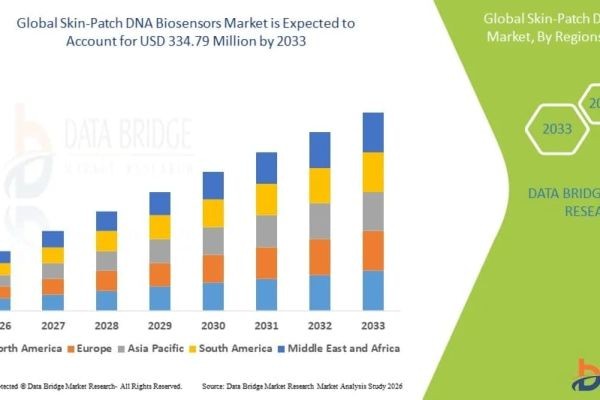
According to Data Bridge Market Research, the skin-patch DNA biosensors market was estimated to be worth USD 94.05 million in 2025 and is projected to grow at a compound annual growth rate (CAGR) of 17.20% to reach USD 334.79 million by 2033.
Learn More: https://www.databridgemarketresearch.com/reports/global-skin-patch-dna-biosensors-market
Conclusion
Skin-patch DNA biosensors represent a groundbreaking convergence of biotechnology and wearable technology. By offering non-invasive, real-time, and highly specific genetic monitoring, they hold the potential to revolutionize diagnostics, personalized medicine, and preventive healthcare. While challenges remain, rapid technological progress suggests that these smart patches will soon play a vital role in how we understand and manage human health - one DNA strand at a time.






