
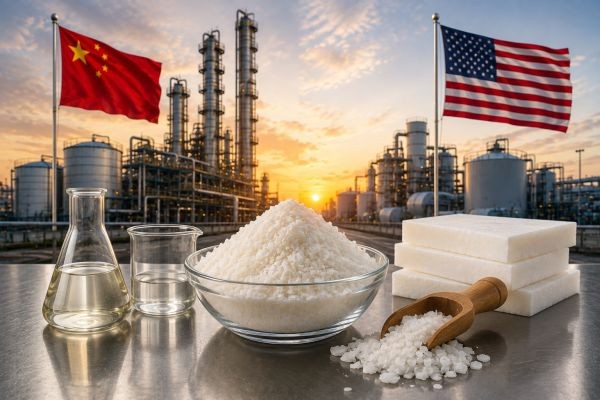
Stearic Acid Price Trend Q2 2026: China vs USA Compared
Two numbers tell most of the story here. China's stearic acid is priced at USD 1,472.55/MT, FOB, as of May 2026. The USA? USD 1,591.74/MT, CFR. That's a gap of over a hundred dollars a ton, and it's not just a rounding difference it points to real gaps in feedstock access, freight structure, and how each market handles this particular fatty acid.
Stearic acid shows up everywhere once you start looking. Soap, candles, plastics additives, cosmetics, rubber processing. It's a workhorse chemical, and a fairly boring one on the surface. But the pricing behind it moves for reasons worth understanding if you're buying it in bulk.
Current Stearic Acid Prices: China vs USA
Numbers first, commentary after.
| Product | Region | Incoterm Basis | Price | Last Updated |
|---|---|---|---|---|
| Stearic Acid | China | FOB | USD 1,472.55/MT | May 2026 |
| Stearic Acid | USA | CFR | USD 1,591.74/MT | May 2026 |
Subtract those and you get USD 119.19/MT. That's a meaningful spread for anyone buying multiple containers a quarter.
Quick context on the incoterms, since they matter more than people give them credit for:
- China's number is FOB — the price at the port of loading, before ocean freight gets added.
- The USA figure is CFR, meaning freight is already baked in.
- Compare these directly and you're partly comparing shipping costs, not just raw material value.
Add freight to China's FOB number and the real gap narrows quite a bit. Worth keeping in mind before anyone assumes China is simply cheaper across the board.
What's Behind These Numbers?
Feedstock. Stearic acid comes from fats and oils — palm oil, tallow, sometimes soybean oil depending on the producer. Palm oil pricing out of Southeast Asia has a direct line to Chinese stearic acid costs. In the US, tallow availability and beef production cycles play a bigger role.
Production capacity. China runs large-scale oleochemical operations with decent access to Southeast Asian palm feedstock nearby. That proximity helps keep FOB pricing competitive. US producers work with a smaller domestic feedstock base, which limits how much cost pressure they can absorb before passing it to buyers.
Freight and shipping. Ocean freight rates swing with fuel costs and container availability. A CFR price like the US figure carries that volatility built right in — so when shipping gets expensive, the delivered cost climbs even if the underlying chemical hasn't changed in price at all.
Currency. Dollar-denominated trade means any currency movement against the yuan affects how competitive Chinese exports look on paper, even without a single change to production cost.
Quick Q&A: Buyers Ask This a Lot
Does a lower FOB price always mean cheaper sourcing? Not really. Freight, insurance, and import duties can eat into that advantage fast. Run the full landed cost before deciding.
Is the USA-China gap likely to close? Depends on palm oil pricing trends and freight rates over the next few months. Neither is fixed, so this spread could shift either direction by Q3.
Should smaller buyers care about a $119 spread? At container volumes, yes. It adds up quickly once you're ordering multiple shipments a year.
What This Means for Buyers and Investors
For procurement teams sourcing stearic acid, China's FOB price looks appealing at first. But factor in ocean freight, and the actual delivered cost narrows against the US CFR figure — sometimes by a lot, depending on the shipping lane and time of year.
US-based buyers already paying the CFR rate have less pricing flexibility to chase. Domestic sourcing might still make sense given shorter lead times, even at a higher headline price.
Investors watching oleochemical markets should note the feedstock dependency here. China's tie to palm oil pricing means any disruption in Southeast Asian production — weather, export policy, whatever — flows straight into stearic acid costs downstream.
Business advisers working with soap, cosmetics, or rubber manufacturing clients: this pricing data is a decent leading indicator. Raw material costs here tend to show up in finished product margins within a quarter or two.
Looking Ahead: Q2 2026 Outlook
Nobody can call this with certainty. What's fairly predictable is that the China-USA spread will keep tracking palm oil and tallow feedstock trends more than anything else.
If palm oil prices stay steady through Q2, expect China's FOB number to hold roughly where it is. Freight costs are the wildcard on the US side — a spike there widens the gap further, a drop narrows it.
Buyers locking in long-term contracts right now should build in some flexibility. Stearic acid pricing doesn't sit still for long, and treating May 2026 figures as permanent would be a mistake.
Conclusion
The stearic acid price trend [https://www.procurementresource.com/resource-center/stearic-acid-price-trends] for Q2 2026 puts China at USD 1,472.55/MT FOB and the USA at USD 1,591.74/MT CFR, both as of May 2026. Feedstock access, freight structure, and incoterm differences explain most of that USD 119.19 gap. Anyone sourcing this chemical at scale or advising someone who does should be tracking these numbers regularly, not just once a quarter.
FAQ Section
What is the current stearic acid price trend in China and the USA?
China's stearic acid is priced at USD 1,472.55/MT FOB, while the USA sits at USD 1,591.74/MT CFR, both as of May 2026. Part of that gap is incoterm-related — CFR includes freight, FOB doesn't — so the raw material cost difference is smaller than it first appears.
Why is stearic acid cheaper in China than in the USA?
China's proximity to Southeast Asian palm oil supply keeps feedstock costs down, and large-scale oleochemical production adds further cost efficiency. US producers rely more on tallow, tied to domestic beef production, which doesn't offer the same cost advantage or scale.
What factors drive stearic acid pricing the most?
Feedstock costs top the list — palm oil for China, tallow for the US. Freight rates, currency shifts, and production capacity all play a role too. Since stearic acid margins run thin, cost changes upstream tend to reach buyers fairly fast.
How often does stearic acid pricing change?
Prices can shift monthly or even faster depending on feedstock markets and shipping conditions. The May 2026 figures serve as a solid reference point, but buyers negotiating contracts should pull current pricing rather than relying on older data.
What's the outlook for stearic acid prices in Q2 2026?
Expect the China-USA gap to keep tracking feedstock and freight trends. Steady palm oil pricing would hold China's rate relatively flat, while freight volatility remains the bigger risk factor on the US side through the rest of the quarter.






