
Stroke Post Processing Software Market Analysis, Industry Outlook & Forecast, 2026-2035
The Stroke Post Processing Software Market is gaining significant momentum as healthcare providers increasingly prioritize rapid diagnosis and accurate treatment planning for stroke patients. Rising incidences of ischemic and hemorrhagic strokes, growing adoption of artificial intelligence (AI) in medical imaging, and expanding investments in digital healthcare infrastructure are driving demand for advanced stroke post processing software solutions. Healthcare institutions are leveraging these platforms to improve workflow efficiency, reduce diagnostic delays, and enhance patient outcomes through precise image interpretation and clinical decision support.
Software developers continue to introduce AI-powered automation, cloud-based deployment models, and enhanced visualization capabilities that enable clinicians to process complex imaging datasets more efficiently. The integration of stroke post processing software with hospital information systems and picture archiving and communication systems (PACS) is further improving diagnostic accuracy while supporting multidisciplinary care teams.
- 2025 Market Size: USD 188.52 Million
- Projected 2035 Market Size: USD 414.6 Million
- Growth Forecast (2026–2035): 8.2%
Regional Performance Highlights
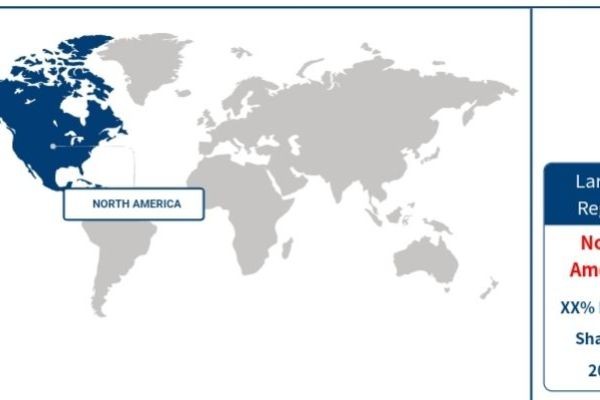
North America continues to dominate the Stroke Post Processing Software Market due to widespread adoption of advanced neuroimaging technologies, strong healthcare infrastructure, favorable reimbursement policies, and the presence of leading medical imaging software providers. Continuous investments in AI-assisted stroke diagnosis and growing awareness regarding early intervention further strengthen regional demand.
Europe is experiencing steady market expansion supported by increasing government initiatives focused on digital healthcare transformation, rising stroke awareness programs, and broader implementation of standardized stroke care pathways. Hospitals across the region are increasingly adopting advanced imaging software to improve emergency response and patient management.
Asia Pacific is emerging as one of the fastest-growing regional markets, driven by expanding healthcare infrastructure, increasing prevalence of neurological disorders, improving access to advanced diagnostic imaging, and growing investments in healthcare digitization across countries such as China, Japan, South Korea, and India.
Market Segmentation Analysis
Desktop held the leading position in the Stroke Post Processing Software Market in 2025, accounting for a 63% share. Desktop-based platforms remain widely preferred in hospitals and diagnostic imaging centers due to their robust computational capabilities, seamless integration with existing radiology workflows, and ability to efficiently process large imaging datasets required for stroke diagnosis.
MRI led the Stroke Post Processing Software Market in 2025 with a 67.9% share. MRI-based stroke imaging continues to play a critical role in identifying ischemic tissue, evaluating brain perfusion, and guiding treatment decisions through superior soft tissue visualization and advanced imaging capabilities.
Request Free Sample Report @ https://www.fundamentalbusinessinsights.com/request-sample/15170
Top Market Trends Transforming the Stroke Post Processing Software Market
AI-Powered Image Analysis is Revolutionizing Stroke Diagnosis
Artificial intelligence has become one of the most influential trends in the Stroke Post Processing Software Market. AI algorithms can rapidly detect vessel occlusions, quantify infarct core volumes, evaluate perfusion deficits, and prioritize urgent cases for clinicians. These capabilities significantly reduce interpretation time while supporting faster treatment decisions in emergency settings. Several software vendors continue expanding machine learning capabilities to improve diagnostic consistency and clinical confidence.
Cloud-Based Imaging Platforms are Gaining Wider Adoption
Healthcare providers are increasingly deploying cloud-enabled stroke imaging platforms that facilitate remote collaboration among neurologists, radiologists, and stroke specialists. Cloud integration enables rapid image sharing between healthcare facilities, supports telemedicine initiatives, and improves access to advanced diagnostic tools regardless of geographic location.
Growing Integration with Hospital Digital Ecosystems
Modern stroke post processing software is being designed to integrate seamlessly with electronic health records (EHRs), PACS, radiology information systems (RIS), and hospital workflow management platforms. Such integration minimizes manual data transfer, enhances clinical efficiency, and supports coordinated patient care across multiple departments.
Advanced Visualization and Decision Support Technologies
Developers are introducing sophisticated visualization features including automated perfusion mapping, three-dimensional reconstruction, quantitative analytics, and real-time clinical decision support. These innovations assist clinicians in evaluating stroke severity more accurately while enabling personalized treatment planning based on patient-specific imaging findings.
Request Free Sample Report @ https://www.fundamentalbusinessinsights.com/request-sample/15170
Recent Company Developments
- GE HealthCare continued expanding its AI-enabled imaging portfolio by enhancing neurological imaging workflows and advanced visualization solutions designed to improve stroke diagnosis and clinical efficiency.
- Siemens Healthineers introduced further advancements across its neuroimaging ecosystem, strengthening AI-assisted image processing capabilities and supporting faster stroke assessment within emergency departments.
- Philips continued investing in integrated diagnostic imaging platforms that combine advanced visualization, workflow automation, and clinical decision support for neurological care.
- Canon Medical Systems enhanced its advanced imaging software portfolio with improvements in stroke imaging applications, enabling more efficient visualization and quantitative analysis for clinicians.
- Brainomix expanded adoption of its AI-powered stroke imaging solutions through collaborations with healthcare providers focused on accelerating diagnosis and treatment pathways.
- RapidAI continued strengthening its comprehensive stroke workflow platform with expanded automation capabilities, enhanced clinical analytics, and broader deployment across stroke centers worldwide.
- Viz.ai advanced its AI-driven care coordination platform by introducing additional workflow optimization features that support rapid identification of stroke patients and improve communication among multidisciplinary teams.
- Nico.lab continued developing AI-assisted stroke imaging software that improves diagnostic efficiency through automated image interpretation and decision support technologies.
- Medtronic strengthened its stroke care ecosystem through continued investments in integrated neurological solutions supporting improved patient management and clinical outcomes.
- Terarecon enhanced its advanced visualization platform with improved post-processing capabilities designed to support comprehensive neurological imaging analysis across healthcare organizations.
These developments demonstrate how leading companies continue investing in artificial intelligence, workflow automation, cloud computing, and advanced visualization technologies to improve stroke diagnosis and optimize clinical decision-making across healthcare systems.
Request Free Sample Report @ https://www.fundamentalbusinessinsights.com/request-sample/15170
Related Reports
About
Fundamental Business Insights:
Fundamental Business Insights is global market research and consulting company which is engaged in providing in depth market reports to its various types of clients like industrial sectors, financial sectors, universities, non-profit, and corporations. Our goal is to offer the correct information to the right stakeholder at the right time, in a format that enables logical and informed decision making. We have a team of consultants who have experience in offering executive level blueprints of markets and solutions. Our services include syndicated market studies, customized research reports, and consultation.
Contact us:
Robbin Fernandez
Head of Business Development
Fundamental Business Insights and Consulting
Email: sales@fundamentalbusinessinsights.com
Read This Report in Regional Languages -






