
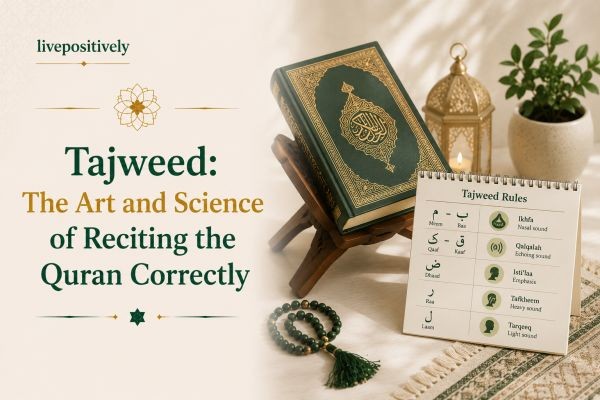
Tajweed: The Art and Science of Reciting the Quran Correctly
The Holy Quran is more than a book; it is the divine word of Allah revealed as guidance for humanity. Muslims around the world recite the Quran daily in prayers, reflection, and worship. However, proper recitation requires more than simply reading Arabic words. This is where Tajweed becomes essential.
Tajweed is the set of rules that governs the correct pronunciation, articulation, and recitation of the Quran. Learning Tajweed helps preserve the beauty, meaning, and authenticity of Allah's words exactly as they were revealed to Prophet Muhammad (peace be upon him). Whether you are a beginner or an advanced student, understanding Tajweed can significantly improve your relationship with the Quran.
What Is Tajweed?
The word "Tajweed" comes from the Arabic root j-w-d, which means "to improve" or "to make better." In Quranic recitation, Tajweed refers to giving every letter its proper rights and characteristics while reciting.
Each Arabic letter has a specific point of articulation and unique qualities. Tajweed teaches readers how to pronounce these letters correctly, where to pause, when to elongate sounds, and how to maintain the rhythm and beauty of Quranic recitation.
Without Tajweed, pronunciation mistakes can alter meanings and reduce the accuracy of recitation.
Why Is Tajweed Important?
1. Preserves the Authentic Message
The Quran has been transmitted through precise oral recitation for over fourteen centuries. Tajweed helps maintain this tradition and ensures that the words are recited as they were taught by the Prophet Muhammad (peace be upon him).
2. Prevents Changes in Meaning
Arabic is a language where slight pronunciation differences can completely change the meaning of a word. Tajweed minimizes these errors and helps readers convey the intended message accurately.
3. Enhances Spiritual Connection
Beautiful and correct recitation allows believers to engage more deeply with the Quran. Many Muslims find that learning Tajweed increases concentration during prayer and strengthens their emotional connection with Allah's words.
4. Builds Confidence
Students who learn Tajweed often become more comfortable reciting aloud in prayers, study circles, and family gatherings. Confidence grows as recitation becomes more accurate and fluent.
Essential Rules of Tajweed
While Tajweed contains many detailed principles, beginners usually start with a few fundamental rules.
Makharij (Points of Articulation)
Every Arabic letter originates from a specific place in the mouth, throat, or lips. Learning these articulation points is the foundation of proper recitation.
Sifaat (Characteristics of Letters)
Letters possess unique characteristics such as heaviness, softness, strength, and airflow. Understanding these qualities helps distinguish similar sounds.
Madd (Elongation)
Certain letters require stretching for specific counts. Proper elongation creates rhythm and preserves the intended pronunciation.
Ghunnah (Nasal Sound)
Ghunnah refers to a nasalized sound commonly associated with specific letters such as Noon and Meem. Mastering this rule improves fluency and accuracy.
Rules of Stopping and Starting
Knowing where to pause and resume recitation helps maintain the meaning of verses and prevents misunderstandings.
Common Challenges When Learning Tajweed
Many students face obstacles during their Tajweed journey. Common challenges include:
-
Difficulty pronouncing Arabic letters not found in their native language.
-
Confusion between similar sounds.
-
Remembering multiple rules simultaneously.
-
Maintaining consistency in practice.
These challenges are normal and can be overcome with regular practice and qualified instruction.
Benefits of Learning Tajweed Online
Modern technology has made Quran education accessible to Muslims worldwide. Online learning allows students to receive personalized instruction regardless of location.
Benefits include:
-
Flexible scheduling for busy families.
-
One-on-one attention from qualified tutors.
-
Access to male and female instructors.
-
Structured learning paths for different skill levels.
-
Recorded sessions and progress tracking in many programs.
For students seeking structured Quran learning, platforms such as Islamic Tuition offer online Quran and Tajweed courses with certified tutors. Their Tajweed program focuses on proper pronunciation, recitation accuracy, and personalized instruction for both children and adults.
Students interested specifically in advanced Tajweed training can also explore the dedicated Tajweed course available through Islamic Tuition's Tajweed Program.
Tips for Mastering Tajweed
Practice Daily
Even 15 to 20 minutes of daily practice can lead to noticeable improvement over time.
Listen to Qualified Reciters
Listening to skilled Quran reciters helps train the ear and develop proper pronunciation habits.
Learn Gradually
Avoid trying to master every rule at once. Focus on one concept at a time and build a strong foundation.
Work With a Teacher
A qualified instructor can identify mistakes that learners may not notice themselves and provide immediate correction.
Be Patient
Tajweed is a lifelong journey. Consistent effort often produces better results than intensive short-term study.
Final Thoughts
Tajweed is much more than a collection of technical rules. It is a means of honoring the Quran and preserving its divine message. By learning proper pronunciation and recitation techniques, Muslims can improve their worship, deepen their understanding of the Quran, and strengthen their spiritual connection with Allah.
Whether you are beginning your Quran journey or seeking to refine your recitation skills, investing time in Tajweed is one of the most rewarding steps you can take. With dedication, regular practice, and guidance from qualified teachers, anyone can improve their recitation and experience the beauty of the Quran as it was meant to be heard.






