
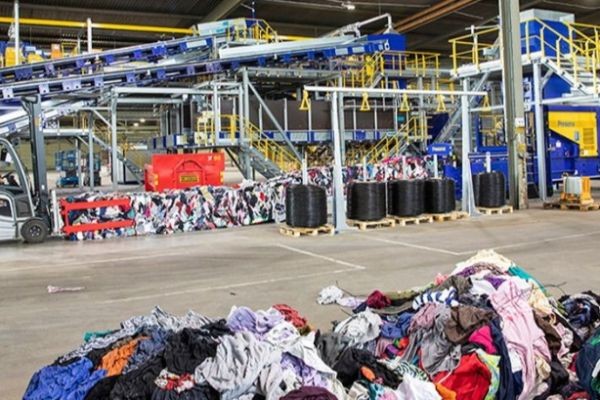
The global fashion and manufacturing industries generate large volumes of textile waste every year, making sustainable disposal and reuse increasingly important. In response, textile recycling in Australia has become a key part of the country’s broader waste management strategy, focusing on recovering valuable fibres and reducing landfill pressure. In many modern facilities, it is supported by advanced mechanical and automated systems that sort, process, and transform discarded fabrics into reusable raw materials. These systems are essential for improving recovery rates and enabling a more circular approach to textile production and consumption.
Understanding Textile Waste in Australia
Textile waste includes discarded clothing, industrial fabric offcuts, household textiles, and post-consumer garments. A significant portion of this waste ends up in landfills due to complex material blends and limited recycling infrastructure. Australia produces large quantities of textile waste annually, driven by fast fashion consumption and industrial production cycles. Many textiles are made from mixed fibres such as cotton-polyester blends, which are difficult to separate using traditional recycling methods. This complexity makes efficient sorting and processing a critical requirement for any successful recycling system.
The Textile Recycling Process
Collection and Pre-Sorting
The first stage involves collecting textile waste from households, businesses, and industrial sources. Materials are then pre-sorted based on condition, separating reusable garments from non-reusable ones.
Reusable textiles are often redirected to second-hand markets or donation channels, while damaged or worn-out items move into recycling streams.
Mechanical Processing
Once sorted, textiles undergo mechanical processing. This may include cutting, tearing, and shredding to break materials into smaller pieces. These processes help prepare fibres for further separation and reuse.
Modern systems are designed to handle different waste streams, including synthetic fabrics and natural fibres, although blended textiles remain more challenging.
Fibre Separation and Refinement
After shredding, fibres are separated and refined. Natural fibres like cotton can be reprocessed into new yarns or nonwoven materials, while synthetic fibres may be melted or chemically treated for reuse in manufacturing.
This stage is crucial in ensuring that recovered fibres maintain quality and usability for industrial applications.
Role of Recycling Sorting
Advanced recycling sorting plays a central role in improving efficiency and accuracy in textile recycling facilities.
Automated Sorting Technologies
Modern facilities use technologies such as optical sensors, near-infrared (NIR) scanners, and AI-based recognition systems to identify fabric types and compositions. These systems can distinguish between cotton, polyester, wool, and blended fabrics, enabling more precise separation.
Research in automated textile classification shows that AI-driven systems significantly improve sorting accuracy and reduce manual labour requirements in industrial environments.
Mechanical Separation Equipment
Sorting systems also include machinery such as shredders, screens, magnets, and air classifiers. These machines help remove non-textile components like buttons, zippers, and metal accessories before fibres are processed further.
Efficient removal of contaminants is essential to ensure high-quality recycled outputs and reduce damage to downstream equipment.
Importance of Recycling Infrastructure in Australia
Australia’s textile recycling infrastructure is still developing, but it is evolving with increased investment in technology and circular economy initiatives. Efficient sorting systems are critical for scaling textile recovery operations and reducing landfill dependency.
Industry reports and environmental discussions highlight that improving sorting efficiency is one of the biggest challenges in textile recycling globally. Without proper separation, large volumes of recyclable fibres are lost or downgraded.
In Australia, integrated recycling facilities are beginning to adopt more automated and AI-assisted systems to improve throughput and material recovery rates.
Environmental Benefits of Textile Recycling
Textile recycling offers several environmental advantages:
- Reduces landfill waste and associated pollution
- Conserves natural resources such as water and cotton
- Lowers greenhouse gas emissions from textile production
- Supports circular economy models by reusing fibres
Conclusion
The growth of textile recycling in Australia reflects a broader shift toward sustainable waste management and resource recovery. As textile waste continues to rise, advanced technologies and structured systems are becoming essential for efficient processing. Central to this transformation are recycling sorting systems, which enable accurate separation, improved fibre recovery, and higher-quality recycled materials. In the middle of these advancements, this system plays a defining role in making textile recycling more scalable, efficient, and environmentally responsible.






