
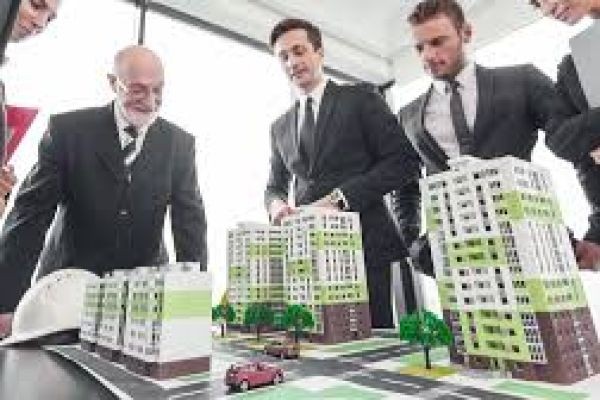
Before there is a house, there is land. Before there is a neighborhood, there is a decision — a decision made by a residential land developer about what kind of place this piece of ground is going to become, for whom, and for how long. That decision shapes the daily life of every person who eventually moves there, often for decades, in ways most of those residents will never consciously trace back to its origin.
Residential land development is one of the most consequential and least publicly understood industries in the modern economy. It sits at the intersection of capital, regulation, civil engineering, community design, environmental stewardship, and human psychology — and the people who do it well hold something closer to community authorship than the more transactional term "developer" typically suggests.
This article is about what residential land developers actually do, how the industry is evolving in response to the most significant housing market pressures in a generation, and what the best developers in the current environment are doing that separates their communities from the ones that decline within a decade of being built.
The Scale of What Is Actually Being Built
To understand the stakes involved in residential land development, it helps to start with the numbers. The global residential land planning and development market was valued at $4,821.3 billion in 2025 and is projected to reach $7,648.9 billion by 2034 — a compound annual growth rate of 5.3 percent across the forecast period. That figure encompasses everything from site acquisition and environmental assessment through zoning, permitting, infrastructure construction, and final property delivery across every major economy on earth.
In the United States specifically, master-planned communities — the most sophisticated expression of residential land development — achieved an estimated 34,000 home sales among top-selling communities in 2024 alone, with stable performance continuing through 2025 despite significant affordability headwinds from elevated mortgage rates, rising insurance costs, and persistent construction cost pressure. The top-performing communities by volume tell their own story about where residential demand is concentrated: The Villages in Orlando led with an estimated 3,400 sales, followed by Lakewood Ranch in Sarasota at 2,080, and Cadence in Las Vegas at 1,270.
These are not simply large neighborhoods. They are complete living environments, designed and built from the ground up with an explicit vision of how residents will move through their days, interact with one another, raise children, age in place, and experience the built landscape around them. The developers behind them are making decisions that will outlast any individual career, mortgage, or municipal administration.
What Residential Land Developers Actually Do
The public perception of a residential developer tends to oscillate between two inadequate images: the speculative landowner holding raw acreage for resale, and the production builder stamping identical houses across a cul-de-sac grid. The reality of what serious residential land development involves is substantially more complex than either.
A residential land developer's core function is the transformation of land from its raw or underutilized state into a legally entitled, infrastructure-served, builder-ready product. That transformation involves a sequential and highly interdependent series of activities that most housing consumers never see.
Site acquisition begins with reading a landscape — not just for price per acre, but for the full picture of what development will cost and what it can realistically become. A site that looks inexpensive may carry soil conditions requiring expensive foundation engineering, flood zone designations requiring costly drainage infrastructure, or proximity to competing developments that will limit achievable lot premiums. Experienced developers price these risks before making an offer, not after.
Entitlement — the process of obtaining governmental approvals for the intended development — is where most development projects succeed or fail. In the United States, this means navigating zoning law, subdivision regulations, environmental review requirements, and the political dynamics of planning commissions and city councils, all simultaneously. In Sun Belt markets where the most active residential development is currently concentrated — including Austin, Dallas-Fort Worth, Nashville, and Phoenix — entitlement timelines have compressed in some jurisdictions and expanded in others as municipalities struggle to staff review processes at the pace that growth demands. The developers who move fastest through entitlement are consistently those with the deepest relationships with local government staff and the strongest track records of delivering developments that improve rather than burden municipal infrastructure.
Infrastructure design and construction — roads, drainage, water and sewer utilities, parks, and the connectivity that ties a community together — represents the largest capital commitment in most residential land development projects. It is also where the long-term quality of a community is most fundamentally determined. Drainage infrastructure that is undersized for development-era flood events produces flooded streets. Road networks that prioritize throughput over livability produce communities people drive through rather than walk in. Park systems that are placed as development afterthoughts rather than community anchors produce amenity space that nobody uses.
Builder lot sales complete the developer's primary transaction, with finished lots delivered to homebuilders who construct and sell the individual residences. The developer's ongoing relationship with the builders who work within their community affects the quality and pace of home construction, the price points achieved, and the character of the neighborhood that ultimately emerges.
The Trends Reshaping What Developers Are Building
The residential land development industry entering 2026 is responding to a set of converging forces that are changing not just where communities are built, but what they contain and what they are designed to accomplish.
Wellness as a design principle rather than an amenity add-on has moved from marketing language to genuine planning priority among the most sophisticated master-planned community developers. In Texas, community planners working on active projects describe an integration of natural areas and shared spaces into community design that goes well beyond the standard park-and-playground formula — agrihoods, where working farms or community gardens sit within the residential fabric, are rising in popularity, and par-3 golf courses with integrated walking trails are appearing in communities where developers are trying to combine active recreation with social infrastructure in a single design gesture. The distinction between this approach and simply listing "green space" as a community feature is meaningful: wellness-oriented design treats the daily movement patterns of residents as a planning variable, not an afterthought.
Build-to-rent integration within master-planned communities represents one of the most significant structural shifts in residential land development. Rather than developing standalone build-to-rent communities, developers are increasingly embedding pods of rental product within for-sale communities, providing a product mix that captures different buyer and renter segments within the same geographic and amenity footprint. This approach benefits developers through diversified revenue streams and accelerated velocity during market softening periods, and it benefits communities by introducing a more economically diverse resident mix than all-for-sale communities typically achieve.
Technology-driven planning and operations is reshaping how large-scale communities are designed and managed. Digital tools and data are being applied from the earliest planning stages — using predictive modeling to optimize lot mix, amenity placement, and infrastructure sizing — through to community operations, where data from resident behavior is used to calibrate programming, maintenance scheduling, and future phase planning. The developers who have invested most seriously in this capability are reporting material advantages in both planning accuracy and operational efficiency relative to peers still relying primarily on experience-based judgment.
Attainably priced product on smaller lots has emerged as one of the most consistent strategies among developers navigating the affordability pressures that have constrained new home demand since 2022. Master-planned communities that offer a genuine range of price points — including detached homes on smaller lots designed for first-time buyers and downsizers alongside the larger lots that have traditionally anchored MPC product — are outperforming communities with more homogeneous price positioning. The data from RCLCO's 2025 rankings supports this directly: communities with broader price-point diversity showed stronger sales velocity than those concentrated in the upper segments of the for-sale market.
Peripheral growth around small municipalities is an emerging pattern that reflects both land economics and buyer preference shifts. As land costs in established suburban corridors of major metros have risen, developers have increasingly looked to communities on the fringe of larger markets that have existing downtown infrastructure — restaurants, schools, civic institutions, a sense of established identity — around which new residential development can cluster. This pattern reduces the community-building burden on the developer while offering residents an authenticity of place that purpose-built master-planned communities on greenfield sites take decades to develop organically.
The Relationship Between Developer and Builder: A Shifting Dynamic
One of the less publicly visible but consequential shifts in the residential land development industry is the evolution of the relationship between developers and the homebuilders who construct within their communities. Traditionally, these were arm's-length transactions — a developer sold finished lots to builders, and each party operated within their own lane. The high-cost, high-volatility environment of the mid-2020s has pushed both sides toward more integrated arrangements.
Builders are increasingly seeking longer-term take-down agreements with developers that provide greater certainty of land supply in exchange for volume commitments, rather than the option-based arrangements that characterized the previous cycle. Land developers are responding by structuring their builder relationships more like partnerships — sharing market data, coordinating on product design to optimize community character, and in some cases co-investing in community infrastructure that serves both parties' interests in lot absorption and home sales velocity.
This dynamic played out explicitly in discussions among industry leaders at the 2025 ULI Spring Meeting, where panel participants from Oxland Group, Taylor Morrison, and Highland Homes described capital strategies and partnership structures that differ meaningfully from the conventional developer-builder transaction. The traditional roles are shifting, and the developers adapting most effectively are those treating builder relationships as long-term strategic partnerships rather than one-time lot sales.
What Separates Communities That Last From Those That Do Not
The residential land development industry has produced both extraordinary successes — communities that have sustained desirability and value for generations — and developments that have declined into distress within years of completion. The factors that separate these outcomes are worth understanding, both for developers making planning decisions and for buyers and policymakers evaluating what is being built.
Communities that sustain long-term desirability share several consistent characteristics. They were planned with a genuine vision of what daily life within them would look and feel like, not just what they would look like on a marketing brochure at the moment of initial sales. They invested in infrastructure and amenities proportionate to the density they were designed to support, rather than underfunding community infrastructure to improve short-term returns on lot sales. They established governance structures — homeowners associations, community development districts, or other institutional mechanisms — capable of maintaining community standards and adapting programming over time without becoming either ineffective or punitive.
Most fundamentally, they were developed by people who understood that they were not building a product but building a place — and that the quality of that place would be the ultimate measure of their professional legacy, long after the last lot was sold and the builder equipment had moved to the next project.
That understanding is the core disposition that separates residential land development done well from residential land development done adequately. The land beneath the life matters. The developers who never forget that are the ones building the communities people actually want to live in, return to, and remember.






