
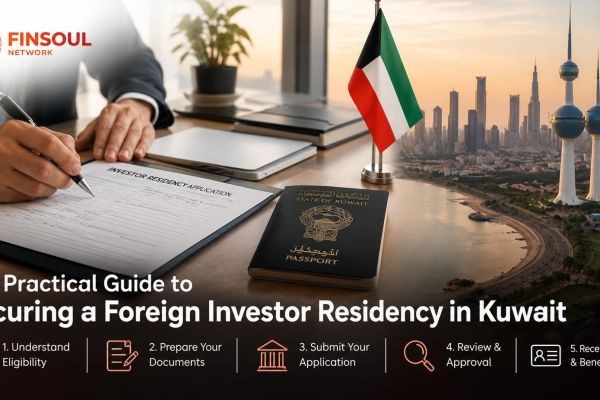
Expanding into a new country is about more than finding the right investment opportunity. It is about creating a stable foundation that allows you to manage your investments, build business relationships, and participate in long-term economic growth. For many international entrepreneurs and investors, Kuwait continues to stand out as one of the Gulf region's most attractive destinations.
With a strong economy, strategic geographic location, investor-friendly policies, and a growing private sector, Kuwait offers significant opportunities for foreign investors seeking regional expansion. However, before focusing on growth strategies and returns, understanding the process of securing xis essential.
A proper residency status not only supports legal compliance but also provides greater flexibility to oversee business activities, access financial services, and explore new investment opportunities. This guide explains how foreign investors can establish residency in Kuwait and use that presence as a platform for sustainable capital growth.
Why Kuwait Attracts Foreign Investors
Kuwait has long been recognized as one of the Gulf's most economically stable nations. Its strategic location between major regional markets makes it a valuable hub for trade, finance, and investment.
The country's ongoing economic diversification initiatives have created opportunities beyond traditional sectors. Today, investors are exploring opportunities in:
- Financial services
- Technology and software development
- Logistics and transportation
- Healthcare
- Real estate
- Professional consulting
- Manufacturing
- Renewable energy
As Kuwait continues to encourage private-sector participation and foreign investment, many entrepreneurs view the country as a strategic gateway for regional business expansion.
For investors seeking long-term involvement in the market, obtaining residency often becomes the first critical step.
Understanding Foreign Investor Residency in Kuwait
Foreign investor residency in Kuwait refers to legal residency arrangements that allow eligible foreign nationals to reside in the country while participating in approved business or investment activities.
Unlike short-term travel arrangements, investor residency provides a stronger connection to the local market. It enables investors to establish a physical presence, manage operations more efficiently, and engage directly with customers, suppliers, and business partners.
Having residency status often creates advantages that cannot be achieved through occasional business visits alone.
Why Residency Matters for Investors
Many investors underestimate the importance of physical presence in a foreign market.
While technology allows remote management, being present in the country often leads to stronger business outcomes.
Direct Business Oversight
Residency allows investors to actively oversee operations and respond quickly to market developments.
Rather than relying entirely on third parties, investors can:
- Monitor business performance
- Meet management teams
- Evaluate opportunities firsthand
- Resolve operational challenges efficiently
This level of involvement often improves decision-making and business performance.
Stronger Local Relationships
Business growth frequently depends on relationships.
Being present in Kuwait allows investors to build stronger connections with:
- Clients
- Suppliers
- Financial institutions
- Government authorities
- Strategic partners
These relationships often become valuable assets that support long-term expansion.
Better Understanding of the Market
Investors who spend time in the local market gain deeper insights into consumer behavior, industry trends, and emerging opportunities.
This knowledge can help identify investment opportunities before competitors recognize them.
Understanding the Kuwait Residence Permit
A Kuwait residence permit is one of the key components of legal residency within the country.
The permit authorizes eligible individuals to live in Kuwait under approved categories and conditions.
For investors, residency status often works alongside business ownership or investment structures that demonstrate a legitimate economic connection to the country.
Obtaining the appropriate residency status is essential for maintaining compliance and supporting long-term business activities.
Kuwait Residency Visa Options
A Kuwait residency visa serves as the legal mechanism that permits foreign nationals to reside within the country.
Different visa categories exist depending on the applicant's circumstances and objectives.
For investors, residency pathways may be linked to:
- Business ownership
- Corporate participation
- Approved investment activities
- Commercial registrations
Understanding which residency category aligns with your investment goals is an important part of the planning process.
Selecting the appropriate pathway from the beginning can help prevent delays and administrative complications later.
Kuwait Business Visa vs Investor Residency
Many entrepreneurs initially enter Kuwait using a Kuwait business visa.
A business visa is typically designed for short-term commercial activities such as:
- Business meetings
- Market research
- Negotiations
- Trade events
- Exploring investment opportunities
While a business visa serves an important purpose during the exploratory phase, it does not provide the same long-term advantages as investor residency.
Investors seeking to actively manage businesses or maintain a continuous presence generally require residency arrangements that support ongoing commercial involvement.
Understanding this distinction is essential when planning market entry strategies.
Investment Residency in Kuwait and Long-Term Growth
For serious investors, investment residency in Kuwait provides a framework for long-term participation in the economy.
Investment residency supports business continuity by allowing investors to remain closely connected to their operations and opportunities.
Benefits may include:
- Improved access to business opportunities
- Greater operational flexibility
- Easier management of commercial interests
- Stronger networking opportunities
- Enhanced credibility within the local market
Rather than viewing residency as a simple legal requirement, successful investors often treat it as a strategic asset that supports business growth.
Documents Commonly Required for Investor Residency
Although specific requirements may vary depending on the investor's circumstances, authorities generally require supporting documentation to verify eligibility.
Personal Documentation
Applicants may be asked to provide:
- Valid passport
- Identification records
- Passport-sized photographs
- Residency application forms
Business Documentation
Business-related documents often include:
- Commercial registration certificates
- Company incorporation records
- Shareholding documentation
- Trade licenses
- Corporate ownership records
Financial Documentation
Financial evidence may include:
- Bank statements
- Capital contribution records
- Investment documentation
- Financial verification reports
Preparing documentation carefully helps reduce delays and improves application efficiency.
Common Challenges Investors Face
While Kuwait offers significant opportunities, investors sometimes encounter challenges during the residency process.
Incomplete Documentation
One of the most common issues involves missing or inconsistent records.
Even small documentation errors can slow processing times and create unnecessary complications.
Business Registration Delays
Residency applications are often linked to company formation procedures.
If business registrations or licensing processes are delayed, residency approvals may also be affected.
Regulatory Compliance Issues
Businesses must remain compliant with applicable laws and regulations.
Failure to maintain proper licensing or documentation can create obstacles during residency reviews.
Lack of Professional Guidance
Many investors attempt to navigate complex procedures independently.
Without expert support, important details may be overlooked, increasing the risk of delays or rejections.
Strategies for Growing Your Capital in Kuwait
Once residency is secured, investors can focus on building and protecting their capital.
Diversify Your Investments
Diversification helps reduce risk while creating multiple growth opportunities.
Rather than concentrating resources in a single sector, many investors explore opportunities across various industries.
Build Strong Business Partnerships
Local partnerships often provide valuable market knowledge and access to opportunities.
Strong relationships can accelerate growth and improve business resilience.
Monitor Economic Trends
Economic conditions evolve continuously.
Investors who stay informed about industry developments, government initiatives, and market trends are often better positioned to make profitable decisions.
Prioritize Long-Term Planning
Short-term gains can be attractive, but sustainable wealth is often built through disciplined long-term strategies.
Successful investors focus on creating lasting value rather than pursuing quick returns.
The Importance of Professional Support
The process of obtaining residency, establishing businesses, and maintaining compliance can be complex.
Many investors work with experienced advisors to simplify these requirements and reduce administrative burdens.
Professional support can assist with:
- Business formation
- Regulatory compliance
- Documentation preparation
- Residency applications
- Corporate structuring
- Investment planning
Investors entering Kuwait frequently seek guidance from firms such as Finsoul Network Kuwait to better understand regulatory requirements and establish a strong operational foundation before expanding their investments.
The right guidance can save time, reduce risk, and improve overall efficiency.
Kuwait's Investment Outlook
Kuwait continues to invest heavily in economic modernization and private-sector development.
Government initiatives supporting innovation, infrastructure development, and economic diversification are creating new opportunities across multiple sectors.
Areas expected to attract continued investor interest include:
- Digital transformation
- Financial technology
- Logistics
- Healthcare
- Professional services
- Renewable energy
- Industrial development
As these sectors continue to evolve, investors who establish an early presence may benefit from future growth opportunities.
Final Thoughts
Securing foreign investor residency in Kuwait is an important step for entrepreneurs and investors who want to establish a lasting presence in one of the Gulf region's most promising markets.
Whether you are exploring a Kuwait residence permit , applying for a Kuwait residency visa , entering the market through a Kuwait business visa , or pursuing investment residency in Kuwait , understanding the process helps reduce uncertainty and supports better decision-making.
Residency provides more than legal authorization to live in the country. It creates opportunities to build relationships, oversee investments, identify new ventures, and participate directly in Kuwait's economic growth.
With careful planning, proper compliance, and expert guidance, foreign investors can position themselves for long-term success while building a strong foundation for future capital growth in Kuwait.






