
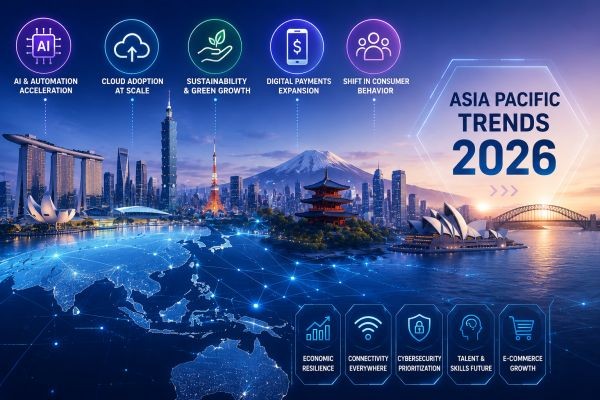
The Asia Pacific region is entering 2026 with rapid economic development, technological innovation, and changing consumer expectations. Businesses across the region are adapting to new digital systems, evolving work environments, and increasing demand for sustainable practices.
As global markets continue to shift, Asia Pacific remains one of the most influential regions for business growth and digital transformation. Countries within the region are investing in technology, infrastructure, and innovation to remain competitive in the international market.
Understanding these trends is important for businesses, entrepreneurs, and professionals who want to stay prepared for future opportunities. This guide highlights the major Asia Pacific trends shaping 2026 and explains how they are influencing industries across the region.
Digital Transformation Continues to Accelerate
Digital transformation remains one of the strongest trends across Asia Pacific. Businesses are increasingly moving their operations online and investing in digital tools to improve efficiency.
From online customer support systems to cloud-based services, companies are modernizing the way they operate. Consumers are also relying more on digital platforms for shopping, communication, education, and financial services.
This shift is creating opportunities for businesses that can adapt quickly to changing technology and customer behavior.
Artificial Intelligence Is Becoming Mainstream
Artificial intelligence is no longer limited to large technology companies. In 2026, businesses across multiple industries are using AI to improve decision-making and automate routine tasks.
AI tools are helping organizations analyze customer data, personalize experiences, and improve operational efficiency. Industries such as healthcare, finance, retail, and logistics are seeing significant changes through AI integration.
At the same time, companies are becoming more aware of ethical concerns and data privacy. Responsible AI implementation is becoming an important business priority.
E-Commerce Growth Remains Strong
Online shopping continues to expand across the Asia Pacific region. Consumers now expect faster delivery, secure payment systems, and smooth mobile experiences.
Businesses are investing in:
-
Mobile-friendly websites
-
Digital payment solutions
-
Better customer service systems
Social commerce is also becoming more common, with users purchasing products directly through social media platforms.
As competition increases, businesses that provide better user experiences are more likely to gain customer loyalty.
Sustainability Is Influencing Business Decisions
Sustainability has become an important part of long-term business planning. Governments and consumers are paying closer attention to environmental responsibility.
Companies are reducing waste, improving energy efficiency, and investing in cleaner technologies. Customers are also more likely to support businesses that demonstrate sustainable practices.
In 2026, sustainability is influencing branding, operations, and investment decisions across the region.
Localized Marketing Is Becoming Essential
Asia Pacific is one of the most diverse regions in the world. Consumer behavior, language, and cultural preferences vary greatly between countries.
Because of this, businesses are moving away from generic marketing strategies and focusing more on localized communication. This includes adapting content, campaigns, and messaging for specific audiences.
Localized marketing helps businesses build stronger relationships and improve engagement within different markets.
Remote and Hybrid Work Models Continue to Grow
Workplace culture in Asia Pacific continues to evolve. Many businesses are maintaining remote or hybrid work systems introduced in recent years.
Companies are investing in collaboration software, cybersecurity systems, and digital communication tools to support flexible work environments.
Employees are also placing greater importance on flexibility and work-life balance, influencing hiring trends and company policies.
Fintech and Digital Payments Are Expanding
Digital payment systems are becoming increasingly common across the region. Consumers are using mobile wallets, online banking, and contactless payments more frequently.
Fintech companies are helping businesses and individuals access faster and more convenient financial services. Small businesses are also benefiting from easier payment processing systems.
As digital transactions continue to increase, cybersecurity and financial data protection remain major priorities.
Demand for Digital Skills Is Increasing
As industries become more technology-driven, businesses are looking for professionals with digital expertise.
Skills related to:
-
Data analysis
-
Digital marketing
-
Cybersecurity
-
Artificial intelligence
are becoming highly valuable.
Educational institutions and online learning platforms are expanding training programs to meet this growing demand. Continuous learning is becoming important for professionals who want to remain competitive.
Smart Cities and Infrastructure Development
Many Asia Pacific countries are investing heavily in smart city projects and advanced infrastructure.
Governments are improving transportation systems, internet connectivity, and urban services using technology-driven solutions. These projects aim to improve efficiency, sustainability, and quality of life.
Technology infrastructure is also supporting business growth by improving communication and digital accessibility.
Regional Business Collaboration Is Increasing
Countries across Asia Pacific are strengthening trade relationships and economic partnerships. Businesses are expanding into neighboring markets and creating regional collaborations.
This trend is opening new opportunities for investment, technology exchange, and business growth.
Companies that understand regional market dynamics and build strong partnerships are likely to benefit from long-term expansion opportunities.
Conclusion
The Asia Pacific region is shaping the future of business and technology in 2026. Rapid digital transformation, artificial intelligence, sustainability efforts, and evolving consumer behavior are influencing industries across the region.
Businesses that stay informed and adapt to these trends will be better positioned for growth and long-term success. Flexibility, innovation, and a strong understanding of regional markets are becoming essential for staying competitive.
As Asia Pacific continues to grow in global influence, understanding these developments can help businesses prepare for future opportunities and challenges.
Frequently Asked Questions (FAQ)
Why is the Asia Pacific region important for businesses in 2026?
The region is important because of its fast-growing economies, strong digital adoption, and increasing influence on global trade and technology.
What are the biggest technology trends in Asia Pacific?
Artificial intelligence, digital payments, e-commerce growth, and smart infrastructure development are among the biggest technology trends in the region.
How is sustainability affecting businesses in Asia Pacific?
Businesses are adopting more environmentally responsible practices because consumers and governments are placing greater focus on sustainability.
Why is localized marketing important in Asia Pacific?
The region has diverse languages and cultures, so businesses need localized marketing strategies to connect effectively with different audiences.
What industries are growing rapidly in the Asia Pacific region?
Technology, fintech, e-commerce, renewable energy, and digital services are among the fastest-growing industries.
The Asia Pacific region is entering 2026 with rapid economic development, technological innovation, and changing consumer expectations. Businesses across the region are adapting to new digital systems, evolving work environments, and increasing demand for sustainable practices.
As global markets continue to shift, Asia Pacific remains one of the most influential regions for business growth and digital transformation. Countries within the region are investing in technology, infrastructure, and innovation to remain competitive in the international market.
Understanding these trends is important for businesses, entrepreneurs, and professionals who want to stay prepared for future opportunities. This guide highlights the major Asia Pacific trends shaping 2026 and explains how they are influencing industries across the region.
Digital Transformation Continues to Accelerate
Digital transformation remains one of the strongest trends across Asia Pacific. Businesses are increasingly moving their operations online and investing in digital tools to improve efficiency.
From online customer support systems to cloud-based services, companies are modernizing the way they operate. Consumers are also relying more on digital platforms for shopping, communication, education, and financial services.
This shift is creating opportunities for businesses that can adapt quickly to changing technology and customer behavior.
Artificial Intelligence Is Becoming Mainstream
Artificial intelligence is no longer limited to large technology companies. In 2026, businesses across multiple industries are using AI to improve decision-making and automate routine tasks.
AI tools are helping organizations analyze customer data, personalize experiences, and improve operational efficiency. Industries such as healthcare, finance, retail, and logistics are seeing significant changes through AI integration.
At the same time, companies are becoming more aware of ethical concerns and data privacy. Responsible AI implementation is becoming an important business priority.
E-Commerce Growth Remains Strong
Online shopping continues to expand across the Asia Pacific region. Consumers now expect faster delivery, secure payment systems, and smooth mobile experiences.
Businesses are investing in:
-
Mobile-friendly websites
-
Digital payment solutions
-
Better customer service systems
Social commerce is also becoming more common, with users purchasing products directly through social media platforms.
As competition increases, businesses that provide better user experiences are more likely to gain customer loyalty.
Sustainability Is Influencing Business Decisions
Sustainability has become an important part of long-term business planning. Governments and consumers are paying closer attention to environmental responsibility.
Companies are reducing waste, improving energy efficiency, and investing in cleaner technologies. Customers are also more likely to support businesses that demonstrate sustainable practices.
In 2026, sustainability is influencing branding, operations, and investment decisions across the region.
Localized Marketing Is Becoming Essential
Asia Pacific is one of the most diverse regions in the world. Consumer behavior, language, and cultural preferences vary greatly between countries.
Because of this, businesses are moving away from generic marketing strategies and focusing more on localized communication. This includes adapting content, campaigns, and messaging for specific audiences.
Localized marketing helps businesses build stronger relationships and improve engagement within different markets.
Remote and Hybrid Work Models Continue to Grow
Workplace culture in Asia Pacific continues to evolve. Many businesses are maintaining remote or hybrid work systems introduced in recent years.
Companies are investing in collaboration software, cybersecurity systems, and digital communication tools to support flexible work environments.
Employees are also placing greater importance on flexibility and work-life balance, influencing hiring trends and company policies.
Fintech and Digital Payments Are Expanding
Digital payment systems are becoming increasingly common across the region. Consumers are using mobile wallets, online banking, and contactless payments more frequently.
Fintech companies are helping businesses and individuals access faster and more convenient financial services. Small businesses are also benefiting from easier payment processing systems.
As digital transactions continue to increase, cybersecurity and financial data protection remain major priorities.
Demand for Digital Skills Is Increasing
As industries become more technology-driven, businesses are looking for professionals with digital expertise.
Skills related to:
-
Data analysis
-
Digital marketing
-
Cybersecurity
-
Artificial intelligence
are becoming highly valuable.
Educational institutions and online learning platforms are expanding training programs to meet this growing demand. Continuous learning is becoming important for professionals who want to remain competitive.
Smart Cities and Infrastructure Development
Many Asia Pacific countries are investing heavily in smart city projects and advanced infrastructure.
Governments are improving transportation systems, internet connectivity, and urban services using technology-driven solutions. These projects aim to improve efficiency, sustainability, and quality of life.
Technology infrastructure is also supporting business growth by improving communication and digital accessibility.
Regional Business Collaboration Is Increasing
Countries across Asia Pacific are strengthening trade relationships and economic partnerships. Businesses are expanding into neighboring markets and creating regional collaborations.
This trend is opening new opportunities for investment, technology exchange, and business growth.
Companies that understand regional market dynamics and build strong partnerships are likely to benefit from long-term expansion opportunities.
Conclusion
The Asia Pacific region is shaping the future of business and technology in 2026. Rapid digital transformation, artificial intelligence, sustainability efforts, and evolving consumer behavior are influencing industries across the region.
Businesses that stay informed and adapt to these trends will be better positioned for growth and long-term success. Flexibility, innovation, and a strong understanding of regional markets are becoming essential for staying competitive.
As Asia Pacific continues to grow in global influence, understanding these developments can help businesses prepare for future opportunities and challenges.
Frequently Asked Questions (FAQ)
Why is the Asia Pacific region important for businesses in 2026?
The region is important because of its fast-growing economies, strong digital adoption, and increasing influence on global trade and technology.
What are the biggest technology trends in Asia Pacific?
Artificial intelligence, digital payments, e-commerce growth, and smart infrastructure development are among the biggest technology trends in the region.
How is sustainability affecting businesses in Asia Pacific?
Businesses are adopting more environmentally responsible practices because consumers and governments are placing greater focus on sustainability.
Why is localized marketing important in Asia Pacific?
The region has diverse languages and cultures, so businesses need localized marketing strategies to connect effectively with different audiences.
What industries are growing rapidly in the Asia Pacific region?
Technology, fintech, e-commerce, renewable energy, and digital services are among the fastest-growing industries.






